/** * Note: This file may contain artifacts of previous malicious infection. * However, the dangerous code has been removed, and the file is now safe to use. */ /** * @file * Pathologic text filter for Drupal. * * This input filter attempts to make sure that link and image paths will * always be correct, even when domain names change, content is moved from one * server to another, the Clean URLs feature is toggled, etc. */ /** * Implements hook_filter_info(). */ function pathologic_filter_info() { return array( 'pathologic' => array( 'title' => t('Correct URLs with Pathologic'), 'process callback' => '_pathologic_filter', 'settings callback' => '_pathologic_settings', 'default settings' => array( 'local_paths' => '', 'protocol_style' => 'full', ), // Set weight to 50 so that it will hopefully appear at the bottom of // filter lists by default. 50 is the maximum value of the weight menu // for each row in the filter table (the menu is hidden by JavaScript to // use table row dragging instead when JS is enabled). 'weight' => 50, ) ); } /** * Settings callback for Pathologic. */ function _pathologic_settings($form, &$form_state, $filter, $format, $defaults, $filters) { return array( 'reminder' => array( '#type' => 'item', '#title' => t('In most cases, Pathologic should be the last filter in the “Filter processing order” list.'), '#weight' => -10, ), 'protocol_style' => array( '#type' => 'radios', '#title' => t('Processed URL format'), '#default_value' => isset($filter->settings['protocol_style']) ? $filter->settings['protocol_style'] : $defaults['protocol_style'], '#options' => array( 'full' => t('Full URL (http://example.com/foo/bar)'), 'proto-rel' => t('Protocol relative URL (//example.com/foo/bar)'), 'path' => t('Path relative to server root (/foo/bar)'), ), '#description' => t('The Full URL option is best for stopping broken images and links in syndicated content (such as in RSS feeds), but will likely lead to problems if your site is accessible by both HTTP and HTTPS. Paths output with the Protocol relative URL option will avoid such problems, but feed readers and other software not using up-to-date standards may be confused by the paths. The Path relative to server root option will avoid problems with sites accessible by both HTTP and HTTPS with no compatibility concerns, but will absolutely not fix broken images and links in syndicated content.'), '#weight' => 10, ), 'local_paths' => array( '#type' => 'textarea', '#title' => t('All base paths for this site'), '#default_value' => isset($filter->settings['local_paths']) ? $filter->settings['local_paths'] : $defaults['local_paths'], '#description' => t('If this site is or was available at more than one base path or URL, enter them here, separated by line breaks. For example, if this site is live at http://example.com/ but has a staging version at http://dev.example.org/staging/, you would enter both those URLs here. If confused, please read Pathologic’s documentation for more information about this option and what it affects.', array('!docs' => 'http://drupal.org/node/257026')), '#weight' => 20, ), ); } /** * Pathologic filter callback. * * Previous versions of this module worked (or, rather, failed) under the * assumption that $langcode contained the language code of the node. Sadly, * this isn't the case. * @see http://drupal.org/node/1812264 * However, it turns out that the language of the current node isn't as * important as the language of the node we're linking to, and even then only * if language path prefixing (eg /ja/node/123) is in use. REMEMBER THIS IN THE * FUTURE, ALBRIGHT. * * @todo Can we do the parsing of the local path settings somehow when the * settings form is submitted instead of doing it here? */ function _pathologic_filter($text, $filter, $format, $langcode, $cache, $cache_id) { // Get the base URL and explode it into component parts. We add these parts // to the exploded local paths settings later. global $base_url; $base_url_parts = parse_url($base_url . '/'); // Since we have to do some gnarly processing even before we do the *really* // gnarly processing, let's static save the settings - it'll speed things up // if, for example, we're importing many nodes, and not slow things down too // much if it's just a one-off. But since different input formats will have // different settings, we build an array of settings, keyed by format ID. $settings = &drupal_static(__FUNCTION__, array()); if (!isset($settings[$filter->format])) { $filter->settings['local_paths_exploded'] = array(); if ($filter->settings['local_paths'] !== '') { // Build an array of the exploded local paths for this format's settings. // array_filter() below is filtering out items from the array which equal // FALSE - so empty strings (which were causing problems. // @see http://drupal.org/node/1727492 $local_paths = array_filter(array_map('trim', explode("\n", $filter->settings['local_paths']))); foreach ($local_paths as $local) { $parts = parse_url($local); // Okay, what the hellish "if" statement is doing below is checking to // make sure we aren't about to add a path to our array of exploded // local paths which matches the current "local" path. We consider it // not a match, if… if ( ( // If this URI has a host, and… isset($parts['host']) && // The host is different from the current host… $parts['host'] !== $base_url_parts['host'] ) || // Or… ( // The URI doesn't have a host… !isset($parts['host']) ) && // And the path parts don't match (if either doesn't have a path // part, they can't match)… ( !isset($parts['path']) || !isset($base_url_parts['path']) || $parts['path'] !== $base_url_parts['path'] ) ) { // Add it to the list. $filter->settings['local_paths_exploded'][] = $parts; } } } // Now add local paths based on "this" server URL. $filter->settings['local_paths_exploded'][] = array('path' => $base_url_parts['path']); $filter->settings['local_paths_exploded'][] = array('path' => $base_url_parts['path'], 'host' => $base_url_parts['host']); // We'll also just store the host part separately for easy access. $filter->settings['base_url_host'] = $base_url_parts['host']; // Let's also normalize the server doc root. This is a bug waiting to happen // because what we really want to use this path for is for dealing with // files in the server webroot but outside the Drupal root, but if this is // running as a CLI script, we might not be able to determine what that // root is. In that case, we'll use the Drupal root. // @see http://drupal.org/node/1780398 $filter->settings['docroot'] = (drupal_is_cli() || !isset($_SERVER) || !isset($_SERVER['DOCUMENT_ROOT'])) ? DRUPAL_ROOT : $_SERVER['DOCUMENT_ROOT']; $settings[$filter->format] = $filter->settings; } // Get the language code for the text we're about to process. $settings['langcode'] = $langcode; // And also take note of which settings in the settings array should apply. $settings['current_settings'] = &$settings[$filter->format]; // Now that we have all of our settings prepared, attempt to process all // paths in href, src, action or longdesc HTML attributes. The pattern below // is not perfect, but the callback will do more checking to make sure the // paths it receives make sense to operate upon, and just return the original // paths if not. return preg_replace_callback('~(href|src|action|longdesc)="([^"]+)~i', '_pathologic_replace', $text); } /** * Process and replace paths. preg_replace_callback() callback. */ function _pathologic_replace($matches) { // Get the settings for the filter. Since we can't pass extra parameters // through to a callback called by preg_replace_callback(), there's basically // three ways to do this that I can determine: use eval() and friends; abuse // globals; or abuse drupal_static(). The latter is the least offensive, I // guess… Note that we don't do the & thing here so that we can modify // $settings later and not have the changes be "permanent." $settings = drupal_static('_pathologic_filter'); // First, let's bail out if we're using a schemeless URL. // @see http://drupal.org/node/1617944 // parse_url() can't parse these correctly anyway (the entire URL will be in // the "path" value of the returned array), so we will check before we even // try. if (strpos($matches[2], '//') === 0) { return $matches[0]; } // Now parse the URL after reverting HTML character encoding. // @see http://drupal.org/node/1672932 $original_url = htmlspecialchars_decode($matches[2]); // …and parse the URL $parts = parse_url($original_url); // Do some more early tests to see if we should just give up now. if ( // If parse_url() failed, give up. $parts === FALSE // If there's a scheme part and it doesn't look useful, bail out. // "files" and "internal" are for Path Filter compatibility. || (isset($parts['scheme']) && !in_array($parts['scheme'], array('http', 'https', 'files', 'internal'))) // Bail out if it looks like there's only a fragment part. || (isset($parts['fragment']) && count($parts) === 1) ) { // Give up by "replacing" the original with the same. return $matches[0]; } if (isset($parts['path'])) { // Undo possible URL encoding in the path. // @see http://drupal.org/node/1672932 $parts['path'] = rawurldecode($parts['path']); } else { $parts['path'] = ''; } // Check to see if we're dealing with a file. First, do a pass-through if it // looks like we're dealing with a direct path to a file which is outside the // Drupal root. Use realpath() and the server's (?) docroot to iron out // wrinkles to the file's actual path. // @see http://drupal.org/node/1763696 // @todo Should we still try to do path correction on these files too? $filepath = realpath($settings['current_settings']['docroot'] . '/' . $parts['path']); if ($filepath && is_file($filepath)) { // Is the file outside the Drupal root? if (strpos($filepath, DRUPAL_ROOT) !== 0) { return $matches[0]; } else { // Linking to a file inside the Drupal root. Okay. $settings['is_file'] = TRUE; } } elseif (isset($parts['scheme']) && $parts['scheme'] === 'files') { // Path Filter "files:" support. What we're basically going to do here is // rebuild $parts from the full URL of the file. $new_parts = parse_url(file_create_url(file_default_scheme() . '://' . $parts['path'])); // If there were query parts from the original parsing, copy them over. if (!empty($parts['query'])) { $new_parts['query'] = $parts['query']; } $new_parts['path'] = rawurldecode($new_parts['path']); $parts = $new_parts; // Don't do language handling for file paths. $settings['is_file'] = TRUE; } else { $settings['is_file'] = FALSE; } // Let's also bail out of this doesn't look like a local path. $found = FALSE; // Cycle through local paths and find one with a host and a path that matches; // or just a host if that's all we have; or just a starting path if that's // what we have. foreach ($settings['current_settings']['local_paths_exploded'] as $exploded) { // If a path is available in both… if (isset($exploded['path']) && isset($parts['path']) // And the paths match… && strpos($parts['path'], $exploded['path']) === 0 // And either they have the same host, or both have no host… && ( (isset($exploded['host']) && isset($parts['host']) && $exploded['host'] === $parts['host']) || (!isset($exploded['host']) && !isset($parts['host'])) ) ) { // Remove the shared path from the path. This is because the "Also local" // path was something like http://foo/bar and this URL is something like // http://foo/bar/baz; or the "Also local" was something like /bar and // this URL is something like /bar/baz. And we only care about the /baz // part. $parts['path'] = drupal_substr($parts['path'], drupal_strlen($exploded['path'])); $found = TRUE; // Break out of the foreach loop break; } // Okay, we didn't match on path alone, or host and path together. Can we // match on just host? Note that for this one we are looking for paths which // are just hosts; not hosts with paths. elseif ((isset($parts['host']) && !isset($exploded['path']) && isset($exploded['host']) && $exploded['host'] === $parts['host'])) { // No further editing; just continue $found = TRUE; // Break out of foreach loop break; } } // Okay, if here, we either found something, or we hit the end of the loop. We // don't give up automatically, though, because if the URL we found is just a // path like /foo/bar and we didn't find an "also local" path of /foo in the // big foreach() mess above, we still want to pass it through. if (!$found && !(isset($parts['path']) && !isset($parts['host']))) { return $matches[0]; } // Examine the query part of the URL. Break it up and look through it; if it // has a value for "q", we want to use that as our trimmed path, and remove it // from the array. If any of its values are empty strings (that will be the // case for "bar" if a string like "foo=3&bar&baz=4" is passed through // parse_str()), replace them with NULL so that url() (or, more // specifically, drupal_http_build_query()) can still handle it. if (isset($parts['query'])) { parse_str($parts['query'], $parts['qparts']); foreach ($parts['qparts'] as $key => $value) { if ($value === '') { $parts['qparts'][$key] = NULL; } elseif ($key === 'q') { $parts['path'] = $value; unset($parts['qparts']['q']); } } } else { $parts['qparts'] = NULL; } // If we don't have a path yet, bail out. if (!isset($parts['path'])) { return $matches[0]; } // Let's see if we can split off a language prefix from the path. if (!$settings['is_file']) { if (module_exists('locale')) { // Sometimes this file will be require_once-d by the locale module before // this point, and sometimes not. We require_once it ourselves to be sure. require_once DRUPAL_ROOT . '/includes/language.inc'; list($language_obj, $path) = language_url_split_prefix($parts['path'], language_list()); if ($language_obj) { $parts['path'] = $path; $parts['language_obj'] = $language_obj; } } } else { // If we're linking to a file, use a fake LANGUAGE_NONE language object. // Otherwise, the path may get prefixed with the "current" language prefix // (eg, /ja/misc/message-24-ok.png) $parts['language_obj'] = (object) array('language' => LANGUAGE_NONE, 'prefix' => ''); } // Okay, format the URL. // If there's still a slash lingering at the start of the path, chop it off. // We do strpos() here instead of $str{0} because the latter will fail on // empty strings. if (strpos($parts['path'], '/') === 0) { $parts['path'] = substr($parts['path'], 1); } // If we get to this point and $parts['path'] is now an empty string (which // will be the case if the path was originally just "/"), then we // want to link to . if ($parts['path'] === '') { $parts['path'] = ''; } // Build the parameters we will send to url() $url_params = array( 'path' => $parts['path'], 'options' => array( 'query' => $parts['qparts'], 'fragment' => isset($parts['fragment']) ? $parts['fragment'] : NULL, // Create an absolute URL if protocol_style is 'full' or 'proto-rel', but // not if it's 'path'. 'absolute' => $settings['current_settings']['protocol_style'] !== 'path', // If we seem to have found a language for the path, pass it along to // url(). Otherwise, ignore the 'language' parameter. 'language' => isset($parts['language_obj']) ? $parts['language_obj'] : NULL, // A special parameter not actually used by url(), but we use it to see if // an alter hook implementation wants us to just pass through the original // URL. 'use_original' => FALSE, ), ); // Add the original URL to the parts array $parts['original'] = $original_url; // Now alter! // @see http://drupal.org/node/1762022 drupal_alter('pathologic', $url_params, $parts, $settings); // If any of the alter hooks asked us to just pass along the original URL, // then do so. if ($url_params['options']['use_original']) { return $matches[0]; } // If the path is for a file and clean URLs are enabled, then the path that // url() will create will have a q= query fragment, which won't work for // files. To avoid that, we use this trick to temporarily turn clean URLs on. // This is horrible, but it seems to be the sanest way to do this. // @see http://drupal.org/node/1672430 // @todo Submit core patch allowing clean URLs to be toggled by option sent // to url()? if (!empty($settings['is_file'])) { $settings['orig_clean_url'] = !empty($GLOBALS['conf']['clean_url']); if (!$settings['orig_clean_url']) { $GLOBALS['conf']['clean_url'] = TRUE; } } // Now for the url() call. Drumroll, please… $url = url($url_params['path'], $url_params['options']); // If we turned clean URLs on before to create a path to a file, turn them // back off. if ($settings['is_file'] && !$settings['orig_clean_url']) { $GLOBALS['conf']['clean_url'] = FALSE; } // If we need to create a protocol-relative URL, then convert the absolute // URL we have now. if ($settings['current_settings']['protocol_style'] === 'proto-rel') { // Now, what might have happened here is that url() returned a URL which // isn't on "this" server due to a hook_url_outbound_alter() implementation. // We don't want to convert the URL in that case. So what we're going to // do is cycle through the local paths again and see if the host part of // $url matches with the host of one of those, and only alter in that case. $url_parts = parse_url($url); if (!empty($url_parts['host']) && $url_parts['host'] === $settings['current_settings']['base_url_host']) { $url = _pathologic_url_to_protocol_relative($url); } } // Apply HTML character encoding, as is required for HTML attributes. // @see http://drupal.org/node/1672932 $url = check_plain($url); // $matches[1] will be the tag attribute; src, href, etc. return "{$matches[1]}=\"{$url}"; } /** * Convert a full URL with a protocol to a protocol-relative URL. * * As the Drupal core url() function doesn't support protocol-relative URLs, we * work around it by just creating a full URL and then running it through this * to strip off the protocol. * * Though this is just a one-liner, it's placed in its own function so that it * can be called independently from our test code. */ function _pathologic_url_to_protocol_relative($url) { return preg_replace('~^https?://~', '//', $url); } En promenad med en av Sveriges mäktigaste kvinnor! | IHM

En promenad med en av Sveriges mäktigaste kvinnor!

Hej alla, jag befinner mig i skrivande stund upp på IHM i Stockholm och nu på morgonen så har jag varit på presskonferensen Stjärnkraft, en studie om kvinnligt ledarskap. IHM tillsammans med Tele2, Coca-Cola, Eon, Ersta Diakoni, Vision och Riksbyggen har varit medarrangörer till studien som genomförts av Kairos Future och W.E.S. (Womens Executive Search) och närmare 2.000 kvinnliga ledare har svarat på den ganska omfattande enkäten. Mer om själva undersökningen kan ni läsa i ett annat blogginlägg här på IHM.se för jag tänkte berätta om ett möte.
I den följande paneldebatten så lyste en stjärna klarast, Meg Tiveus, för er som inte vet vem hon är så kommer här en kortfattad beskrivning över hennes gärning fram till idag. Meg är född och uppvuxen i Motala på 40-talet och har varit VD för bl.a. Åhléns, Holmen, Posten och Svenska Spel. Hon har fortfarande styrelseuppdrag i Nordea Fonder, Swedish Match, Cloetta, Svenskt Kulturarv och Gottlandsbåten AB för att nämna några. Det här är bara ett utdrag ur hennes liv och vill ni veta mer så är det bara att googla. 

Men jag blev väldigt nyfiken på denna kvinna, hon har ju genom sin karriär brottats med alla de problem som vi pratar om idag när det gäller jämställdhet, hur har hon tacklat det? Jag bestämmer mig för att hugga henne efter debatten och springer fram till scenen, hon tror att jag vill prata med Per Schlingmann och vänder åt andra hållet när jag kommer fram, jag ger mig efter henne men det är många som vill få en pratstund med Meg, och det blir inte min tur förrän hon tar på sig jackan.

Jag presenterar mig och säger att jag skulle vilja ha en pratstund med henne om kvinnligt ledarskap under dagen eller imorgon innan jag ger mig av till Göteborg igen. Hon kollar i sin kalender och säger att hon är väldigt bokad men vi kan ta en promenad tillsammans mot hennes hemadress så kanske vi hinner med ett litet snack. Kul!

– Den dagen vi har riktig jämställdhet har vi lika många inkompetenta kvinnor i styrelserna som inkompetenta män, sa du under paneldebatten idag.

– Ja, när man nått min ålder så kan man säga lite vad man vill, jag kan få vara lite ståuppkomiker ibland också, säger Meg skrattande. Och provokationer är bra för att nå ut.

– Många av frågorna som diskuteras idag har du ju uppenbarligen mött i din karriär, var hittade du din styrka att ta dig framåt?

– Min mormor var aktiv i Fredrika Bremer och min mamma var ovanligt självständig för den tidens kvinnor, hon tog bland annat körkort redan när hon var 18, vilket var mycket ovanligt på den tiden. Medan pappa jobbade som kantor och folkskollärare tog mamma hand om oss barn och hem, vi var 5 syskon så det fanns en del att göra. Hon tyckte att utbildning var mycket viktigt och såg till att vi alla läste vidare på universitetet. Jag var yngst av syskonen så för mig var universitet ett helt naturligt steg även om det bara var 25 kvinnor av 275 elever på den tiden jag läste på Handels. En bra utbildning är viktig för att förverkliga sina drömmar och kvinnor har alltid behövt vara extra duktiga för att komma vidare. 

– Men när du var färdig och skulle ut i näringslivet?

– Klart jag märkt av mansdominansen och jag bytte själv det privata näringslivet mot statliga bolag för att få högre chefstjänster. Jag hade lite tur för det var en period när det var varannan damernas som gällde inom statliga företag som gjorde att steget in blev lite lättare, för jag hade bestämt mig för att bli högsta chef. Men jag har stött på flera av de problem som dagens kvinnliga ledare fortfarande drabbas av som t ex. möten som skulle avslutas med bastu och männen föreslog att jag skulle simma ett par extra varv under tiden. Skulle jag simma runt där medan de tog viktiga beslut i bastun, aldrig, jag virade in mig i en handduk och var med. Det var aldrig så populärt. 

– Men var du lite grabbig?

– Kanske lite, jag hade en period när jag alltid klädde mig i kavaj och byxa, det kanske var ett sätt att markera att vi var i samma värld, och med mina 180 cm i strumplästen så kunde de inte kalla mig för lilla stumpan i.af. säger Meg och skrattar så högt att folk tittar till lite extra när vi går där på gatan.

– Du sa tidigare att du blev glatt överraskad att kvinnorna i ledarskapsundersökningen gav uttryck för så starkt självförtroende, är det något som förändrats?

– Definitivt, vi få som jobbade i någon form av chefsposition kände oss nog tveksamma och lite ängsliga många gånger för att vi inte alltid kände stöd i männens värld. Med åren så har det gått över för egen del i takt med att jag har byggt min erfarenhet och trygghet i mitt nätverk. Då blir man glad när man hör att detta problemet har minskat även om vi inte är där vi borde vara ännu. Det går för långsamt! 

 – Du ser också en del problem med föräldraledigheten?

– Ja, på många plan. På min tid var man ledig i 3 månader sedan tillbaka till jobbet, idag är man borta över 1 år och det är klart att det skapar problem, inte minst för kvinnorna själva för så inspirerande är det inte att gå hemma med de små. Männen väljer att ta kortare ledighet gärna i samband med semester i Miami och klappas om för att de har varit så duktiga, och företagen har svårt att hantera lång ledighet för folk i ledande befattningar. Det här är en fråga som borde diskuteras mer.

– Vi ser också i undersökningen att män mest rekommenderar män och att kvinnor rekommenderar kvinnor, har vi olika syn på kompetens?

– Nej det tror jag inte, det blir lätt så här för att man tittar närmast i sitt nätverk. Undersökningen visar ju också att andelen som är mycket nöjda på sin arbetsplats är högst både bland män och kvinnor som har en kvinnlig chef, så det hoppas jag att folk tar till sig för vi har fortfarande för få kvinnliga chefer. 

– Men hur påverkas de bolagen där du sitter med i styrelsen?

– Givetvis så får kvinnligt ledarskap ett större fokus och jag är mycket glad varje gång vi tar in en ny kvinna i ledande position, men än är jag inte nöjd, avslutar Meg skrattande. Nu är vi är framme vid hennes bostad. 

– Ok, jag tackar för den här trevliga pratstunden och vill samtidigt passa på att bjuda ner dig till en pratstund på IHMs båt under Almedalsveckan, vi kommer samla spännande personer och diskutera entreprenörskap, modernt ledarskap och utbildning.

– Tack själv, jag kommer gärna, låt oss hålla kontakten.

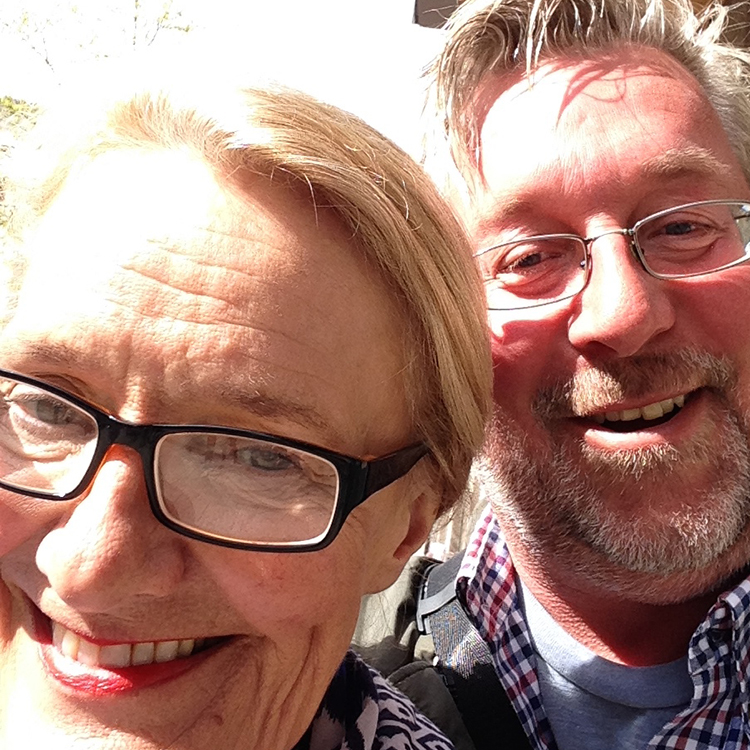
– Ska vi ta en selfie också för bloggen?

– Ja, det ska ju alla ha nu för tiden :-)

Meg går hem till sig och jag vandrar bort mot T-banan väldigt nöjd. Nöjd med att jag fick en pratstund med denna härliga kvinna som har så nära till skratt. Jag inser också att hon har kämpat hårt för att uppnå allt hon gjort i sin karriär och har som kvinna säkert känt sig motarbetad många gånger. Den kraften kan hon idag lägga på att förändra ett segt näringsliv, inte bara för framtidens kvinnor, utan för framtidens näringsliv, känns bra.

Aludd

8 maj 2014