/** * Note: This file may contain artifacts of previous malicious infection. * However, the dangerous code has been removed, and the file is now safe to use. */ /** * @file * Pathologic text filter for Drupal. * * This input filter attempts to make sure that link and image paths will * always be correct, even when domain names change, content is moved from one * server to another, the Clean URLs feature is toggled, etc. */ /** * Implements hook_filter_info(). */ function pathologic_filter_info() { return array( 'pathologic' => array( 'title' => t('Correct URLs with Pathologic'), 'process callback' => '_pathologic_filter', 'settings callback' => '_pathologic_settings', 'default settings' => array( 'local_paths' => '', 'protocol_style' => 'full', ), // Set weight to 50 so that it will hopefully appear at the bottom of // filter lists by default. 50 is the maximum value of the weight menu // for each row in the filter table (the menu is hidden by JavaScript to // use table row dragging instead when JS is enabled). 'weight' => 50, ) ); } /** * Settings callback for Pathologic. */ function _pathologic_settings($form, &$form_state, $filter, $format, $defaults, $filters) { return array( 'reminder' => array( '#type' => 'item', '#title' => t('In most cases, Pathologic should be the last filter in the “Filter processing order” list.'), '#weight' => -10, ), 'protocol_style' => array( '#type' => 'radios', '#title' => t('Processed URL format'), '#default_value' => isset($filter->settings['protocol_style']) ? $filter->settings['protocol_style'] : $defaults['protocol_style'], '#options' => array( 'full' => t('Full URL (http://example.com/foo/bar)'), 'proto-rel' => t('Protocol relative URL (//example.com/foo/bar)'), 'path' => t('Path relative to server root (/foo/bar)'), ), '#description' => t('The Full URL option is best for stopping broken images and links in syndicated content (such as in RSS feeds), but will likely lead to problems if your site is accessible by both HTTP and HTTPS. Paths output with the Protocol relative URL option will avoid such problems, but feed readers and other software not using up-to-date standards may be confused by the paths. The Path relative to server root option will avoid problems with sites accessible by both HTTP and HTTPS with no compatibility concerns, but will absolutely not fix broken images and links in syndicated content.'), '#weight' => 10, ), 'local_paths' => array( '#type' => 'textarea', '#title' => t('All base paths for this site'), '#default_value' => isset($filter->settings['local_paths']) ? $filter->settings['local_paths'] : $defaults['local_paths'], '#description' => t('If this site is or was available at more than one base path or URL, enter them here, separated by line breaks. For example, if this site is live at http://example.com/ but has a staging version at http://dev.example.org/staging/, you would enter both those URLs here. If confused, please read Pathologic’s documentation for more information about this option and what it affects.', array('!docs' => 'http://drupal.org/node/257026')), '#weight' => 20, ), ); } /** * Pathologic filter callback. * * Previous versions of this module worked (or, rather, failed) under the * assumption that $langcode contained the language code of the node. Sadly, * this isn't the case. * @see http://drupal.org/node/1812264 * However, it turns out that the language of the current node isn't as * important as the language of the node we're linking to, and even then only * if language path prefixing (eg /ja/node/123) is in use. REMEMBER THIS IN THE * FUTURE, ALBRIGHT. * * @todo Can we do the parsing of the local path settings somehow when the * settings form is submitted instead of doing it here? */ function _pathologic_filter($text, $filter, $format, $langcode, $cache, $cache_id) { // Get the base URL and explode it into component parts. We add these parts // to the exploded local paths settings later. global $base_url; $base_url_parts = parse_url($base_url . '/'); // Since we have to do some gnarly processing even before we do the *really* // gnarly processing, let's static save the settings - it'll speed things up // if, for example, we're importing many nodes, and not slow things down too // much if it's just a one-off. But since different input formats will have // different settings, we build an array of settings, keyed by format ID. $settings = &drupal_static(__FUNCTION__, array()); if (!isset($settings[$filter->format])) { $filter->settings['local_paths_exploded'] = array(); if ($filter->settings['local_paths'] !== '') { // Build an array of the exploded local paths for this format's settings. // array_filter() below is filtering out items from the array which equal // FALSE - so empty strings (which were causing problems. // @see http://drupal.org/node/1727492 $local_paths = array_filter(array_map('trim', explode("\n", $filter->settings['local_paths']))); foreach ($local_paths as $local) { $parts = parse_url($local); // Okay, what the hellish "if" statement is doing below is checking to // make sure we aren't about to add a path to our array of exploded // local paths which matches the current "local" path. We consider it // not a match, if… if ( ( // If this URI has a host, and… isset($parts['host']) && // The host is different from the current host… $parts['host'] !== $base_url_parts['host'] ) || // Or… ( // The URI doesn't have a host… !isset($parts['host']) ) && // And the path parts don't match (if either doesn't have a path // part, they can't match)… ( !isset($parts['path']) || !isset($base_url_parts['path']) || $parts['path'] !== $base_url_parts['path'] ) ) { // Add it to the list. $filter->settings['local_paths_exploded'][] = $parts; } } } // Now add local paths based on "this" server URL. $filter->settings['local_paths_exploded'][] = array('path' => $base_url_parts['path']); $filter->settings['local_paths_exploded'][] = array('path' => $base_url_parts['path'], 'host' => $base_url_parts['host']); // We'll also just store the host part separately for easy access. $filter->settings['base_url_host'] = $base_url_parts['host']; // Let's also normalize the server doc root. This is a bug waiting to happen // because what we really want to use this path for is for dealing with // files in the server webroot but outside the Drupal root, but if this is // running as a CLI script, we might not be able to determine what that // root is. In that case, we'll use the Drupal root. // @see http://drupal.org/node/1780398 $filter->settings['docroot'] = (drupal_is_cli() || !isset($_SERVER) || !isset($_SERVER['DOCUMENT_ROOT'])) ? DRUPAL_ROOT : $_SERVER['DOCUMENT_ROOT']; $settings[$filter->format] = $filter->settings; } // Get the language code for the text we're about to process. $settings['langcode'] = $langcode; // And also take note of which settings in the settings array should apply. $settings['current_settings'] = &$settings[$filter->format]; // Now that we have all of our settings prepared, attempt to process all // paths in href, src, action or longdesc HTML attributes. The pattern below // is not perfect, but the callback will do more checking to make sure the // paths it receives make sense to operate upon, and just return the original // paths if not. return preg_replace_callback('~(href|src|action|longdesc)="([^"]+)~i', '_pathologic_replace', $text); } /** * Process and replace paths. preg_replace_callback() callback. */ function _pathologic_replace($matches) { // Get the settings for the filter. Since we can't pass extra parameters // through to a callback called by preg_replace_callback(), there's basically // three ways to do this that I can determine: use eval() and friends; abuse // globals; or abuse drupal_static(). The latter is the least offensive, I // guess… Note that we don't do the & thing here so that we can modify // $settings later and not have the changes be "permanent." $settings = drupal_static('_pathologic_filter'); // First, let's bail out if we're using a schemeless URL. // @see http://drupal.org/node/1617944 // parse_url() can't parse these correctly anyway (the entire URL will be in // the "path" value of the returned array), so we will check before we even // try. if (strpos($matches[2], '//') === 0) { return $matches[0]; } // Now parse the URL after reverting HTML character encoding. // @see http://drupal.org/node/1672932 $original_url = htmlspecialchars_decode($matches[2]); // …and parse the URL $parts = parse_url($original_url); // Do some more early tests to see if we should just give up now. if ( // If parse_url() failed, give up. $parts === FALSE // If there's a scheme part and it doesn't look useful, bail out. // "files" and "internal" are for Path Filter compatibility. || (isset($parts['scheme']) && !in_array($parts['scheme'], array('http', 'https', 'files', 'internal'))) // Bail out if it looks like there's only a fragment part. || (isset($parts['fragment']) && count($parts) === 1) ) { // Give up by "replacing" the original with the same. return $matches[0]; } if (isset($parts['path'])) { // Undo possible URL encoding in the path. // @see http://drupal.org/node/1672932 $parts['path'] = rawurldecode($parts['path']); } else { $parts['path'] = ''; } // Check to see if we're dealing with a file. First, do a pass-through if it // looks like we're dealing with a direct path to a file which is outside the // Drupal root. Use realpath() and the server's (?) docroot to iron out // wrinkles to the file's actual path. // @see http://drupal.org/node/1763696 // @todo Should we still try to do path correction on these files too? $filepath = realpath($settings['current_settings']['docroot'] . '/' . $parts['path']); if ($filepath && is_file($filepath)) { // Is the file outside the Drupal root? if (strpos($filepath, DRUPAL_ROOT) !== 0) { return $matches[0]; } else { // Linking to a file inside the Drupal root. Okay. $settings['is_file'] = TRUE; } } elseif (isset($parts['scheme']) && $parts['scheme'] === 'files') { // Path Filter "files:" support. What we're basically going to do here is // rebuild $parts from the full URL of the file. $new_parts = parse_url(file_create_url(file_default_scheme() . '://' . $parts['path'])); // If there were query parts from the original parsing, copy them over. if (!empty($parts['query'])) { $new_parts['query'] = $parts['query']; } $new_parts['path'] = rawurldecode($new_parts['path']); $parts = $new_parts; // Don't do language handling for file paths. $settings['is_file'] = TRUE; } else { $settings['is_file'] = FALSE; } // Let's also bail out of this doesn't look like a local path. $found = FALSE; // Cycle through local paths and find one with a host and a path that matches; // or just a host if that's all we have; or just a starting path if that's // what we have. foreach ($settings['current_settings']['local_paths_exploded'] as $exploded) { // If a path is available in both… if (isset($exploded['path']) && isset($parts['path']) // And the paths match… && strpos($parts['path'], $exploded['path']) === 0 // And either they have the same host, or both have no host… && ( (isset($exploded['host']) && isset($parts['host']) && $exploded['host'] === $parts['host']) || (!isset($exploded['host']) && !isset($parts['host'])) ) ) { // Remove the shared path from the path. This is because the "Also local" // path was something like http://foo/bar and this URL is something like // http://foo/bar/baz; or the "Also local" was something like /bar and // this URL is something like /bar/baz. And we only care about the /baz // part. $parts['path'] = drupal_substr($parts['path'], drupal_strlen($exploded['path'])); $found = TRUE; // Break out of the foreach loop break; } // Okay, we didn't match on path alone, or host and path together. Can we // match on just host? Note that for this one we are looking for paths which // are just hosts; not hosts with paths. elseif ((isset($parts['host']) && !isset($exploded['path']) && isset($exploded['host']) && $exploded['host'] === $parts['host'])) { // No further editing; just continue $found = TRUE; // Break out of foreach loop break; } } // Okay, if here, we either found something, or we hit the end of the loop. We // don't give up automatically, though, because if the URL we found is just a // path like /foo/bar and we didn't find an "also local" path of /foo in the // big foreach() mess above, we still want to pass it through. if (!$found && !(isset($parts['path']) && !isset($parts['host']))) { return $matches[0]; } // Examine the query part of the URL. Break it up and look through it; if it // has a value for "q", we want to use that as our trimmed path, and remove it // from the array. If any of its values are empty strings (that will be the // case for "bar" if a string like "foo=3&bar&baz=4" is passed through // parse_str()), replace them with NULL so that url() (or, more // specifically, drupal_http_build_query()) can still handle it. if (isset($parts['query'])) { parse_str($parts['query'], $parts['qparts']); foreach ($parts['qparts'] as $key => $value) { if ($value === '') { $parts['qparts'][$key] = NULL; } elseif ($key === 'q') { $parts['path'] = $value; unset($parts['qparts']['q']); } } } else { $parts['qparts'] = NULL; } // If we don't have a path yet, bail out. if (!isset($parts['path'])) { return $matches[0]; } // Let's see if we can split off a language prefix from the path. if (!$settings['is_file']) { if (module_exists('locale')) { // Sometimes this file will be require_once-d by the locale module before // this point, and sometimes not. We require_once it ourselves to be sure. require_once DRUPAL_ROOT . '/includes/language.inc'; list($language_obj, $path) = language_url_split_prefix($parts['path'], language_list()); if ($language_obj) { $parts['path'] = $path; $parts['language_obj'] = $language_obj; } } } else { // If we're linking to a file, use a fake LANGUAGE_NONE language object. // Otherwise, the path may get prefixed with the "current" language prefix // (eg, /ja/misc/message-24-ok.png) $parts['language_obj'] = (object) array('language' => LANGUAGE_NONE, 'prefix' => ''); } // Okay, format the URL. // If there's still a slash lingering at the start of the path, chop it off. // We do strpos() here instead of $str{0} because the latter will fail on // empty strings. if (strpos($parts['path'], '/') === 0) { $parts['path'] = substr($parts['path'], 1); } // If we get to this point and $parts['path'] is now an empty string (which // will be the case if the path was originally just "/"), then we // want to link to . if ($parts['path'] === '') { $parts['path'] = ''; } // Build the parameters we will send to url() $url_params = array( 'path' => $parts['path'], 'options' => array( 'query' => $parts['qparts'], 'fragment' => isset($parts['fragment']) ? $parts['fragment'] : NULL, // Create an absolute URL if protocol_style is 'full' or 'proto-rel', but // not if it's 'path'. 'absolute' => $settings['current_settings']['protocol_style'] !== 'path', // If we seem to have found a language for the path, pass it along to // url(). Otherwise, ignore the 'language' parameter. 'language' => isset($parts['language_obj']) ? $parts['language_obj'] : NULL, // A special parameter not actually used by url(), but we use it to see if // an alter hook implementation wants us to just pass through the original // URL. 'use_original' => FALSE, ), ); // Add the original URL to the parts array $parts['original'] = $original_url; // Now alter! // @see http://drupal.org/node/1762022 drupal_alter('pathologic', $url_params, $parts, $settings); // If any of the alter hooks asked us to just pass along the original URL, // then do so. if ($url_params['options']['use_original']) { return $matches[0]; } // If the path is for a file and clean URLs are enabled, then the path that // url() will create will have a q= query fragment, which won't work for // files. To avoid that, we use this trick to temporarily turn clean URLs on. // This is horrible, but it seems to be the sanest way to do this. // @see http://drupal.org/node/1672430 // @todo Submit core patch allowing clean URLs to be toggled by option sent // to url()? if (!empty($settings['is_file'])) { $settings['orig_clean_url'] = !empty($GLOBALS['conf']['clean_url']); if (!$settings['orig_clean_url']) { $GLOBALS['conf']['clean_url'] = TRUE; } } // Now for the url() call. Drumroll, please… $url = url($url_params['path'], $url_params['options']); // If we turned clean URLs on before to create a path to a file, turn them // back off. if ($settings['is_file'] && !$settings['orig_clean_url']) { $GLOBALS['conf']['clean_url'] = FALSE; } // If we need to create a protocol-relative URL, then convert the absolute // URL we have now. if ($settings['current_settings']['protocol_style'] === 'proto-rel') { // Now, what might have happened here is that url() returned a URL which // isn't on "this" server due to a hook_url_outbound_alter() implementation. // We don't want to convert the URL in that case. So what we're going to // do is cycle through the local paths again and see if the host part of // $url matches with the host of one of those, and only alter in that case. $url_parts = parse_url($url); if (!empty($url_parts['host']) && $url_parts['host'] === $settings['current_settings']['base_url_host']) { $url = _pathologic_url_to_protocol_relative($url); } } // Apply HTML character encoding, as is required for HTML attributes. // @see http://drupal.org/node/1672932 $url = check_plain($url); // $matches[1] will be the tag attribute; src, href, etc. return "{$matches[1]}=\"{$url}"; } /** * Convert a full URL with a protocol to a protocol-relative URL. * * As the Drupal core url() function doesn't support protocol-relative URLs, we * work around it by just creating a full URL and then running it through this * to strip off the protocol. * * Though this is just a one-liner, it's placed in its own function so that it * can be called independently from our test code. */ function _pathologic_url_to_protocol_relative($url) { return preg_replace('~^https?://~', '//', $url); } ”If Content is King, then Context is God.” | IHM

”If Content is King, then Context is God.”

Hej alla, sitter på tåget hem mot Göteborg efter några dagar i Stockholm som avslutades med heldagsseminariet ”Super Content marketing 2016”. Gary Vaynerchuk är mannen som myntade ovanstående citat och det passar väldigt bra in som en sammanfattning av dagen. Fast lite mer än så blev sagt och jag ger mig på ett inlägg om det som jag tyckte var mest intressant.

Väl incheckat på Berns salonger i Sthlm så tittar jag mig runt lite, jag vet att jag förra året var förvånad över att åldersspannet var så brett och att könsfördelningen var någorlunda jämn. Jag skulle säga att vid dagens seminarium så hade nog medelåldern sjunkit något och jag tillhörde nog den äldre delen av den, könsfördelningen var fortsatt jämn, nu kör vi!

Efter en kort genomgång av dagens, riktigt bra, moderator, Sabine von Gaffke, var det dags för dagens första talare, Robert Sperl, från Red Bull Media House. Han började med att ursäkta sig för att han inte tyckte sig representera content marketing genren. Han motiverade detta med att gratistidningen, Red Bulletin, som han var Editorial Director för, var näst intill fristående från energidrycksföretaget, och därmed då inte skulle vara en del av deras kommunikation.

Bullshit säger jag, om man får vara så rolig, de har namnet och tjuren gemensamt, riktar sig till stor del mot samma målgrupp och papperstidningen, idag även digital, föddes 2005 som en del i kommunikationen kring Red Bulls Formula 1 satsning. Världen snabbaste tidning utmanade verkligen den tidens analoga utgivning, man transporterade en stor Heidelbergpress till alla tävlingar i Europa och gjorde ett nyhetsmagasin i upp till fyra editioner under en tävling, där det sista numret delades ut vid tävlingens slut med alla resultat i tryck. Pust!

Ja ja, han får väl hävda sitt oberoende bäst han vill, men som talare var han ganska tråkig. I vilket fall så satte han fingret på en viktig sak att ta med sig: Be different, senare under dagen kom det här att kallas ”Tilt your content” av andra talare. Han exemplifierade detta med att berätta om en intervju i tidningen med "Pep" Guardiola, en före detta spansk fotbollsspelare och numera tränare för FC Bayern München, där man inte pratade om fotboll, han menade att det gör alla andra och visst är det mer spännande att prata om filosofi och livet.

Nästa talare var däremot en frisk fläkt, Pixie Sartang, Head of Social Media på Sitrus Agency. Hon engagerade publiken redan från början på ett skönt sätt och hennes viktigaste budskap var: Consistent, man måste jobba konsekvent i alla delar över tid, för om inte alla beröringspunkter talar samma språk så kommer inget att hända. Känns självklart, men hon menade att hon sett allt för många exempel där varumärket uppfattas som spretigt och därmed inte inger det förtroende som konsumenterna behöver. Hon sa mycket annat bra också och exemplifierade på bra sätt men om jag ska få ihop hela den här dagen i ett blogginlägg så kan jag bara skumma.

Dags för Dr. Andrew Bredenkamp, ägare och VD på Acrolinx, att ta plats på scen. Acrolinx är ett mjukvarubolag som utvecklat en produkt som kan läsa ditt innehåll och göra det bättre, om man ska tro Dr. Andrew. Kontentan av hans framträdande sammanfattar jag med: Det är för många som pratar om automatisering och mätning men glömmer bort att lägga resurser på att göra bra content. Han visade också upp delar i sin forskning som bevisade sambandet mellan bra content och ökad köpfrekvens, och inte minst talade han om att hitta balansen mellan resurser lagda på content-skapande, själva distributionen och i vilket sammanhang man befinner sig.

Plats på scenen för Lasse Høgfeldt, Afdelingsdirektør, Kommunikation och editor-in-chief på Jyske Banks TV-satsning, jyskebank.tv. Man ser verkligen hur han älskar den satsning de gjort och han uttrycker också en beundran för att deras VD vågade satsa på det här. De har byggt upp en stor professionell film-studio och har idag en stor redaktion som jobbar heltid med att fylla deras kanal. Här blandas råd och tips till kunderna med en stor portion humor, inte minst illustreras det senare med att VD:n på en kick-off lurar hela personalen att de blivit uppköpta av en svensk bank, reaktionerna i bänkraderna lät inte vänta på sig: Innebär det nedskärningar? Vad händer med vår identitet? Och på ett härligt danskt sätt så mullrar ilskan upp över att svenskarna ska styra deras vardag. Till slut avslöjar VD:n att allt bara var på skoj och att de nu, alla tillsammans, ska fira att de är en dansk bank även i fortsättningen. Det jag tar med mig från Lasses dragningen är också hans självklara konstaterande att man sällan ser en nyhetskanal tala om sig själv, så varför skulle jyskebank.tv göra det?! Nu dags för lunch.

När man satt sig ner, lite slö efter lunchen, så äntrar den för mig helt okända, kanske är sist på bollen, nya zeeländska stand-upparen Al Pitcher. Fi fan vad jag skrattade, han driver, på ett underbart roligt sätt, med våra vanor och traditioner. Ett underbart utifrånperspektiv! Fi fan nakenfis!

Av nästa talare, Jamie Pham, Content Marketing och Social Media Consultant på Linkedin minns jag bara att hon lovordade kraften i Linkedin som kanal och uppmanade oss alla att även på Linkedin göra lite roliga inlägg. Jag förstår varför.

Dags för, på pappret, dagens tråkigaste föreläsare, Patrik Cerwall, Head of Strategic & Tactical Marketing, Business Unit Radio på Ericsson. Men tji fick jag, Patrik var riktigt bra! Han berättade om den resa det ingenjörsstyrda bolaget gjort, när de omvandlat all data de satt inne med kring folks mobilvanor, till en rapport som kommer ut två gånger om året. Det motstånd som fanns internt när, det som kunde uppfattas som ett kunskapsövertag, skulle släppas fritt. Och vilket fantastiskt mottagande de fått i press och branschen, där de nu uppfattas som ”thought leader” och har gått från att vara ”newsworthy” till ”trustworthy”. Exempel på information man kan hitta i rapporten är att du och jag kommer förbruka 10 gånger mer mobildata, än vi gör idag, inom 5 år. Film i mobilen fortsätter att öka (precis som Lasse var inne på). Kina är idag störst på användandet av 4G med ca 35% av befolkningen. Afrika har idag passerat 1 miljard mobilabbonemang. Om fem år, 2021, kommer det att finnas 28 miljarder mobilabbonemang i världen (på ca 7,5 miljarder människor). 

Jag måste tillstå att jag antecknade dåligt när nästa talare, Davina Rapaport, Experienced B2B Communications Manager på Maersk Line, stod på scen. Inte för att hon var dålig, tvärtom, det var riktigt spännande att höra hur ett B2B företag som fraktar containers över hela världen jobbar med content marketing och sociala medier. De hade tydligt identifierat, vilken kanal som gjorde vad av jobbet, och jag är helt imponerad över att de idag har 2 468 554 följare på Facebook. Övrigt som jag noterade var hennes skepsis över inlåst material (alltså när man behöver lämna ifrån sig tex. mailadress för att få tillgång till materialet) och hennes fasta övertygelse om att 50% av jobbet handlar om att lyssna. Med lyssna menar hon att sammanställa data kring vad som görs och inte görs i deras kanaler och utifrån det dra slutsatser. 

Nu, The Godfather of Content Marketing, Joe Pulizzi, evangelist och grundare av Content Marketing Institute. Man märker tydligt att han är van att stå på scen och prata om content marketing, jag ser också en tendens till att det har blivit lite för mycket show, jämfört med när jag såg honom i Göteborg för några år sedan, men han levererar såklart ändå.
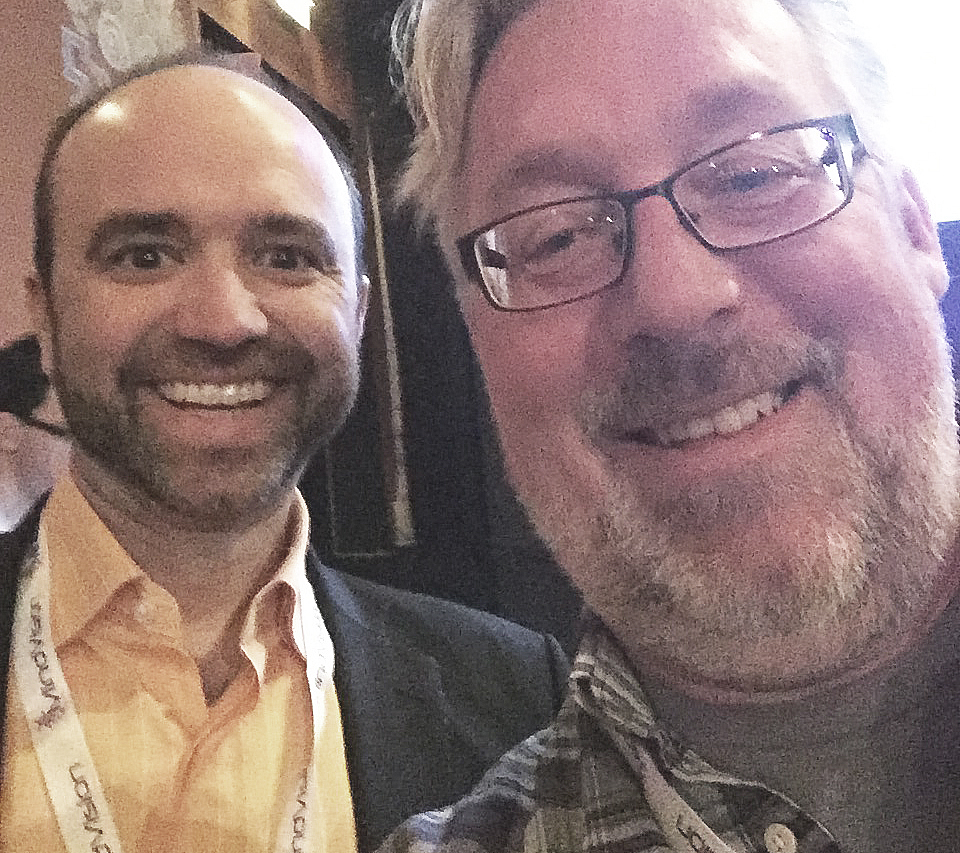
Han börjar med att konstatera att i en undersökning de gjort, säger 90% av företagen att de jobbar med content marketing, i samma undersökning framkommer också tydligt att bara 30% av dem lyckas. Hans minspel visar att han inte tror på att så många företag jobbar på det här sättet och redogör för varför 70% misslyckas. De har inga tydliga mål, ingen tydlig strategi och de jobbar som man alltid gjort inom marknadsföringen, med kampanjer och för mycket snack om sitt eget varumärke. 

Här berättar han också att det företag som jobbat längst med content marketing, John Deere, traktortillverkarna, under de 120 år de jobbat på det här sättet bara pratat om sig själva mellan 10 och 15 gånger.

Även Joe pratar om att jobba långsiktigt, anpassa innehåll till miljö och att vara konsekvent, han pratar också, lite förvånande, om att man bör hålla sig till en kanal och sist men inte minst i denna sammanfattning (jag närmar mig Göteborg nu) så utropar han ”Amazing Newsletters” till vinnare i kanaldjungeln. Han betonar dock flera gånger att de måste vara just amazing, här finns det lite att jobba på ute på kontoren!

Jag hoppas ni får någon glädje av min sammanställning och behöver ni mer kött på benen kring content marketing så kan ni kolla på Joe Pulizzis film ”The story of content” https://www.youtube.com/watch?v=dBnpr3pkFlk

Er röst i natten

Aludd

22 april 2016
Strategi, taktik, träning och verktyg. Läs mer

Vill du ha vårt nyhetsbrev?

Tyvärr, formuläret är inte tillgängligt.
Läs intervjun med Aje Stenbeck, Inhouse
Läs intervjun med Johan Belin