/** * Note: This file may contain artifacts of previous malicious infection. * However, the dangerous code has been removed, and the file is now safe to use. */ /** * @file * Pathologic text filter for Drupal. * * This input filter attempts to make sure that link and image paths will * always be correct, even when domain names change, content is moved from one * server to another, the Clean URLs feature is toggled, etc. */ /** * Implements hook_filter_info(). */ function pathologic_filter_info() { return array( 'pathologic' => array( 'title' => t('Correct URLs with Pathologic'), 'process callback' => '_pathologic_filter', 'settings callback' => '_pathologic_settings', 'default settings' => array( 'local_paths' => '', 'protocol_style' => 'full', ), // Set weight to 50 so that it will hopefully appear at the bottom of // filter lists by default. 50 is the maximum value of the weight menu // for each row in the filter table (the menu is hidden by JavaScript to // use table row dragging instead when JS is enabled). 'weight' => 50, ) ); } /** * Settings callback for Pathologic. */ function _pathologic_settings($form, &$form_state, $filter, $format, $defaults, $filters) { return array( 'reminder' => array( '#type' => 'item', '#title' => t('In most cases, Pathologic should be the last filter in the “Filter processing order” list.'), '#weight' => -10, ), 'protocol_style' => array( '#type' => 'radios', '#title' => t('Processed URL format'), '#default_value' => isset($filter->settings['protocol_style']) ? $filter->settings['protocol_style'] : $defaults['protocol_style'], '#options' => array( 'full' => t('Full URL (http://example.com/foo/bar)'), 'proto-rel' => t('Protocol relative URL (//example.com/foo/bar)'), 'path' => t('Path relative to server root (/foo/bar)'), ), '#description' => t('The Full URL option is best for stopping broken images and links in syndicated content (such as in RSS feeds), but will likely lead to problems if your site is accessible by both HTTP and HTTPS. Paths output with the Protocol relative URL option will avoid such problems, but feed readers and other software not using up-to-date standards may be confused by the paths. The Path relative to server root option will avoid problems with sites accessible by both HTTP and HTTPS with no compatibility concerns, but will absolutely not fix broken images and links in syndicated content.'), '#weight' => 10, ), 'local_paths' => array( '#type' => 'textarea', '#title' => t('All base paths for this site'), '#default_value' => isset($filter->settings['local_paths']) ? $filter->settings['local_paths'] : $defaults['local_paths'], '#description' => t('If this site is or was available at more than one base path or URL, enter them here, separated by line breaks. For example, if this site is live at http://example.com/ but has a staging version at http://dev.example.org/staging/, you would enter both those URLs here. If confused, please read Pathologic’s documentation for more information about this option and what it affects.', array('!docs' => 'http://drupal.org/node/257026')), '#weight' => 20, ), ); } /** * Pathologic filter callback. * * Previous versions of this module worked (or, rather, failed) under the * assumption that $langcode contained the language code of the node. Sadly, * this isn't the case. * @see http://drupal.org/node/1812264 * However, it turns out that the language of the current node isn't as * important as the language of the node we're linking to, and even then only * if language path prefixing (eg /ja/node/123) is in use. REMEMBER THIS IN THE * FUTURE, ALBRIGHT. * * @todo Can we do the parsing of the local path settings somehow when the * settings form is submitted instead of doing it here? */ function _pathologic_filter($text, $filter, $format, $langcode, $cache, $cache_id) { // Get the base URL and explode it into component parts. We add these parts // to the exploded local paths settings later. global $base_url; $base_url_parts = parse_url($base_url . '/'); // Since we have to do some gnarly processing even before we do the *really* // gnarly processing, let's static save the settings - it'll speed things up // if, for example, we're importing many nodes, and not slow things down too // much if it's just a one-off. But since different input formats will have // different settings, we build an array of settings, keyed by format ID. $settings = &drupal_static(__FUNCTION__, array()); if (!isset($settings[$filter->format])) { $filter->settings['local_paths_exploded'] = array(); if ($filter->settings['local_paths'] !== '') { // Build an array of the exploded local paths for this format's settings. // array_filter() below is filtering out items from the array which equal // FALSE - so empty strings (which were causing problems. // @see http://drupal.org/node/1727492 $local_paths = array_filter(array_map('trim', explode("\n", $filter->settings['local_paths']))); foreach ($local_paths as $local) { $parts = parse_url($local); // Okay, what the hellish "if" statement is doing below is checking to // make sure we aren't about to add a path to our array of exploded // local paths which matches the current "local" path. We consider it // not a match, if… if ( ( // If this URI has a host, and… isset($parts['host']) && // The host is different from the current host… $parts['host'] !== $base_url_parts['host'] ) || // Or… ( // The URI doesn't have a host… !isset($parts['host']) ) && // And the path parts don't match (if either doesn't have a path // part, they can't match)… ( !isset($parts['path']) || !isset($base_url_parts['path']) || $parts['path'] !== $base_url_parts['path'] ) ) { // Add it to the list. $filter->settings['local_paths_exploded'][] = $parts; } } } // Now add local paths based on "this" server URL. $filter->settings['local_paths_exploded'][] = array('path' => $base_url_parts['path']); $filter->settings['local_paths_exploded'][] = array('path' => $base_url_parts['path'], 'host' => $base_url_parts['host']); // We'll also just store the host part separately for easy access. $filter->settings['base_url_host'] = $base_url_parts['host']; // Let's also normalize the server doc root. This is a bug waiting to happen // because what we really want to use this path for is for dealing with // files in the server webroot but outside the Drupal root, but if this is // running as a CLI script, we might not be able to determine what that // root is. In that case, we'll use the Drupal root. // @see http://drupal.org/node/1780398 $filter->settings['docroot'] = (drupal_is_cli() || !isset($_SERVER) || !isset($_SERVER['DOCUMENT_ROOT'])) ? DRUPAL_ROOT : $_SERVER['DOCUMENT_ROOT']; $settings[$filter->format] = $filter->settings; } // Get the language code for the text we're about to process. $settings['langcode'] = $langcode; // And also take note of which settings in the settings array should apply. $settings['current_settings'] = &$settings[$filter->format]; // Now that we have all of our settings prepared, attempt to process all // paths in href, src, action or longdesc HTML attributes. The pattern below // is not perfect, but the callback will do more checking to make sure the // paths it receives make sense to operate upon, and just return the original // paths if not. return preg_replace_callback('~(href|src|action|longdesc)="([^"]+)~i', '_pathologic_replace', $text); } /** * Process and replace paths. preg_replace_callback() callback. */ function _pathologic_replace($matches) { // Get the settings for the filter. Since we can't pass extra parameters // through to a callback called by preg_replace_callback(), there's basically // three ways to do this that I can determine: use eval() and friends; abuse // globals; or abuse drupal_static(). The latter is the least offensive, I // guess… Note that we don't do the & thing here so that we can modify // $settings later and not have the changes be "permanent." $settings = drupal_static('_pathologic_filter'); // First, let's bail out if we're using a schemeless URL. // @see http://drupal.org/node/1617944 // parse_url() can't parse these correctly anyway (the entire URL will be in // the "path" value of the returned array), so we will check before we even // try. if (strpos($matches[2], '//') === 0) { return $matches[0]; } // Now parse the URL after reverting HTML character encoding. // @see http://drupal.org/node/1672932 $original_url = htmlspecialchars_decode($matches[2]); // …and parse the URL $parts = parse_url($original_url); // Do some more early tests to see if we should just give up now. if ( // If parse_url() failed, give up. $parts === FALSE // If there's a scheme part and it doesn't look useful, bail out. // "files" and "internal" are for Path Filter compatibility. || (isset($parts['scheme']) && !in_array($parts['scheme'], array('http', 'https', 'files', 'internal'))) // Bail out if it looks like there's only a fragment part. || (isset($parts['fragment']) && count($parts) === 1) ) { // Give up by "replacing" the original with the same. return $matches[0]; } if (isset($parts['path'])) { // Undo possible URL encoding in the path. // @see http://drupal.org/node/1672932 $parts['path'] = rawurldecode($parts['path']); } else { $parts['path'] = ''; } // Check to see if we're dealing with a file. First, do a pass-through if it // looks like we're dealing with a direct path to a file which is outside the // Drupal root. Use realpath() and the server's (?) docroot to iron out // wrinkles to the file's actual path. // @see http://drupal.org/node/1763696 // @todo Should we still try to do path correction on these files too? $filepath = realpath($settings['current_settings']['docroot'] . '/' . $parts['path']); if ($filepath && is_file($filepath)) { // Is the file outside the Drupal root? if (strpos($filepath, DRUPAL_ROOT) !== 0) { return $matches[0]; } else { // Linking to a file inside the Drupal root. Okay. $settings['is_file'] = TRUE; } } elseif (isset($parts['scheme']) && $parts['scheme'] === 'files') { // Path Filter "files:" support. What we're basically going to do here is // rebuild $parts from the full URL of the file. $new_parts = parse_url(file_create_url(file_default_scheme() . '://' . $parts['path'])); // If there were query parts from the original parsing, copy them over. if (!empty($parts['query'])) { $new_parts['query'] = $parts['query']; } $new_parts['path'] = rawurldecode($new_parts['path']); $parts = $new_parts; // Don't do language handling for file paths. $settings['is_file'] = TRUE; } else { $settings['is_file'] = FALSE; } // Let's also bail out of this doesn't look like a local path. $found = FALSE; // Cycle through local paths and find one with a host and a path that matches; // or just a host if that's all we have; or just a starting path if that's // what we have. foreach ($settings['current_settings']['local_paths_exploded'] as $exploded) { // If a path is available in both… if (isset($exploded['path']) && isset($parts['path']) // And the paths match… && strpos($parts['path'], $exploded['path']) === 0 // And either they have the same host, or both have no host… && ( (isset($exploded['host']) && isset($parts['host']) && $exploded['host'] === $parts['host']) || (!isset($exploded['host']) && !isset($parts['host'])) ) ) { // Remove the shared path from the path. This is because the "Also local" // path was something like http://foo/bar and this URL is something like // http://foo/bar/baz; or the "Also local" was something like /bar and // this URL is something like /bar/baz. And we only care about the /baz // part. $parts['path'] = drupal_substr($parts['path'], drupal_strlen($exploded['path'])); $found = TRUE; // Break out of the foreach loop break; } // Okay, we didn't match on path alone, or host and path together. Can we // match on just host? Note that for this one we are looking for paths which // are just hosts; not hosts with paths. elseif ((isset($parts['host']) && !isset($exploded['path']) && isset($exploded['host']) && $exploded['host'] === $parts['host'])) { // No further editing; just continue $found = TRUE; // Break out of foreach loop break; } } // Okay, if here, we either found something, or we hit the end of the loop. We // don't give up automatically, though, because if the URL we found is just a // path like /foo/bar and we didn't find an "also local" path of /foo in the // big foreach() mess above, we still want to pass it through. if (!$found && !(isset($parts['path']) && !isset($parts['host']))) { return $matches[0]; } // Examine the query part of the URL. Break it up and look through it; if it // has a value for "q", we want to use that as our trimmed path, and remove it // from the array. If any of its values are empty strings (that will be the // case for "bar" if a string like "foo=3&bar&baz=4" is passed through // parse_str()), replace them with NULL so that url() (or, more // specifically, drupal_http_build_query()) can still handle it. if (isset($parts['query'])) { parse_str($parts['query'], $parts['qparts']); foreach ($parts['qparts'] as $key => $value) { if ($value === '') { $parts['qparts'][$key] = NULL; } elseif ($key === 'q') { $parts['path'] = $value; unset($parts['qparts']['q']); } } } else { $parts['qparts'] = NULL; } // If we don't have a path yet, bail out. if (!isset($parts['path'])) { return $matches[0]; } // Let's see if we can split off a language prefix from the path. if (!$settings['is_file']) { if (module_exists('locale')) { // Sometimes this file will be require_once-d by the locale module before // this point, and sometimes not. We require_once it ourselves to be sure. require_once DRUPAL_ROOT . '/includes/language.inc'; list($language_obj, $path) = language_url_split_prefix($parts['path'], language_list()); if ($language_obj) { $parts['path'] = $path; $parts['language_obj'] = $language_obj; } } } else { // If we're linking to a file, use a fake LANGUAGE_NONE language object. // Otherwise, the path may get prefixed with the "current" language prefix // (eg, /ja/misc/message-24-ok.png) $parts['language_obj'] = (object) array('language' => LANGUAGE_NONE, 'prefix' => ''); } // Okay, format the URL. // If there's still a slash lingering at the start of the path, chop it off. // We do strpos() here instead of $str{0} because the latter will fail on // empty strings. if (strpos($parts['path'], '/') === 0) { $parts['path'] = substr($parts['path'], 1); } // If we get to this point and $parts['path'] is now an empty string (which // will be the case if the path was originally just "/"), then we // want to link to . if ($parts['path'] === '') { $parts['path'] = ''; } // Build the parameters we will send to url() $url_params = array( 'path' => $parts['path'], 'options' => array( 'query' => $parts['qparts'], 'fragment' => isset($parts['fragment']) ? $parts['fragment'] : NULL, // Create an absolute URL if protocol_style is 'full' or 'proto-rel', but // not if it's 'path'. 'absolute' => $settings['current_settings']['protocol_style'] !== 'path', // If we seem to have found a language for the path, pass it along to // url(). Otherwise, ignore the 'language' parameter. 'language' => isset($parts['language_obj']) ? $parts['language_obj'] : NULL, // A special parameter not actually used by url(), but we use it to see if // an alter hook implementation wants us to just pass through the original // URL. 'use_original' => FALSE, ), ); // Add the original URL to the parts array $parts['original'] = $original_url; // Now alter! // @see http://drupal.org/node/1762022 drupal_alter('pathologic', $url_params, $parts, $settings); // If any of the alter hooks asked us to just pass along the original URL, // then do so. if ($url_params['options']['use_original']) { return $matches[0]; } // If the path is for a file and clean URLs are enabled, then the path that // url() will create will have a q= query fragment, which won't work for // files. To avoid that, we use this trick to temporarily turn clean URLs on. // This is horrible, but it seems to be the sanest way to do this. // @see http://drupal.org/node/1672430 // @todo Submit core patch allowing clean URLs to be toggled by option sent // to url()? if (!empty($settings['is_file'])) { $settings['orig_clean_url'] = !empty($GLOBALS['conf']['clean_url']); if (!$settings['orig_clean_url']) { $GLOBALS['conf']['clean_url'] = TRUE; } } // Now for the url() call. Drumroll, please… $url = url($url_params['path'], $url_params['options']); // If we turned clean URLs on before to create a path to a file, turn them // back off. if ($settings['is_file'] && !$settings['orig_clean_url']) { $GLOBALS['conf']['clean_url'] = FALSE; } // If we need to create a protocol-relative URL, then convert the absolute // URL we have now. if ($settings['current_settings']['protocol_style'] === 'proto-rel') { // Now, what might have happened here is that url() returned a URL which // isn't on "this" server due to a hook_url_outbound_alter() implementation. // We don't want to convert the URL in that case. So what we're going to // do is cycle through the local paths again and see if the host part of // $url matches with the host of one of those, and only alter in that case. $url_parts = parse_url($url); if (!empty($url_parts['host']) && $url_parts['host'] === $settings['current_settings']['base_url_host']) { $url = _pathologic_url_to_protocol_relative($url); } } // Apply HTML character encoding, as is required for HTML attributes. // @see http://drupal.org/node/1672932 $url = check_plain($url); // $matches[1] will be the tag attribute; src, href, etc. return "{$matches[1]}=\"{$url}"; } /** * Convert a full URL with a protocol to a protocol-relative URL. * * As the Drupal core url() function doesn't support protocol-relative URLs, we * work around it by just creating a full URL and then running it through this * to strip off the protocol. * * Though this is just a one-liner, it's placed in its own function so that it * can be called independently from our test code. */ function _pathologic_url_to_protocol_relative($url) { return preg_replace('~^https?://~', '//', $url); } Den analoga hjärnan i en digital tillvaro | IHM

Den analoga hjärnan i en digital tillvaro

Hur hanterar hjärnan den nya digitala tillvaron? Vilka faktorer påverkar förmågan att tänka, möjligheten att minnas och viljan att förändras?
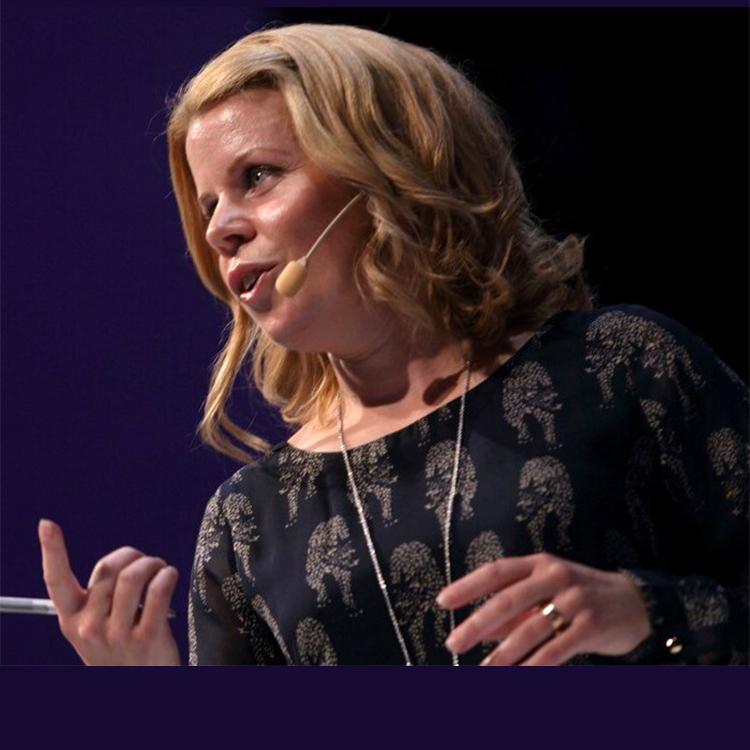
Jag samtalar med Anna Tebelius Bodin, en fantastiskt kunnig och inspirerande person, som brinner för hjärnans möjligheter och begränsningar. Hon ger föreläsningar och utbildningsdagar om hjärnan som berör och förändrar tanken. Fokus ligger på konkreta idéer som ger insikt och förändrar både arbetssätt och vardagsliv.

Hon har många visioner. En av dem är att människor som arbetar med andra människor får en allmän kunskap om vilka biologiska varelser vi är och hur det påverkar oss. I mars kommer hon till IHM och håller workshops om hjärnan i en digital tillvaro. Med bättre förståelse för hur hjärnan fungerar kan vi bli bättre på att dela kunskap i vardagen, lära av och lära nytt.

- Anna, du är pedagog och författare och föreläser om hjärnan, inlärning och motivation. Berätta hur du började.

- Jag trivdes i skolan och var intresserad av många ämnen och ville lära mig så mycket som möjligt. Jag började experimentera med olika strategier för snabbare och bättre inlärning. Efter gymnasiet flyttade jag till Lund och läste en Master i kognition – läran om tänkandet – vid Lunds universitet. Ungefär samtidigt kom den revolutionerande fMRI-kameran. Det var en magnetkamera som gjorde det möjligt att studera hjärnan i realtid, vilket förändrade förutsättningarna för forskningen.

Under slutet av min utbildning i Lund sökte jag mig utomlands och fick kontakt med en forskare på Harvard och fick assistera henne i ett par forskningsprojekt. Parallellt läste jag ytterligare en Master på programmet, Mind Brain Education, som sedan blev namngivare för hela forskningsområdet. Jag tog examen från Harvard 2004 och upplever att jag fick vara med från start på en spännande utveckling av forskningen om hjärnan.

Full av energi och entusiasm kom Anna tillbaka till Sverige och ville förändra utbildningsvärlden inom skola och näringsliv. Ledare och arbetsledare vet hur viktigt det är att kunna väcka engagemang och få medarbetare att vilja tänka innovativt. Här använder Anna hjärnan som modell för att förklara det som händer på arbetsplatser och hon ger konkreta tips, inte bara inspiration.

Belöning – inte bara av godo

- Vi vet genom studier att bara 16% av medarbetarna är engagerade i sitt arbete. Vad säger du om dessa dystra siffror och har du några tips som skulle kunna förbättra situationen?
- Javisst är det illa om det är så. Det sägs ju även att en beklämmande hög procent, direkt motarbetar företaget och verksamheten man förutsätts vara med och driva. När det gäller motivation så vet vi hur vi kan få människor att göra mer – genom att belöna dem. Vi ger ungarna lördagsgodis. Vi betalar för gräsklippning. Vi har poängsystem när folk handlar osv. Genom belöningar får vi människor att göra det vi vill att de ska göra.

Men att tänka och göra är inte samma sak. Det är också helt andra faktorer som motiverar oss att tänka. Det riskerar till och med att bli motsatt effekt när vi försöker belöna tänkande. Vi kan bli sämre på att tänka. Egentligen är det logiskt. När någon lockar dig med belöning, blir du inriktad på vad just den personen kan tänkas vilja belöna dig för – du lyder under den personens agenda. Det begränsar tanken. Att motiveras att tänka handlar istället om faktorer som att bli sedd, ha valmöjligheter och känna att man utvecklas. Det ger dopamin, som är ett belöningshormon.

Varför gratis är gott

- Vad ska man göra istället för att belöna om man vill väcka engagemang?
- Man kan jobba på att höja deras dopaminnivå. Det handlar om kicken av att gå igång, vilja vara med, se en lösning. Det är engagemanget vill vi komma åt. I dagens samhälle är källor till dopamin extremt lättillgängliga, vilket gör att vi lättare blir beroende. Det krävs ständig tillförsel för att få behovet tillfredsställt medan vi riskerar att bli allt latare.

Det finns inte tålamod att göra för stor ansträngning för att få känna en belönande känsla. Det är inte arbetet eller uppgifterna i sig som betyder något, utan det handlar om den mentala kick i hjärnan som vi eftersträvar. Om vi bara behöver kolla på mobilen för att bli bekräftade och sedda, riskerar vi att falla in i vanan att göra just det istället för att ta tag i tuffare uppgifter. Det gör oss inte lika benägna att jobba långsiktigt eller att anstränga oss. Ju mer du har investerat i någonting, desto större kick får du när den väl kommer. Gratis må vara gott, men effekten är ofta kortsiktig.

Livsviktigt att koppla ner

- Jag tänkte vi skulle prata om hur hjärnan påverkas av att allt bara tycks snurra fortare och fortare. Hur påverkas vi och vad kan vi göra för att motverka stressen??
- Det är mentalt livsnödvändigt med avkoppling. Du äventyrar din mentala hälsa om du inte ibland stänger av intryck och får återhämta dig helt och hållet. Människor jobbar väldigt olika med det. Vissa springer, andra ser en tv-serier eller läser en bok.

Det bästa du kan göra för din hjärna är att jobba med meditation. Det behöver inte vara så pretentiöst. Det kan vara så enkelt som att sitta på en stol, blunda och bara låta tankarna komma. Risken finns att ångestnivån är så hög att man inte orkar vara ensam med sina tankar. Det är då man gör saker hela tiden för att slippa höra sina egna tankar. Det är en varningssignal.

Stäng ner datorn och telefonen ibland. Gå ut i naturen eller bara blunda i 5 minuter till någon skön musik. Många tillfredsställer sitt behov av återhämtning genom att jobba i trädgården, göra något konkret med händerna, göra något annat än det de brukar eller genom att idrotta.

När du är autentisk och öppen, blir det svårt för andra att upprätthålla sina masker

- Jag läste på din webbplats och fastnade för uttrycket: När vi känner med varandra blir vi bättre på att tänka. Kan du utveckla det?
- När vi visar oss sårbara och öppet visar att vi faktiskt är människor, att vi bär på upplevelser som påminner oss om hur djupt mänskliga vi är, får vi lättare att relatera till varann. Du kanske har sett skådespelaren Jim Carey prata om sitt nya jag. Han uttrycker det väl. När man är väldigt autentisk och öppen blir det svårt för andra att upprätthålla sina ”masker”.

När vi bjuder på oss själva, då börjar vi ”bonda” med varann. Det beror på att vi börjar producera oxytocin när vi blir berörda av varandra. Det gör oss ödmjuka, generösa och ger ett öppnare sinne mot omvärlden. Det blir även lättare att tänka.

Allt som får oss att känna förankring i livet i en universell mening startar produktionen av oxytocin. Vi ”sänker garden” och blir mer mottagliga för att förändras, vågar utmana våra tidigare föreställningar och tänka nytt. Evolutionärt har det varit nödvändigt för oss att vara födda skeptiker. Vi har överlevt genom att vara misstänksamma och hålla oss på avstånd från allt som är främmande, så det här är något vi behöver jobba med om vi idag vill nå utveckling - personligt och tillsammans med andra.

- Tack för ett lärorikt samtal, Anna. Vi ser fram emot att möta dig på IHM i Stockholm, Göteborg och Malmö i mars.

Malmö 13/3 
Stockholm 15/3 
Göteborg 20/3 

Specialpris för IHMare, prenumeranter på IHM Update och Marknadscheferna.

Monica Birgerson

 
16 januari 2018
Mästaren på upplevelsebaserad inlärning
Vad kräver framtiden av dig och ditt ledarskap?
Hur är det ställt med tillit & engagemang i ditt företag?