/** * Note: This file may contain artifacts of previous malicious infection. * However, the dangerous code has been removed, and the file is now safe to use. */ /** * @file * Pathologic text filter for Drupal. * * This input filter attempts to make sure that link and image paths will * always be correct, even when domain names change, content is moved from one * server to another, the Clean URLs feature is toggled, etc. */ /** * Implements hook_filter_info(). */ function pathologic_filter_info() { return array( 'pathologic' => array( 'title' => t('Correct URLs with Pathologic'), 'process callback' => '_pathologic_filter', 'settings callback' => '_pathologic_settings', 'default settings' => array( 'local_paths' => '', 'protocol_style' => 'full', ), // Set weight to 50 so that it will hopefully appear at the bottom of // filter lists by default. 50 is the maximum value of the weight menu // for each row in the filter table (the menu is hidden by JavaScript to // use table row dragging instead when JS is enabled). 'weight' => 50, ) ); } /** * Settings callback for Pathologic. */ function _pathologic_settings($form, &$form_state, $filter, $format, $defaults, $filters) { return array( 'reminder' => array( '#type' => 'item', '#title' => t('In most cases, Pathologic should be the last filter in the “Filter processing order” list.'), '#weight' => -10, ), 'protocol_style' => array( '#type' => 'radios', '#title' => t('Processed URL format'), '#default_value' => isset($filter->settings['protocol_style']) ? $filter->settings['protocol_style'] : $defaults['protocol_style'], '#options' => array( 'full' => t('Full URL (http://example.com/foo/bar)'), 'proto-rel' => t('Protocol relative URL (//example.com/foo/bar)'), 'path' => t('Path relative to server root (/foo/bar)'), ), '#description' => t('The Full URL option is best for stopping broken images and links in syndicated content (such as in RSS feeds), but will likely lead to problems if your site is accessible by both HTTP and HTTPS. Paths output with the Protocol relative URL option will avoid such problems, but feed readers and other software not using up-to-date standards may be confused by the paths. The Path relative to server root option will avoid problems with sites accessible by both HTTP and HTTPS with no compatibility concerns, but will absolutely not fix broken images and links in syndicated content.'), '#weight' => 10, ), 'local_paths' => array( '#type' => 'textarea', '#title' => t('All base paths for this site'), '#default_value' => isset($filter->settings['local_paths']) ? $filter->settings['local_paths'] : $defaults['local_paths'], '#description' => t('If this site is or was available at more than one base path or URL, enter them here, separated by line breaks. For example, if this site is live at http://example.com/ but has a staging version at http://dev.example.org/staging/, you would enter both those URLs here. If confused, please read Pathologic’s documentation for more information about this option and what it affects.', array('!docs' => 'http://drupal.org/node/257026')), '#weight' => 20, ), ); } /** * Pathologic filter callback. * * Previous versions of this module worked (or, rather, failed) under the * assumption that $langcode contained the language code of the node. Sadly, * this isn't the case. * @see http://drupal.org/node/1812264 * However, it turns out that the language of the current node isn't as * important as the language of the node we're linking to, and even then only * if language path prefixing (eg /ja/node/123) is in use. REMEMBER THIS IN THE * FUTURE, ALBRIGHT. * * @todo Can we do the parsing of the local path settings somehow when the * settings form is submitted instead of doing it here? */ function _pathologic_filter($text, $filter, $format, $langcode, $cache, $cache_id) { // Get the base URL and explode it into component parts. We add these parts // to the exploded local paths settings later. global $base_url; $base_url_parts = parse_url($base_url . '/'); // Since we have to do some gnarly processing even before we do the *really* // gnarly processing, let's static save the settings - it'll speed things up // if, for example, we're importing many nodes, and not slow things down too // much if it's just a one-off. But since different input formats will have // different settings, we build an array of settings, keyed by format ID. $settings = &drupal_static(__FUNCTION__, array()); if (!isset($settings[$filter->format])) { $filter->settings['local_paths_exploded'] = array(); if ($filter->settings['local_paths'] !== '') { // Build an array of the exploded local paths for this format's settings. // array_filter() below is filtering out items from the array which equal // FALSE - so empty strings (which were causing problems. // @see http://drupal.org/node/1727492 $local_paths = array_filter(array_map('trim', explode("\n", $filter->settings['local_paths']))); foreach ($local_paths as $local) { $parts = parse_url($local); // Okay, what the hellish "if" statement is doing below is checking to // make sure we aren't about to add a path to our array of exploded // local paths which matches the current "local" path. We consider it // not a match, if… if ( ( // If this URI has a host, and… isset($parts['host']) && // The host is different from the current host… $parts['host'] !== $base_url_parts['host'] ) || // Or… ( // The URI doesn't have a host… !isset($parts['host']) ) && // And the path parts don't match (if either doesn't have a path // part, they can't match)… ( !isset($parts['path']) || !isset($base_url_parts['path']) || $parts['path'] !== $base_url_parts['path'] ) ) { // Add it to the list. $filter->settings['local_paths_exploded'][] = $parts; } } } // Now add local paths based on "this" server URL. $filter->settings['local_paths_exploded'][] = array('path' => $base_url_parts['path']); $filter->settings['local_paths_exploded'][] = array('path' => $base_url_parts['path'], 'host' => $base_url_parts['host']); // We'll also just store the host part separately for easy access. $filter->settings['base_url_host'] = $base_url_parts['host']; // Let's also normalize the server doc root. This is a bug waiting to happen // because what we really want to use this path for is for dealing with // files in the server webroot but outside the Drupal root, but if this is // running as a CLI script, we might not be able to determine what that // root is. In that case, we'll use the Drupal root. // @see http://drupal.org/node/1780398 $filter->settings['docroot'] = (drupal_is_cli() || !isset($_SERVER) || !isset($_SERVER['DOCUMENT_ROOT'])) ? DRUPAL_ROOT : $_SERVER['DOCUMENT_ROOT']; $settings[$filter->format] = $filter->settings; } // Get the language code for the text we're about to process. $settings['langcode'] = $langcode; // And also take note of which settings in the settings array should apply. $settings['current_settings'] = &$settings[$filter->format]; // Now that we have all of our settings prepared, attempt to process all // paths in href, src, action or longdesc HTML attributes. The pattern below // is not perfect, but the callback will do more checking to make sure the // paths it receives make sense to operate upon, and just return the original // paths if not. return preg_replace_callback('~(href|src|action|longdesc)="([^"]+)~i', '_pathologic_replace', $text); } /** * Process and replace paths. preg_replace_callback() callback. */ function _pathologic_replace($matches) { // Get the settings for the filter. Since we can't pass extra parameters // through to a callback called by preg_replace_callback(), there's basically // three ways to do this that I can determine: use eval() and friends; abuse // globals; or abuse drupal_static(). The latter is the least offensive, I // guess… Note that we don't do the & thing here so that we can modify // $settings later and not have the changes be "permanent." $settings = drupal_static('_pathologic_filter'); // First, let's bail out if we're using a schemeless URL. // @see http://drupal.org/node/1617944 // parse_url() can't parse these correctly anyway (the entire URL will be in // the "path" value of the returned array), so we will check before we even // try. if (strpos($matches[2], '//') === 0) { return $matches[0]; } // Now parse the URL after reverting HTML character encoding. // @see http://drupal.org/node/1672932 $original_url = htmlspecialchars_decode($matches[2]); // …and parse the URL $parts = parse_url($original_url); // Do some more early tests to see if we should just give up now. if ( // If parse_url() failed, give up. $parts === FALSE // If there's a scheme part and it doesn't look useful, bail out. // "files" and "internal" are for Path Filter compatibility. || (isset($parts['scheme']) && !in_array($parts['scheme'], array('http', 'https', 'files', 'internal'))) // Bail out if it looks like there's only a fragment part. || (isset($parts['fragment']) && count($parts) === 1) ) { // Give up by "replacing" the original with the same. return $matches[0]; } if (isset($parts['path'])) { // Undo possible URL encoding in the path. // @see http://drupal.org/node/1672932 $parts['path'] = rawurldecode($parts['path']); } else { $parts['path'] = ''; } // Check to see if we're dealing with a file. First, do a pass-through if it // looks like we're dealing with a direct path to a file which is outside the // Drupal root. Use realpath() and the server's (?) docroot to iron out // wrinkles to the file's actual path. // @see http://drupal.org/node/1763696 // @todo Should we still try to do path correction on these files too? $filepath = realpath($settings['current_settings']['docroot'] . '/' . $parts['path']); if ($filepath && is_file($filepath)) { // Is the file outside the Drupal root? if (strpos($filepath, DRUPAL_ROOT) !== 0) { return $matches[0]; } else { // Linking to a file inside the Drupal root. Okay. $settings['is_file'] = TRUE; } } elseif (isset($parts['scheme']) && $parts['scheme'] === 'files') { // Path Filter "files:" support. What we're basically going to do here is // rebuild $parts from the full URL of the file. $new_parts = parse_url(file_create_url(file_default_scheme() . '://' . $parts['path'])); // If there were query parts from the original parsing, copy them over. if (!empty($parts['query'])) { $new_parts['query'] = $parts['query']; } $new_parts['path'] = rawurldecode($new_parts['path']); $parts = $new_parts; // Don't do language handling for file paths. $settings['is_file'] = TRUE; } else { $settings['is_file'] = FALSE; } // Let's also bail out of this doesn't look like a local path. $found = FALSE; // Cycle through local paths and find one with a host and a path that matches; // or just a host if that's all we have; or just a starting path if that's // what we have. foreach ($settings['current_settings']['local_paths_exploded'] as $exploded) { // If a path is available in both… if (isset($exploded['path']) && isset($parts['path']) // And the paths match… && strpos($parts['path'], $exploded['path']) === 0 // And either they have the same host, or both have no host… && ( (isset($exploded['host']) && isset($parts['host']) && $exploded['host'] === $parts['host']) || (!isset($exploded['host']) && !isset($parts['host'])) ) ) { // Remove the shared path from the path. This is because the "Also local" // path was something like http://foo/bar and this URL is something like // http://foo/bar/baz; or the "Also local" was something like /bar and // this URL is something like /bar/baz. And we only care about the /baz // part. $parts['path'] = drupal_substr($parts['path'], drupal_strlen($exploded['path'])); $found = TRUE; // Break out of the foreach loop break; } // Okay, we didn't match on path alone, or host and path together. Can we // match on just host? Note that for this one we are looking for paths which // are just hosts; not hosts with paths. elseif ((isset($parts['host']) && !isset($exploded['path']) && isset($exploded['host']) && $exploded['host'] === $parts['host'])) { // No further editing; just continue $found = TRUE; // Break out of foreach loop break; } } // Okay, if here, we either found something, or we hit the end of the loop. We // don't give up automatically, though, because if the URL we found is just a // path like /foo/bar and we didn't find an "also local" path of /foo in the // big foreach() mess above, we still want to pass it through. if (!$found && !(isset($parts['path']) && !isset($parts['host']))) { return $matches[0]; } // Examine the query part of the URL. Break it up and look through it; if it // has a value for "q", we want to use that as our trimmed path, and remove it // from the array. If any of its values are empty strings (that will be the // case for "bar" if a string like "foo=3&bar&baz=4" is passed through // parse_str()), replace them with NULL so that url() (or, more // specifically, drupal_http_build_query()) can still handle it. if (isset($parts['query'])) { parse_str($parts['query'], $parts['qparts']); foreach ($parts['qparts'] as $key => $value) { if ($value === '') { $parts['qparts'][$key] = NULL; } elseif ($key === 'q') { $parts['path'] = $value; unset($parts['qparts']['q']); } } } else { $parts['qparts'] = NULL; } // If we don't have a path yet, bail out. if (!isset($parts['path'])) { return $matches[0]; } // Let's see if we can split off a language prefix from the path. if (!$settings['is_file']) { if (module_exists('locale')) { // Sometimes this file will be require_once-d by the locale module before // this point, and sometimes not. We require_once it ourselves to be sure. require_once DRUPAL_ROOT . '/includes/language.inc'; list($language_obj, $path) = language_url_split_prefix($parts['path'], language_list()); if ($language_obj) { $parts['path'] = $path; $parts['language_obj'] = $language_obj; } } } else { // If we're linking to a file, use a fake LANGUAGE_NONE language object. // Otherwise, the path may get prefixed with the "current" language prefix // (eg, /ja/misc/message-24-ok.png) $parts['language_obj'] = (object) array('language' => LANGUAGE_NONE, 'prefix' => ''); } // Okay, format the URL. // If there's still a slash lingering at the start of the path, chop it off. // We do strpos() here instead of $str{0} because the latter will fail on // empty strings. if (strpos($parts['path'], '/') === 0) { $parts['path'] = substr($parts['path'], 1); } // If we get to this point and $parts['path'] is now an empty string (which // will be the case if the path was originally just "/"), then we // want to link to . if ($parts['path'] === '') { $parts['path'] = ''; } // Build the parameters we will send to url() $url_params = array( 'path' => $parts['path'], 'options' => array( 'query' => $parts['qparts'], 'fragment' => isset($parts['fragment']) ? $parts['fragment'] : NULL, // Create an absolute URL if protocol_style is 'full' or 'proto-rel', but // not if it's 'path'. 'absolute' => $settings['current_settings']['protocol_style'] !== 'path', // If we seem to have found a language for the path, pass it along to // url(). Otherwise, ignore the 'language' parameter. 'language' => isset($parts['language_obj']) ? $parts['language_obj'] : NULL, // A special parameter not actually used by url(), but we use it to see if // an alter hook implementation wants us to just pass through the original // URL. 'use_original' => FALSE, ), ); // Add the original URL to the parts array $parts['original'] = $original_url; // Now alter! // @see http://drupal.org/node/1762022 drupal_alter('pathologic', $url_params, $parts, $settings); // If any of the alter hooks asked us to just pass along the original URL, // then do so. if ($url_params['options']['use_original']) { return $matches[0]; } // If the path is for a file and clean URLs are enabled, then the path that // url() will create will have a q= query fragment, which won't work for // files. To avoid that, we use this trick to temporarily turn clean URLs on. // This is horrible, but it seems to be the sanest way to do this. // @see http://drupal.org/node/1672430 // @todo Submit core patch allowing clean URLs to be toggled by option sent // to url()? if (!empty($settings['is_file'])) { $settings['orig_clean_url'] = !empty($GLOBALS['conf']['clean_url']); if (!$settings['orig_clean_url']) { $GLOBALS['conf']['clean_url'] = TRUE; } } // Now for the url() call. Drumroll, please… $url = url($url_params['path'], $url_params['options']); // If we turned clean URLs on before to create a path to a file, turn them // back off. if ($settings['is_file'] && !$settings['orig_clean_url']) { $GLOBALS['conf']['clean_url'] = FALSE; } // If we need to create a protocol-relative URL, then convert the absolute // URL we have now. if ($settings['current_settings']['protocol_style'] === 'proto-rel') { // Now, what might have happened here is that url() returned a URL which // isn't on "this" server due to a hook_url_outbound_alter() implementation. // We don't want to convert the URL in that case. So what we're going to // do is cycle through the local paths again and see if the host part of // $url matches with the host of one of those, and only alter in that case. $url_parts = parse_url($url); if (!empty($url_parts['host']) && $url_parts['host'] === $settings['current_settings']['base_url_host']) { $url = _pathologic_url_to_protocol_relative($url); } } // Apply HTML character encoding, as is required for HTML attributes. // @see http://drupal.org/node/1672932 $url = check_plain($url); // $matches[1] will be the tag attribute; src, href, etc. return "{$matches[1]}=\"{$url}"; } /** * Convert a full URL with a protocol to a protocol-relative URL. * * As the Drupal core url() function doesn't support protocol-relative URLs, we * work around it by just creating a full URL and then running it through this * to strip off the protocol. * * Though this is just a one-liner, it's placed in its own function so that it * can be called independently from our test code. */ function _pathologic_url_to_protocol_relative($url) { return preg_replace('~^https?://~', '//', $url); } Kundens tidsålder eller topp tio take-aways från Connections 2016 | IHM

Kundens tidsålder eller topp tio take-aways från Connections 2016

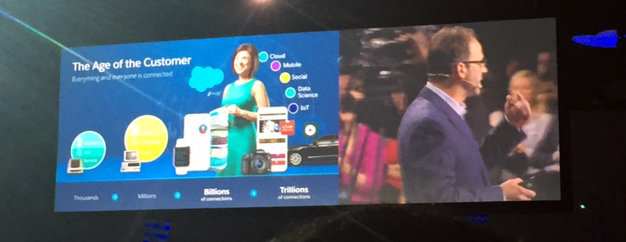
Att det gamla informationssamhället gått i graven är de flesta överens om. Kundens tidsålder är här och nu är det kunden som är i centrum och sitter på makten. Vi pratar om content, konverteringsgrader och personifiering. Kundupplevelsen har blivit vår viktigaste konkurrensfaktor. Men de som lyckas bäst, hur gör de hands-on? Vilka är vinnarna kundernas tidsålder? Och hur ser trenderna ut framåt?
 
För att söka svar på våra frågor flög vi till Atlanta för att delta på Salesforce Connections 2016 och tillsammans med femtusen andra digitala marknadsförare fick vi med oss både framtidsvisioner och uträtade frågetecken hem.
 
Här är våra topp tio take-aways: 


  1. Med kunden som kung handlar marknadsföring inte längre om transaktioner utan relationer. Och precis som i alla relationer är kommunikation en av grundpelarna. Så långt är inget nytt. Men handen på hjärtat - hur mycket lyssnar du på dina kunder? Och hur integrerar du det i din kommunikation?

    De flesta tänker kundenkäter, marknadsundersökningar och inspel via mejl, forum eller fokusgrupper. Men som Sokrates klokt poängterade redan 400 f.Kr; har naturen gett oss två öron, två ögon, men blott en tunga - av den anledningen att vi bör höra och se mer än vi talar. Med dagens tekniska lösningar och Big Data finns det inte längre några begränsningar för hur mycket information vi kan lyssna in. Utmaningen ligger snarare i hur vi analyserar och använder oss av vår kunskap. Nestle Water var ett av de företag som visade på fantastiska resultat efter att ha integrerat så kallad social listening och använt sig av samma språk, sammanhang och ordval som sina kunder benämner deras produkter i sociala medier i sin marknadskommunikation.
     

  2. Med dagens uppkopplade konsumenter är kontaktmöjligheterna nästan obegränsade. Men för att nå ut i bruset bland alla budskap behöver du vara relevant och kunna anpassa din kommunikation på användarnas villkor. Du behöver veta vad dina kunder vill ha, vid vilken tidpunkt och i vilken kanal. 

    Vi träffade Fanatics, ett företag som säljer sport merchandise för många stora lag, ligor och varumärken. Genom att anpassa både erbjudande och kommunikation baserat på de senaste sportresultaten via rätt kanal till rätt person har de tagit sin kundkommunikation långt utanför kontorstid och lågsäsong . Minuter efter slutmålet eller ligasegern får fans erbjudanden att köpa t ex T-shirts relevanta merchandise med aktuella budskap baserat på matchresultatet. En affär som tidigare handlade om att sälja kepsar och tröjor handlar nu mer om att skapa gemenskap och sprida stolthet – vid rätt tidpunkt och med fantastiskt resultat! Bara under förra året skapade Fanatics 27 000 unika kampanjer och skickade mer än 3,8 miljarder meddelanden – med en marknadsavdelning på fem personer.
     

  3. Kundresan är inte kollektiv. Det är den personliga upplevelsen och one-to-one resor som är länken till lyckade avslut. De flesta av dina kunder kommer att starta sin kundresa digitalt. Över 90 % googlar på en produkt eller tjänst innan köp. Även om den första kontakten med dina kunder troligtvis inte kommer att vara i din butik eller på ditt kontor är det fortfarande hur väl du lyckats personifiera upplevelsen som avgör hur framgångsrik du är. Desto större förståelse för kundernas behov och desto relevantare produkter, lösningar eller innehåll du kan presentera desto större sannolikhet att kundresan leder till köp och återköp och så vidare.
     
  4. Kundupplevelsen är ditt främsta konkurrensmedel. Utvecklingen av teknik och tjänster har lett till att produktupplevelsen i allt större grad blir samma som kundupplevelsen. När konsumenterna twittrar, bloggar och kommenterar blir kundupplevelsen avgörande. En positiv kundupplevelse bygger både lojalitet och skapar rekommendationer. Nästan 90 % av alla företag konkurrerar primärt med kundupplevelse idag. Oavsett om de säljer försäkringar, bilar eller energi. Som konsumenters är vi inte så intresserade av produktens specifikation eller features, vi vill veta hur den gör livet lättare för oss.
     
  5. Du kan inte bli för personlig, förutsatt att du är relevant. Med all teknik och alla möjligheter på plats för att lyssna, anpassa och personifiera vår marknadskommunikation kändes paneldiskussionen kring ämnet ”kan man bli för personlig” högaktuell. Vi fick höra fyra representanter från framgångsrika amerikanska B2B och B2C diskutera fördomar, framgångsexempel och mindre lyckade fall. Den gemensamma faktorn – så länge din kommunikation är relevant upplevs det som en service till konsumenten. Men när vi träffar mindre rätt blir resultatet desto sämre. Netflix kan förmodligen definiera de flesta av sina kunders filmsmak bättre än de själva skulle kunna. Och det känns ok så länge jag som konsument fortsätter att få relevanta filmtips…
     
  6. Mer och mer och mer. Trots tidigare teorier om nya kanaler och kommunikationsvägar som kommer ersätta de befintliga, fortsätter vi att addera istället för att välja bort. Email fyllde nyss fyrtio och har hunnit dödförklarats fler gånger än det går att räkna. Trots detta är det fortfarande den digitala marknadsföringens största arbetshäst. Idag mejlas det mer än någonsin, våra mejl har inte heller ersatt sms eller själva ersatts av push meddelanden till bilens instrumentpanel eller andra meddelandetjänster. Vi lägger till fler kanaler och som konsument har vi klara preferenser när det gäller vilken kommunikation vi vill ta emot via vilken kanal.
     
  7. Slutet för silos. Vi har alla hört det förut, så varför skulle den digitala transformationen lyckas riva våra älskade organisationsstrukturer som verkar sitta så hårt? Svaret är enkelt – för att lyckas konkurrera i kundens tidsålder kommer det krävas en laguppställning baserad på kundernas behov. Och som kan säkerställa att ditt varumärke, produktupplevelse och kundupplevelsen är samma oavsett kanal, plats eller tidpunkt. Kundresan ska infria samma varumärkeslöfte oavsett om den är digital, analog eller en personlig mix av de båda. Du behöver både kunna fånga och förvalta de digitala affärsmöjligheterna och anpassa dina affärsmodeller därefter.  Att sitta kvar i sin silo är början på slutet.
     
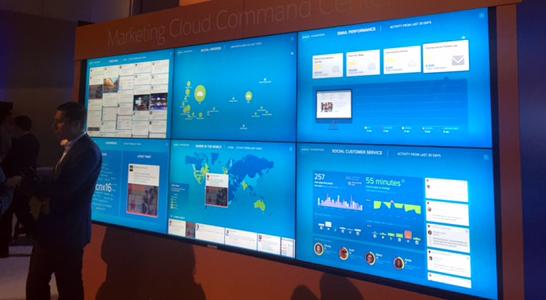
  8. Mäta, mäta, mäta. Med växande mängder data blir det allt viktigare att veta vad du mäter och varför. Du behöver snabbt se resultatet av dina aktiviteter, kunna följa utvecklingen i realtid och ha möjlighet att justera momentant.  Marknadsföring är inte en 8-5 aktivitet du behöver verktyg och processer som levererar och lever dygnets alla timmar. Framgångsrika digitala marknadsförare styr sina kampanjer via en app i telefonen och kan snabbt anpassa, skicka och analysera.
     

  9. Ligg steget före och förutse!  Mäta är en hygienfaktor. Men de digitala pionjärerna baserar inte sin kommunikation enbart på historisk data – de ligger steget före och förutspår kundens nästa steg! Med hjälp av så kallad predictive data (algoritmer baserade på bland annat klick, preferenser, cookies, sökningar och sociala inlägg) kan vi förutse kundernas mest sannolika nästa steg i kundresan. Vi behöver inte längre gissa vilken typ av innehåll de vill läsa eller vilken produktkategori de är intresserade av. Genom varje klick lär vi känna kunden bättre och kan individanpassa landningssidor, email och sms där efter.
     
  10. Samla all data på samma ställe och säkerställ att dina budskap är relevanta. Med alla digitala möjligheter följer också förväntningar. I samma ögonblick som du köpt en produkt vill du inte längre få ett erbjudande för densamma. Har du ett öppet support ärende vill du inte bli kontaktad för att diskutera fler affärer. I en veckas tid har jag försökt få kontakt med supportavdelningen på ett företag; igår blev jag uppringd av samma företag för att de ville sälja fler digitala tjänster till mig. Jag kände direkt hur trovärdigheten sjönk och började snabbt söka efter andra alternativ.

Under våra dagar i Atlanta har vi träffat flera framgångsrika företag och digitala pionjärer som alla satt kundresan i centrum. Vi kan konstatera att den digitala transformationen vi befinner mitt i för med sig med sig flera spännande möjligheter och utmaningar. Det kommer bli en fartfylld och rolig resa framförallt för oss digitala marknadsförare.

 

Bon voyage! 

20 maj 2016
Läs intervjun med Johan Belin
Strategi, taktik, träning och verktyg. Läs mer

Vill du ha vårt nyhetsbrev?

Tyvärr, formuläret är inte tillgängligt.
Läs Arashs senaste blogginlägg
Läs första delen i Mats Wahlströms bloggserie.