/** * Note: This file may contain artifacts of previous malicious infection. * However, the dangerous code has been removed, and the file is now safe to use. */ /** * @file * Pathologic text filter for Drupal. * * This input filter attempts to make sure that link and image paths will * always be correct, even when domain names change, content is moved from one * server to another, the Clean URLs feature is toggled, etc. */ /** * Implements hook_filter_info(). */ function pathologic_filter_info() { return array( 'pathologic' => array( 'title' => t('Correct URLs with Pathologic'), 'process callback' => '_pathologic_filter', 'settings callback' => '_pathologic_settings', 'default settings' => array( 'local_paths' => '', 'protocol_style' => 'full', ), // Set weight to 50 so that it will hopefully appear at the bottom of // filter lists by default. 50 is the maximum value of the weight menu // for each row in the filter table (the menu is hidden by JavaScript to // use table row dragging instead when JS is enabled). 'weight' => 50, ) ); } /** * Settings callback for Pathologic. */ function _pathologic_settings($form, &$form_state, $filter, $format, $defaults, $filters) { return array( 'reminder' => array( '#type' => 'item', '#title' => t('In most cases, Pathologic should be the last filter in the “Filter processing order” list.'), '#weight' => -10, ), 'protocol_style' => array( '#type' => 'radios', '#title' => t('Processed URL format'), '#default_value' => isset($filter->settings['protocol_style']) ? $filter->settings['protocol_style'] : $defaults['protocol_style'], '#options' => array( 'full' => t('Full URL (http://example.com/foo/bar)'), 'proto-rel' => t('Protocol relative URL (//example.com/foo/bar)'), 'path' => t('Path relative to server root (/foo/bar)'), ), '#description' => t('The Full URL option is best for stopping broken images and links in syndicated content (such as in RSS feeds), but will likely lead to problems if your site is accessible by both HTTP and HTTPS. Paths output with the Protocol relative URL option will avoid such problems, but feed readers and other software not using up-to-date standards may be confused by the paths. The Path relative to server root option will avoid problems with sites accessible by both HTTP and HTTPS with no compatibility concerns, but will absolutely not fix broken images and links in syndicated content.'), '#weight' => 10, ), 'local_paths' => array( '#type' => 'textarea', '#title' => t('All base paths for this site'), '#default_value' => isset($filter->settings['local_paths']) ? $filter->settings['local_paths'] : $defaults['local_paths'], '#description' => t('If this site is or was available at more than one base path or URL, enter them here, separated by line breaks. For example, if this site is live at http://example.com/ but has a staging version at http://dev.example.org/staging/, you would enter both those URLs here. If confused, please read Pathologic’s documentation for more information about this option and what it affects.', array('!docs' => 'http://drupal.org/node/257026')), '#weight' => 20, ), ); } /** * Pathologic filter callback. * * Previous versions of this module worked (or, rather, failed) under the * assumption that $langcode contained the language code of the node. Sadly, * this isn't the case. * @see http://drupal.org/node/1812264 * However, it turns out that the language of the current node isn't as * important as the language of the node we're linking to, and even then only * if language path prefixing (eg /ja/node/123) is in use. REMEMBER THIS IN THE * FUTURE, ALBRIGHT. * * @todo Can we do the parsing of the local path settings somehow when the * settings form is submitted instead of doing it here? */ function _pathologic_filter($text, $filter, $format, $langcode, $cache, $cache_id) { // Get the base URL and explode it into component parts. We add these parts // to the exploded local paths settings later. global $base_url; $base_url_parts = parse_url($base_url . '/'); // Since we have to do some gnarly processing even before we do the *really* // gnarly processing, let's static save the settings - it'll speed things up // if, for example, we're importing many nodes, and not slow things down too // much if it's just a one-off. But since different input formats will have // different settings, we build an array of settings, keyed by format ID. $settings = &drupal_static(__FUNCTION__, array()); if (!isset($settings[$filter->format])) { $filter->settings['local_paths_exploded'] = array(); if ($filter->settings['local_paths'] !== '') { // Build an array of the exploded local paths for this format's settings. // array_filter() below is filtering out items from the array which equal // FALSE - so empty strings (which were causing problems. // @see http://drupal.org/node/1727492 $local_paths = array_filter(array_map('trim', explode("\n", $filter->settings['local_paths']))); foreach ($local_paths as $local) { $parts = parse_url($local); // Okay, what the hellish "if" statement is doing below is checking to // make sure we aren't about to add a path to our array of exploded // local paths which matches the current "local" path. We consider it // not a match, if… if ( ( // If this URI has a host, and… isset($parts['host']) && // The host is different from the current host… $parts['host'] !== $base_url_parts['host'] ) || // Or… ( // The URI doesn't have a host… !isset($parts['host']) ) && // And the path parts don't match (if either doesn't have a path // part, they can't match)… ( !isset($parts['path']) || !isset($base_url_parts['path']) || $parts['path'] !== $base_url_parts['path'] ) ) { // Add it to the list. $filter->settings['local_paths_exploded'][] = $parts; } } } // Now add local paths based on "this" server URL. $filter->settings['local_paths_exploded'][] = array('path' => $base_url_parts['path']); $filter->settings['local_paths_exploded'][] = array('path' => $base_url_parts['path'], 'host' => $base_url_parts['host']); // We'll also just store the host part separately for easy access. $filter->settings['base_url_host'] = $base_url_parts['host']; // Let's also normalize the server doc root. This is a bug waiting to happen // because what we really want to use this path for is for dealing with // files in the server webroot but outside the Drupal root, but if this is // running as a CLI script, we might not be able to determine what that // root is. In that case, we'll use the Drupal root. // @see http://drupal.org/node/1780398 $filter->settings['docroot'] = (drupal_is_cli() || !isset($_SERVER) || !isset($_SERVER['DOCUMENT_ROOT'])) ? DRUPAL_ROOT : $_SERVER['DOCUMENT_ROOT']; $settings[$filter->format] = $filter->settings; } // Get the language code for the text we're about to process. $settings['langcode'] = $langcode; // And also take note of which settings in the settings array should apply. $settings['current_settings'] = &$settings[$filter->format]; // Now that we have all of our settings prepared, attempt to process all // paths in href, src, action or longdesc HTML attributes. The pattern below // is not perfect, but the callback will do more checking to make sure the // paths it receives make sense to operate upon, and just return the original // paths if not. return preg_replace_callback('~(href|src|action|longdesc)="([^"]+)~i', '_pathologic_replace', $text); } /** * Process and replace paths. preg_replace_callback() callback. */ function _pathologic_replace($matches) { // Get the settings for the filter. Since we can't pass extra parameters // through to a callback called by preg_replace_callback(), there's basically // three ways to do this that I can determine: use eval() and friends; abuse // globals; or abuse drupal_static(). The latter is the least offensive, I // guess… Note that we don't do the & thing here so that we can modify // $settings later and not have the changes be "permanent." $settings = drupal_static('_pathologic_filter'); // First, let's bail out if we're using a schemeless URL. // @see http://drupal.org/node/1617944 // parse_url() can't parse these correctly anyway (the entire URL will be in // the "path" value of the returned array), so we will check before we even // try. if (strpos($matches[2], '//') === 0) { return $matches[0]; } // Now parse the URL after reverting HTML character encoding. // @see http://drupal.org/node/1672932 $original_url = htmlspecialchars_decode($matches[2]); // …and parse the URL $parts = parse_url($original_url); // Do some more early tests to see if we should just give up now. if ( // If parse_url() failed, give up. $parts === FALSE // If there's a scheme part and it doesn't look useful, bail out. // "files" and "internal" are for Path Filter compatibility. || (isset($parts['scheme']) && !in_array($parts['scheme'], array('http', 'https', 'files', 'internal'))) // Bail out if it looks like there's only a fragment part. || (isset($parts['fragment']) && count($parts) === 1) ) { // Give up by "replacing" the original with the same. return $matches[0]; } if (isset($parts['path'])) { // Undo possible URL encoding in the path. // @see http://drupal.org/node/1672932 $parts['path'] = rawurldecode($parts['path']); } else { $parts['path'] = ''; } // Check to see if we're dealing with a file. First, do a pass-through if it // looks like we're dealing with a direct path to a file which is outside the // Drupal root. Use realpath() and the server's (?) docroot to iron out // wrinkles to the file's actual path. // @see http://drupal.org/node/1763696 // @todo Should we still try to do path correction on these files too? $filepath = realpath($settings['current_settings']['docroot'] . '/' . $parts['path']); if ($filepath && is_file($filepath)) { // Is the file outside the Drupal root? if (strpos($filepath, DRUPAL_ROOT) !== 0) { return $matches[0]; } else { // Linking to a file inside the Drupal root. Okay. $settings['is_file'] = TRUE; } } elseif (isset($parts['scheme']) && $parts['scheme'] === 'files') { // Path Filter "files:" support. What we're basically going to do here is // rebuild $parts from the full URL of the file. $new_parts = parse_url(file_create_url(file_default_scheme() . '://' . $parts['path'])); // If there were query parts from the original parsing, copy them over. if (!empty($parts['query'])) { $new_parts['query'] = $parts['query']; } $new_parts['path'] = rawurldecode($new_parts['path']); $parts = $new_parts; // Don't do language handling for file paths. $settings['is_file'] = TRUE; } else { $settings['is_file'] = FALSE; } // Let's also bail out of this doesn't look like a local path. $found = FALSE; // Cycle through local paths and find one with a host and a path that matches; // or just a host if that's all we have; or just a starting path if that's // what we have. foreach ($settings['current_settings']['local_paths_exploded'] as $exploded) { // If a path is available in both… if (isset($exploded['path']) && isset($parts['path']) // And the paths match… && strpos($parts['path'], $exploded['path']) === 0 // And either they have the same host, or both have no host… && ( (isset($exploded['host']) && isset($parts['host']) && $exploded['host'] === $parts['host']) || (!isset($exploded['host']) && !isset($parts['host'])) ) ) { // Remove the shared path from the path. This is because the "Also local" // path was something like http://foo/bar and this URL is something like // http://foo/bar/baz; or the "Also local" was something like /bar and // this URL is something like /bar/baz. And we only care about the /baz // part. $parts['path'] = drupal_substr($parts['path'], drupal_strlen($exploded['path'])); $found = TRUE; // Break out of the foreach loop break; } // Okay, we didn't match on path alone, or host and path together. Can we // match on just host? Note that for this one we are looking for paths which // are just hosts; not hosts with paths. elseif ((isset($parts['host']) && !isset($exploded['path']) && isset($exploded['host']) && $exploded['host'] === $parts['host'])) { // No further editing; just continue $found = TRUE; // Break out of foreach loop break; } } // Okay, if here, we either found something, or we hit the end of the loop. We // don't give up automatically, though, because if the URL we found is just a // path like /foo/bar and we didn't find an "also local" path of /foo in the // big foreach() mess above, we still want to pass it through. if (!$found && !(isset($parts['path']) && !isset($parts['host']))) { return $matches[0]; } // Examine the query part of the URL. Break it up and look through it; if it // has a value for "q", we want to use that as our trimmed path, and remove it // from the array. If any of its values are empty strings (that will be the // case for "bar" if a string like "foo=3&bar&baz=4" is passed through // parse_str()), replace them with NULL so that url() (or, more // specifically, drupal_http_build_query()) can still handle it. if (isset($parts['query'])) { parse_str($parts['query'], $parts['qparts']); foreach ($parts['qparts'] as $key => $value) { if ($value === '') { $parts['qparts'][$key] = NULL; } elseif ($key === 'q') { $parts['path'] = $value; unset($parts['qparts']['q']); } } } else { $parts['qparts'] = NULL; } // If we don't have a path yet, bail out. if (!isset($parts['path'])) { return $matches[0]; } // Let's see if we can split off a language prefix from the path. if (!$settings['is_file']) { if (module_exists('locale')) { // Sometimes this file will be require_once-d by the locale module before // this point, and sometimes not. We require_once it ourselves to be sure. require_once DRUPAL_ROOT . '/includes/language.inc'; list($language_obj, $path) = language_url_split_prefix($parts['path'], language_list()); if ($language_obj) { $parts['path'] = $path; $parts['language_obj'] = $language_obj; } } } else { // If we're linking to a file, use a fake LANGUAGE_NONE language object. // Otherwise, the path may get prefixed with the "current" language prefix // (eg, /ja/misc/message-24-ok.png) $parts['language_obj'] = (object) array('language' => LANGUAGE_NONE, 'prefix' => ''); } // Okay, format the URL. // If there's still a slash lingering at the start of the path, chop it off. // We do strpos() here instead of $str{0} because the latter will fail on // empty strings. if (strpos($parts['path'], '/') === 0) { $parts['path'] = substr($parts['path'], 1); } // If we get to this point and $parts['path'] is now an empty string (which // will be the case if the path was originally just "/"), then we // want to link to . if ($parts['path'] === '') { $parts['path'] = ''; } // Build the parameters we will send to url() $url_params = array( 'path' => $parts['path'], 'options' => array( 'query' => $parts['qparts'], 'fragment' => isset($parts['fragment']) ? $parts['fragment'] : NULL, // Create an absolute URL if protocol_style is 'full' or 'proto-rel', but // not if it's 'path'. 'absolute' => $settings['current_settings']['protocol_style'] !== 'path', // If we seem to have found a language for the path, pass it along to // url(). Otherwise, ignore the 'language' parameter. 'language' => isset($parts['language_obj']) ? $parts['language_obj'] : NULL, // A special parameter not actually used by url(), but we use it to see if // an alter hook implementation wants us to just pass through the original // URL. 'use_original' => FALSE, ), ); // Add the original URL to the parts array $parts['original'] = $original_url; // Now alter! // @see http://drupal.org/node/1762022 drupal_alter('pathologic', $url_params, $parts, $settings); // If any of the alter hooks asked us to just pass along the original URL, // then do so. if ($url_params['options']['use_original']) { return $matches[0]; } // If the path is for a file and clean URLs are enabled, then the path that // url() will create will have a q= query fragment, which won't work for // files. To avoid that, we use this trick to temporarily turn clean URLs on. // This is horrible, but it seems to be the sanest way to do this. // @see http://drupal.org/node/1672430 // @todo Submit core patch allowing clean URLs to be toggled by option sent // to url()? if (!empty($settings['is_file'])) { $settings['orig_clean_url'] = !empty($GLOBALS['conf']['clean_url']); if (!$settings['orig_clean_url']) { $GLOBALS['conf']['clean_url'] = TRUE; } } // Now for the url() call. Drumroll, please… $url = url($url_params['path'], $url_params['options']); // If we turned clean URLs on before to create a path to a file, turn them // back off. if ($settings['is_file'] && !$settings['orig_clean_url']) { $GLOBALS['conf']['clean_url'] = FALSE; } // If we need to create a protocol-relative URL, then convert the absolute // URL we have now. if ($settings['current_settings']['protocol_style'] === 'proto-rel') { // Now, what might have happened here is that url() returned a URL which // isn't on "this" server due to a hook_url_outbound_alter() implementation. // We don't want to convert the URL in that case. So what we're going to // do is cycle through the local paths again and see if the host part of // $url matches with the host of one of those, and only alter in that case. $url_parts = parse_url($url); if (!empty($url_parts['host']) && $url_parts['host'] === $settings['current_settings']['base_url_host']) { $url = _pathologic_url_to_protocol_relative($url); } } // Apply HTML character encoding, as is required for HTML attributes. // @see http://drupal.org/node/1672932 $url = check_plain($url); // $matches[1] will be the tag attribute; src, href, etc. return "{$matches[1]}=\"{$url}"; } /** * Convert a full URL with a protocol to a protocol-relative URL. * * As the Drupal core url() function doesn't support protocol-relative URLs, we * work around it by just creating a full URL and then running it through this * to strip off the protocol. * * Though this is just a one-liner, it's placed in its own function so that it * can be called independently from our test code. */ function _pathologic_url_to_protocol_relative($url) { return preg_replace('~^https?://~', '//', $url); } Magnus Äng: "Jag blev glad och galen, toklycklig..." | IHM

Magnus Äng: "Jag blev glad och galen, toklycklig..."


I vår intervjuserie med IHMs lärare, har vi nu kommit till malmöiten som startade med insamling av pantflaskor i förorten och slutade som en av stadens mest hyllade entreprenörer. Han är vd:n som ledde Euroflorist att öka omsättningen med 100 miljoner och fick till Sveriges första Google Adwords-avtal. Han är IHM-studenten som tapetserade lägenheten med studieanteckningar och blev uppkallad till rektorn. Möt Magnus Äng.

– Var växte du upp?
– Jag kommer från vanlig arbetarklass och växte upp i de södra delarna av Malmö. Det heter Almvik, vid Lindängen, och är ett segregerat område likt andra delar av södra Malmö. Jag älskar det området, men det finns många fördomar om det. Jag växte upp med alla möjliga nationaliteter under 70 och 80-talet, en fantastiskt bra uppväxtmiljö om man höll sig borta från den kriminella världen.

– Hur hade du det hemma?
– Vi hade det väldigt knapert och därför fick vi jobba och betala hemma för att överleva. Jag har sålt tidningar, påskkort, frallor; you name it! När jag var runt tolv år ringde jag på i höghusen och samlade in pantflaskor. Jag har varit med om att gå på socialen under en sommar när det var tufft. Någonstans växte det fram ett driv där, att jag skulle ta mig upp från den nivån.

– När blev du intresserad av företagsamhet?
– Som 19-20-åring hittade jag en eftergymnasial utbildning i Katrineholm i marknadsföring. Jag kom från en teknisk gymnasieutbildning med ettor och nollor och beräkningar om oändligheten, men i den här utbildningen vände alltihop. Plötsligt kunde jag ta till mig studierna, plötsligt var jag intresserad.

– Vad häftigt! Vart tog du vägen sen?
– Sen fick jag ett jobb i Stockholm som gick ut på att jag knackade dörr och sålde kemikalier till bensinmackars biltvättar. Efter ett år kände jag att det var dags att röra sig hem till Malmö igen. I samma veva startade Citymail upp i Malmö, och då är vi framme runt 1995. 

– Hur många anställdes i Malmö?
– De sökte ett hundratal brevbärare och gjorde 2000 intervjuer. När jag satte mig vid intervjubordet sa jag att jag inte ville bli brevbärare, utan deras första säljare i Malmö, men för att bli en bra säljare måste jag först jobba som brevbärare för att veta vad jobbet handlar om. Av de 2000 var jag en av de 100 som anställdes.

– Hur gick din karriär på Citymail?
– Efter två, tre månaders brevbärarjobb blev jag deras första säljare i Malmö. Sedan blev jag Key Account Manager och fick möjligheten att jobba väldigt nära grundaren och entreprenören Bror Anders Månsson. Han var då rikskändis och var på Dagens industris löpsedlar var och varannan vecka. En stor grej han gjorde var att bryta det svenska postmonopolet. Han blev stämd av svenska posten när han startade Citymail men tog frågan upp till regering och riksdag och fick lagen om postutdelning ändrad.

– Hur var det att arbeta för honom?
– Som KAM, 24 år gammal, fick jag inte träffa koncernchefer för de stora bolagen, Egmonts, Allers och Bonniers eftersom jag var för ung. Då bokade jag ofta in möten där Bror Anders Månsson fick träffa koncerncheferna, för honom ville alla träffa. Jag fixade mötena med potentiella kunder och körde honom dit, så fick han sköta snacket. När de kom ut, fixade jag avtalsförslag, såg till att få signaturerna på plats och fick provision.

– Mitt i allt det här läste du marknadsekonom DIHM vid IHM i Malmö. Hur kom du på det?
– Jag hade en kollega som fått den av företaget, vilket jag fått nys om, och jag ville ha samma sak. Jag var ganska kaxig på den tiden, trevlig men kaxig. Jag gick förbi min närmaste chef och pratade direkt med Bror Anders. Jag sa till honom vad jag ville, jag sa att jag ville bli vd, och för att bli det ville jag läsa marknadsekonom DIHM.

Läs mer om marknadsekonom DIHM 

– Och han gick med på det?
– Precis, så jag pluggade på IHM och gick ut med toppbetyg. Under de två åren hittade jag min egen studieteknik. Jag tog hem ett gäng stora blädderblocksark, dom man ofta ser i konferensrum och tapetserade hela min lägenhet med dem. Sen skrev jag ner allt studiematerial på dem. Jag pluggade genom att titta på de här arken och när jag skrev tenta kunde jag gå tillbaka i mitt minne: Just det ja, ovanför spisen i köket, där finns den anteckningen.

– Vilka är dina bästa minnen från dina DIHM-studier?
– När det var statistiktenta hade jag en av mina häftigaste upplevelser någonsin. Några veckor efter att jag gjort den, låg jag hemma nerbäddad och sjuk. Då ringde mina klasskamrater och sa:  “Det är någon som skrivit alla rätt på statistiktentan, är det du?”. Jag loggade in och såg att det var jag som fått alla rätt. Hela min kropp började skena iväg i massor av endorfiner, och jag blev glad och galen, toklycklig och bara helt chockad. Helt plötsligt var jag frisk.

– Vad hände sen?
– Det blev en utredning på IHM eftersom statistiktentan var den svåraste tentan, och ingen hade fått alla rätt tidigare. Jag blev uppkallad till rektorn i Malmö och fick sitta och förklara hur jag lyckats. Ja, det var mycket som hände under mina IHM-år, och då pratar vi slutet av 90-talet.

– Stannade du kvar på Citymail efter det?
–  Nej, när jag var klar med IHM lade Citymail ner i Malmö, och det var dags för mig att hitta på något annat. Då blev jag mer eller mindre headhuntad in till blombudsföretaget Euroflorist. Först var jag management-trainee i ett år och fick sen rollen som vd i dotterbolaget i Danmark som blödde pengar. Jag pendlade från Malmö, det tog en timme över den nya bron.

– Hur fortsatte din karriär därifrån?
– 2004, samma dag som mitt första barn föddes, blev jag vd för Euroflorist i Sverige och bolaget gick från 120 miljoner till 220 miljoner i omsättning under tre år. När jag var på Euroflorist blev vi Googles första avtalskund i Sverige med Google adwords. Jag var vd i Sverige, men lämnade den rollen och gick in koncernledningen för hela Europa med ansvar för alla länders e-handel och marknadsföring.

– Hur slutade din resa på Euroflorist?
– Runt 2009 bestämde grundaren Peter Jungbeck att han skulle hoppa av Euroflorist, och den nya koncernchefen saknade enligt mitt tycke mycket av den entreprenörskänsla som jag var van vid och var alltför byråkratisk. Jag fick inte igenom mina beslut, och då såg jag till att vi gick skilda vägar. Därifrån startade min egen entreprenörsresa. 

– Vilka affärsidéer satsade du på?
– Jag hade en idé om att skapa en kopia av Euroflorist, fast med tårtor istället för blommor, så jag startade ett företag som hette SkickaTårta.se. Det gick jättebra i början, vi tog in riskkapital från bland annat Industrifonden och bestämde oss för att gå in i Tyskland. Då gick vi rakt in i väggen, en riktigt käftsmäll. Industrifonden bestämde sig nämligen för att inte återinvestera, och då stod vi där utan pengar. Efter flera försök och en företagsrekonstruktion blev jag förra året tvungen att sätta SkickaTårta.se i konkurs. 

– Det måste varit tufft?
– Jag var den enda av grundarna som stoppat in egna pengar. Vi pratar om över miljonen som jag förlorat, och jag har fortfarande en skulddel som jag måste beta av. Men jag har lärt mig sjukt mycket av den erfarenheten. Det har varit många tuffa beslut, tuffa nätter, tankar och lärdomar som jag nu använder när jag coachar andra entreprenörer.

– Låt oss gå över till dina mer framgångsrika företag, berätta om Topvisible.
– Vi startade 2012. Grundtanken med Topvisible var att det skulle bli ett program för de som arbetar med sökmotoroptimering. Vändpunkten för bolaget blev när vi fick en högt uppsatt person på Google att ställa sig på en scen tillsammans med mig i Malmö. Vi stod och snackade inför 120 personer, och efter det har det bara sprutat på med uppdrag.

– Och ur detta har ett bolag till växt fram?
– Ja, när vi skulle släppa programmet vi tänkt oss från början insåg vi att vi inte kunde döpa det till Topvisible, eftersom Topvisible var alltför kopplat till vår konsultverksamhet. Så vi fick helt enkelt döpa mjukvaran till något helt annat, den fick namnet Ranktrail, och för tre år sedan bröts den ut till ett eget aktiebolag som nu är på väg att börja gå med vinst. Två kunder till och vi går med vinst.

– Hur ser dina dagar ut idag?
– Nu driver jag upp nya tjänster för Topvisible och utvecklar RankTrail till nästa version. Jag har också mina andra bolag. Jag köpte loss en liten del från konkursen av SkickaTårta.se, Tårtdekoration.com. De producerar ätbara bilder som man lägger på tårtor. Jag har också en fysisk thébutik med min sambo, och nu startar vi upp en webbshop. Det är organiska théer som vi importerar från Asien. Det är de bolag jag är involverad i, och så IHM.
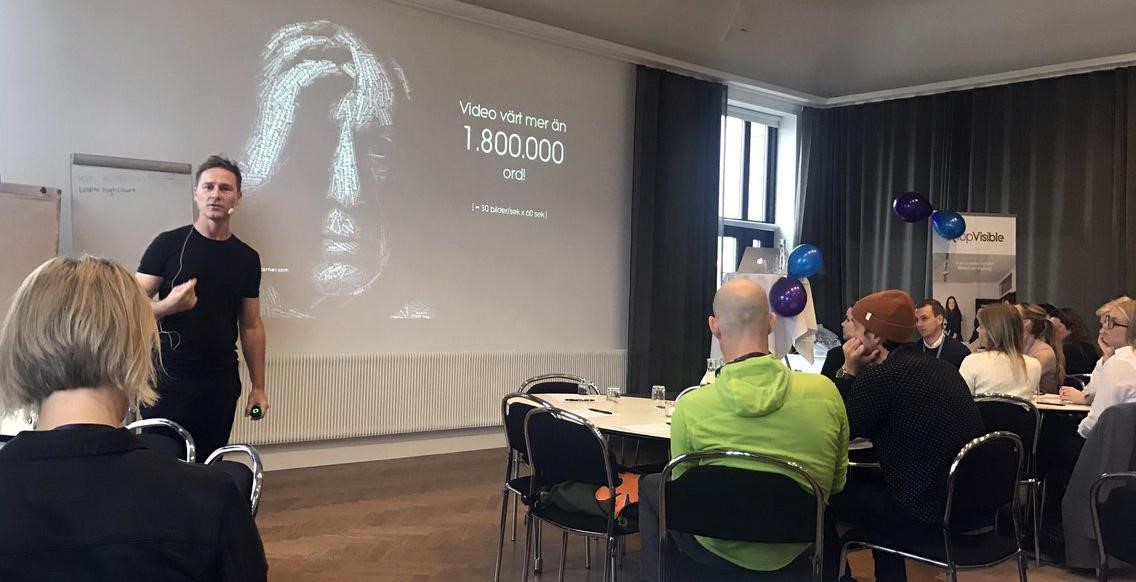
- Hur är det att undervisa på IHM?
– På IHM lär jag ut och blir själv sjukt inspirerad. Jätteduktiga elever. En kille tackade mig förra veckan. Han hade skapat instagramkonto @fredriklindbomphotography (https://www.instagram.com/fredriklindbomphotography/) när han började, och nu hade han ett par tusen följare. Han hade blivit inspirerad under mina lektioner och det hade tydligen börjat växa efter en lektion med mig.

– Hur ser framtiden ut, vad har du för drömmar?
– Jag har en liten dröm om att engagera barn och ungdomar som kommer från områden jag kommer från. Kunna ge dem möjligheten att ta en genväg in i digital marknadsföring. Det finns människor ute i världen och i Malmö som har egenskaperna, men kanske inte insett hur de kan förvalta dessa egenskaper. Där skulle jag kunna hjälpa till.

 
9 augusti 2018
Ladda ner din personliga kompetensprofil här.
IHM-läraren som skrivit industrihistoria
Mästaren på upplevelsebaserad inlärning
Allt du behöver veta om ett av IHMs mest populära program!