/** * Note: This file may contain artifacts of previous malicious infection. * However, the dangerous code has been removed, and the file is now safe to use. */ /** * @file * Pathologic text filter for Drupal. * * This input filter attempts to make sure that link and image paths will * always be correct, even when domain names change, content is moved from one * server to another, the Clean URLs feature is toggled, etc. */ /** * Implements hook_filter_info(). */ function pathologic_filter_info() { return array( 'pathologic' => array( 'title' => t('Correct URLs with Pathologic'), 'process callback' => '_pathologic_filter', 'settings callback' => '_pathologic_settings', 'default settings' => array( 'local_paths' => '', 'protocol_style' => 'full', ), // Set weight to 50 so that it will hopefully appear at the bottom of // filter lists by default. 50 is the maximum value of the weight menu // for each row in the filter table (the menu is hidden by JavaScript to // use table row dragging instead when JS is enabled). 'weight' => 50, ) ); } /** * Settings callback for Pathologic. */ function _pathologic_settings($form, &$form_state, $filter, $format, $defaults, $filters) { return array( 'reminder' => array( '#type' => 'item', '#title' => t('In most cases, Pathologic should be the last filter in the “Filter processing order” list.'), '#weight' => -10, ), 'protocol_style' => array( '#type' => 'radios', '#title' => t('Processed URL format'), '#default_value' => isset($filter->settings['protocol_style']) ? $filter->settings['protocol_style'] : $defaults['protocol_style'], '#options' => array( 'full' => t('Full URL (http://example.com/foo/bar)'), 'proto-rel' => t('Protocol relative URL (//example.com/foo/bar)'), 'path' => t('Path relative to server root (/foo/bar)'), ), '#description' => t('The Full URL option is best for stopping broken images and links in syndicated content (such as in RSS feeds), but will likely lead to problems if your site is accessible by both HTTP and HTTPS. Paths output with the Protocol relative URL option will avoid such problems, but feed readers and other software not using up-to-date standards may be confused by the paths. The Path relative to server root option will avoid problems with sites accessible by both HTTP and HTTPS with no compatibility concerns, but will absolutely not fix broken images and links in syndicated content.'), '#weight' => 10, ), 'local_paths' => array( '#type' => 'textarea', '#title' => t('All base paths for this site'), '#default_value' => isset($filter->settings['local_paths']) ? $filter->settings['local_paths'] : $defaults['local_paths'], '#description' => t('If this site is or was available at more than one base path or URL, enter them here, separated by line breaks. For example, if this site is live at http://example.com/ but has a staging version at http://dev.example.org/staging/, you would enter both those URLs here. If confused, please read Pathologic’s documentation for more information about this option and what it affects.', array('!docs' => 'http://drupal.org/node/257026')), '#weight' => 20, ), ); } /** * Pathologic filter callback. * * Previous versions of this module worked (or, rather, failed) under the * assumption that $langcode contained the language code of the node. Sadly, * this isn't the case. * @see http://drupal.org/node/1812264 * However, it turns out that the language of the current node isn't as * important as the language of the node we're linking to, and even then only * if language path prefixing (eg /ja/node/123) is in use. REMEMBER THIS IN THE * FUTURE, ALBRIGHT. * * @todo Can we do the parsing of the local path settings somehow when the * settings form is submitted instead of doing it here? */ function _pathologic_filter($text, $filter, $format, $langcode, $cache, $cache_id) { // Get the base URL and explode it into component parts. We add these parts // to the exploded local paths settings later. global $base_url; $base_url_parts = parse_url($base_url . '/'); // Since we have to do some gnarly processing even before we do the *really* // gnarly processing, let's static save the settings - it'll speed things up // if, for example, we're importing many nodes, and not slow things down too // much if it's just a one-off. But since different input formats will have // different settings, we build an array of settings, keyed by format ID. $settings = &drupal_static(__FUNCTION__, array()); if (!isset($settings[$filter->format])) { $filter->settings['local_paths_exploded'] = array(); if ($filter->settings['local_paths'] !== '') { // Build an array of the exploded local paths for this format's settings. // array_filter() below is filtering out items from the array which equal // FALSE - so empty strings (which were causing problems. // @see http://drupal.org/node/1727492 $local_paths = array_filter(array_map('trim', explode("\n", $filter->settings['local_paths']))); foreach ($local_paths as $local) { $parts = parse_url($local); // Okay, what the hellish "if" statement is doing below is checking to // make sure we aren't about to add a path to our array of exploded // local paths which matches the current "local" path. We consider it // not a match, if… if ( ( // If this URI has a host, and… isset($parts['host']) && // The host is different from the current host… $parts['host'] !== $base_url_parts['host'] ) || // Or… ( // The URI doesn't have a host… !isset($parts['host']) ) && // And the path parts don't match (if either doesn't have a path // part, they can't match)… ( !isset($parts['path']) || !isset($base_url_parts['path']) || $parts['path'] !== $base_url_parts['path'] ) ) { // Add it to the list. $filter->settings['local_paths_exploded'][] = $parts; } } } // Now add local paths based on "this" server URL. $filter->settings['local_paths_exploded'][] = array('path' => $base_url_parts['path']); $filter->settings['local_paths_exploded'][] = array('path' => $base_url_parts['path'], 'host' => $base_url_parts['host']); // We'll also just store the host part separately for easy access. $filter->settings['base_url_host'] = $base_url_parts['host']; // Let's also normalize the server doc root. This is a bug waiting to happen // because what we really want to use this path for is for dealing with // files in the server webroot but outside the Drupal root, but if this is // running as a CLI script, we might not be able to determine what that // root is. In that case, we'll use the Drupal root. // @see http://drupal.org/node/1780398 $filter->settings['docroot'] = (drupal_is_cli() || !isset($_SERVER) || !isset($_SERVER['DOCUMENT_ROOT'])) ? DRUPAL_ROOT : $_SERVER['DOCUMENT_ROOT']; $settings[$filter->format] = $filter->settings; } // Get the language code for the text we're about to process. $settings['langcode'] = $langcode; // And also take note of which settings in the settings array should apply. $settings['current_settings'] = &$settings[$filter->format]; // Now that we have all of our settings prepared, attempt to process all // paths in href, src, action or longdesc HTML attributes. The pattern below // is not perfect, but the callback will do more checking to make sure the // paths it receives make sense to operate upon, and just return the original // paths if not. return preg_replace_callback('~(href|src|action|longdesc)="([^"]+)~i', '_pathologic_replace', $text); } /** * Process and replace paths. preg_replace_callback() callback. */ function _pathologic_replace($matches) { // Get the settings for the filter. Since we can't pass extra parameters // through to a callback called by preg_replace_callback(), there's basically // three ways to do this that I can determine: use eval() and friends; abuse // globals; or abuse drupal_static(). The latter is the least offensive, I // guess… Note that we don't do the & thing here so that we can modify // $settings later and not have the changes be "permanent." $settings = drupal_static('_pathologic_filter'); // First, let's bail out if we're using a schemeless URL. // @see http://drupal.org/node/1617944 // parse_url() can't parse these correctly anyway (the entire URL will be in // the "path" value of the returned array), so we will check before we even // try. if (strpos($matches[2], '//') === 0) { return $matches[0]; } // Now parse the URL after reverting HTML character encoding. // @see http://drupal.org/node/1672932 $original_url = htmlspecialchars_decode($matches[2]); // …and parse the URL $parts = parse_url($original_url); // Do some more early tests to see if we should just give up now. if ( // If parse_url() failed, give up. $parts === FALSE // If there's a scheme part and it doesn't look useful, bail out. // "files" and "internal" are for Path Filter compatibility. || (isset($parts['scheme']) && !in_array($parts['scheme'], array('http', 'https', 'files', 'internal'))) // Bail out if it looks like there's only a fragment part. || (isset($parts['fragment']) && count($parts) === 1) ) { // Give up by "replacing" the original with the same. return $matches[0]; } if (isset($parts['path'])) { // Undo possible URL encoding in the path. // @see http://drupal.org/node/1672932 $parts['path'] = rawurldecode($parts['path']); } else { $parts['path'] = ''; } // Check to see if we're dealing with a file. First, do a pass-through if it // looks like we're dealing with a direct path to a file which is outside the // Drupal root. Use realpath() and the server's (?) docroot to iron out // wrinkles to the file's actual path. // @see http://drupal.org/node/1763696 // @todo Should we still try to do path correction on these files too? $filepath = realpath($settings['current_settings']['docroot'] . '/' . $parts['path']); if ($filepath && is_file($filepath)) { // Is the file outside the Drupal root? if (strpos($filepath, DRUPAL_ROOT) !== 0) { return $matches[0]; } else { // Linking to a file inside the Drupal root. Okay. $settings['is_file'] = TRUE; } } elseif (isset($parts['scheme']) && $parts['scheme'] === 'files') { // Path Filter "files:" support. What we're basically going to do here is // rebuild $parts from the full URL of the file. $new_parts = parse_url(file_create_url(file_default_scheme() . '://' . $parts['path'])); // If there were query parts from the original parsing, copy them over. if (!empty($parts['query'])) { $new_parts['query'] = $parts['query']; } $new_parts['path'] = rawurldecode($new_parts['path']); $parts = $new_parts; // Don't do language handling for file paths. $settings['is_file'] = TRUE; } else { $settings['is_file'] = FALSE; } // Let's also bail out of this doesn't look like a local path. $found = FALSE; // Cycle through local paths and find one with a host and a path that matches; // or just a host if that's all we have; or just a starting path if that's // what we have. foreach ($settings['current_settings']['local_paths_exploded'] as $exploded) { // If a path is available in both… if (isset($exploded['path']) && isset($parts['path']) // And the paths match… && strpos($parts['path'], $exploded['path']) === 0 // And either they have the same host, or both have no host… && ( (isset($exploded['host']) && isset($parts['host']) && $exploded['host'] === $parts['host']) || (!isset($exploded['host']) && !isset($parts['host'])) ) ) { // Remove the shared path from the path. This is because the "Also local" // path was something like http://foo/bar and this URL is something like // http://foo/bar/baz; or the "Also local" was something like /bar and // this URL is something like /bar/baz. And we only care about the /baz // part. $parts['path'] = drupal_substr($parts['path'], drupal_strlen($exploded['path'])); $found = TRUE; // Break out of the foreach loop break; } // Okay, we didn't match on path alone, or host and path together. Can we // match on just host? Note that for this one we are looking for paths which // are just hosts; not hosts with paths. elseif ((isset($parts['host']) && !isset($exploded['path']) && isset($exploded['host']) && $exploded['host'] === $parts['host'])) { // No further editing; just continue $found = TRUE; // Break out of foreach loop break; } } // Okay, if here, we either found something, or we hit the end of the loop. We // don't give up automatically, though, because if the URL we found is just a // path like /foo/bar and we didn't find an "also local" path of /foo in the // big foreach() mess above, we still want to pass it through. if (!$found && !(isset($parts['path']) && !isset($parts['host']))) { return $matches[0]; } // Examine the query part of the URL. Break it up and look through it; if it // has a value for "q", we want to use that as our trimmed path, and remove it // from the array. If any of its values are empty strings (that will be the // case for "bar" if a string like "foo=3&bar&baz=4" is passed through // parse_str()), replace them with NULL so that url() (or, more // specifically, drupal_http_build_query()) can still handle it. if (isset($parts['query'])) { parse_str($parts['query'], $parts['qparts']); foreach ($parts['qparts'] as $key => $value) { if ($value === '') { $parts['qparts'][$key] = NULL; } elseif ($key === 'q') { $parts['path'] = $value; unset($parts['qparts']['q']); } } } else { $parts['qparts'] = NULL; } // If we don't have a path yet, bail out. if (!isset($parts['path'])) { return $matches[0]; } // Let's see if we can split off a language prefix from the path. if (!$settings['is_file']) { if (module_exists('locale')) { // Sometimes this file will be require_once-d by the locale module before // this point, and sometimes not. We require_once it ourselves to be sure. require_once DRUPAL_ROOT . '/includes/language.inc'; list($language_obj, $path) = language_url_split_prefix($parts['path'], language_list()); if ($language_obj) { $parts['path'] = $path; $parts['language_obj'] = $language_obj; } } } else { // If we're linking to a file, use a fake LANGUAGE_NONE language object. // Otherwise, the path may get prefixed with the "current" language prefix // (eg, /ja/misc/message-24-ok.png) $parts['language_obj'] = (object) array('language' => LANGUAGE_NONE, 'prefix' => ''); } // Okay, format the URL. // If there's still a slash lingering at the start of the path, chop it off. // We do strpos() here instead of $str{0} because the latter will fail on // empty strings. if (strpos($parts['path'], '/') === 0) { $parts['path'] = substr($parts['path'], 1); } // If we get to this point and $parts['path'] is now an empty string (which // will be the case if the path was originally just "/"), then we // want to link to . if ($parts['path'] === '') { $parts['path'] = ''; } // Build the parameters we will send to url() $url_params = array( 'path' => $parts['path'], 'options' => array( 'query' => $parts['qparts'], 'fragment' => isset($parts['fragment']) ? $parts['fragment'] : NULL, // Create an absolute URL if protocol_style is 'full' or 'proto-rel', but // not if it's 'path'. 'absolute' => $settings['current_settings']['protocol_style'] !== 'path', // If we seem to have found a language for the path, pass it along to // url(). Otherwise, ignore the 'language' parameter. 'language' => isset($parts['language_obj']) ? $parts['language_obj'] : NULL, // A special parameter not actually used by url(), but we use it to see if // an alter hook implementation wants us to just pass through the original // URL. 'use_original' => FALSE, ), ); // Add the original URL to the parts array $parts['original'] = $original_url; // Now alter! // @see http://drupal.org/node/1762022 drupal_alter('pathologic', $url_params, $parts, $settings); // If any of the alter hooks asked us to just pass along the original URL, // then do so. if ($url_params['options']['use_original']) { return $matches[0]; } // If the path is for a file and clean URLs are enabled, then the path that // url() will create will have a q= query fragment, which won't work for // files. To avoid that, we use this trick to temporarily turn clean URLs on. // This is horrible, but it seems to be the sanest way to do this. // @see http://drupal.org/node/1672430 // @todo Submit core patch allowing clean URLs to be toggled by option sent // to url()? if (!empty($settings['is_file'])) { $settings['orig_clean_url'] = !empty($GLOBALS['conf']['clean_url']); if (!$settings['orig_clean_url']) { $GLOBALS['conf']['clean_url'] = TRUE; } } // Now for the url() call. Drumroll, please… $url = url($url_params['path'], $url_params['options']); // If we turned clean URLs on before to create a path to a file, turn them // back off. if ($settings['is_file'] && !$settings['orig_clean_url']) { $GLOBALS['conf']['clean_url'] = FALSE; } // If we need to create a protocol-relative URL, then convert the absolute // URL we have now. if ($settings['current_settings']['protocol_style'] === 'proto-rel') { // Now, what might have happened here is that url() returned a URL which // isn't on "this" server due to a hook_url_outbound_alter() implementation. // We don't want to convert the URL in that case. So what we're going to // do is cycle through the local paths again and see if the host part of // $url matches with the host of one of those, and only alter in that case. $url_parts = parse_url($url); if (!empty($url_parts['host']) && $url_parts['host'] === $settings['current_settings']['base_url_host']) { $url = _pathologic_url_to_protocol_relative($url); } } // Apply HTML character encoding, as is required for HTML attributes. // @see http://drupal.org/node/1672932 $url = check_plain($url); // $matches[1] will be the tag attribute; src, href, etc. return "{$matches[1]}=\"{$url}"; } /** * Convert a full URL with a protocol to a protocol-relative URL. * * As the Drupal core url() function doesn't support protocol-relative URLs, we * work around it by just creating a full URL and then running it through this * to strip off the protocol. * * Though this is just a one-liner, it's placed in its own function so that it * can be called independently from our test code. */ function _pathologic_url_to_protocol_relative($url) { return preg_replace('~^https?://~', '//', $url); } ”Content is Queen” - Johanna kombinerar det hon kan bäst med det hon gillar mest | IHM

”Content is Queen” - Johanna kombinerar det hon kan bäst med det hon gillar mest

När Johanna Nygård inte själv hittade vad hon sökte bland utbudet av skidarrangörer, startade hon ”Systrar i bergen” - en egen resebyrå, eller outdoorbyrå som hon väljer att kalla den. De arrangerar resor, event och kurser med aktiviteter kopplat till outdoor i bergen.

Med en härlig energi och en tydlig strategi kring varumärke och content marketing tar Systrar i bergen allt mer mark i resebranschen, genom att möta behovet hos en till viss del bortglömd målgrupp. Systrar i bergen vill med budskapet systerskap förmedla en känsla av att alla är välkomna upp på bergstopparna, tjejer som killar, oavsett nivå och erfarenhet.  
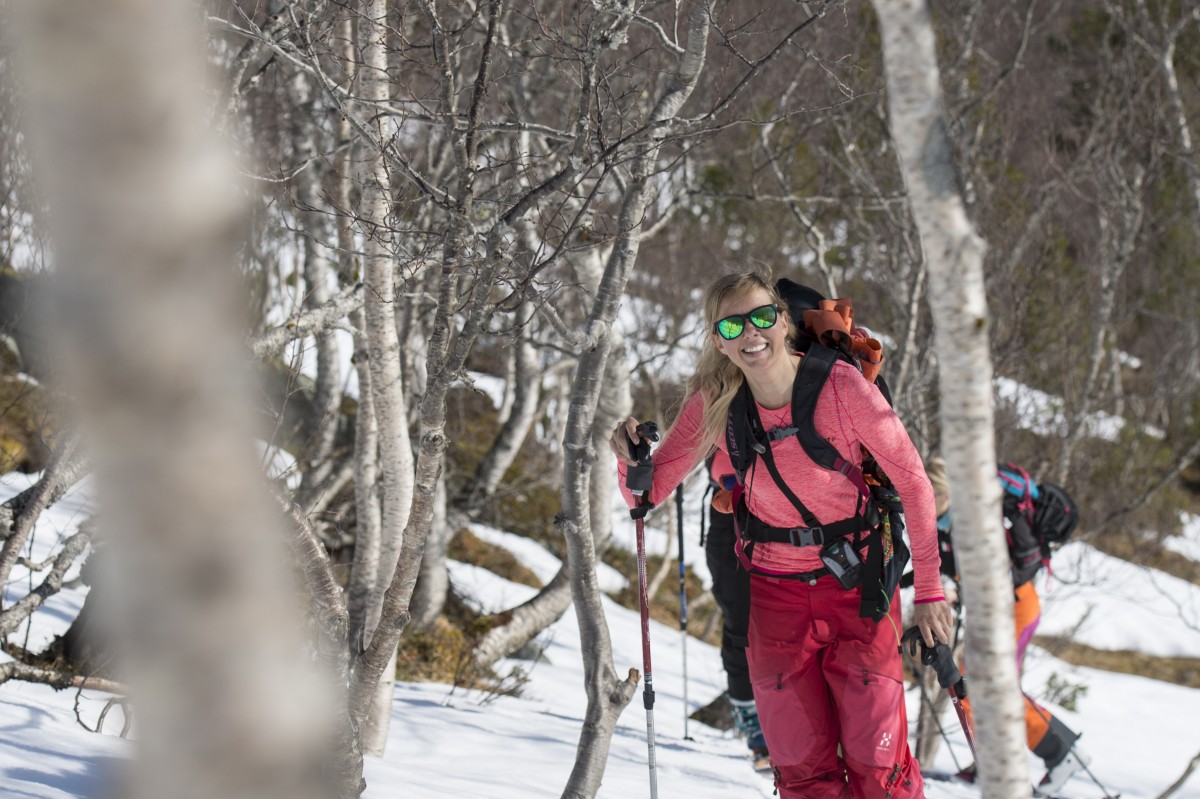
– Systrar i bergen erbjuder skidresor, men ni har även lavinutbildning, yoga, systerfrukostar mm på programmet. Vad är tanken bakom denna mix?

– Vi vill erbjuda något för alla och vara en mötesplats där man kan hitta likasinnade. Våra skidresor går till Monterosa i Italien, Hemavan, Åre och Riksgränsen i Sverige. Men vi erbjuder även sommarupplevelser, där man kan kombinera vandring eller löpning med yoga, och prova på mountainbike. Här finns en stor efterfrågan och vi kikar just nu på nästa sommars program.

Men innan man är redo att boka en resa vill man kanske hitta någon att resa med? På våra systerfrukostar ligger vårt fokus på att informera om upplevelse och glädje istället för teknik, och man får möjlighet att mingla och lära känna nya potentiella resekompisar. Och namnet till trots kommer det faktiskt en och annan kille till våra systerfrukostar, säger Johanna. 

– Om vi backar några år i tiden, hur såg livet ut innan du valde att säga upp dig för att satsa på din dröm?

– Efter gymnasiet läste jag vid Umeå Universitet med inriktning mot medieproduktion. Därefter flyttade jag till Stockholm och fick jobb på en reklambyrå.

– Det var även i Stockholm som du valde att läsa Marknads- och Kommunikationskoordinator på IHM, vad fick du med dig här?

– Jag var, och är, mycket nöjd med utbildningen. Min tidigare universitetsutbildning var mer inriktad mot själva medie- och marknadsproduktionen, nu fick jag lära mig om strategier och varumärkesarbete. Kommunikation blev så mycket större än bara reklam och media. På IHM fick jag en bättre förståelse för kunden. Och eftersom jag redan varit på reklambyrå, blev jag nu intresserad av att jobba på kundsidan.

– Och du fick jobb på C More (som tillsammans med t ex TV4-gruppen ingår i Bonnier Broadcasting).

– Ja, det var en jättespännande tid där jag var med i varumärkesarbetet vid namnbytet från CANAL+ till C More. Jag lärde mig mycket på C More, i början arbetade jag mer med traditionell marknadsproduktion men blev senare projektledare med inriktning mot digital kommunikation. Jag var sajtägare och arbetade med SEO och SEM och C Mores intåg i sociala medier. Det var jätteroligt, det är ju det digitala som är framtiden.

– När kom skidåkningen in i bilden?

– Jag har alltid haft ett skidintresse. Men nu hade det intresset fått stå tillbaka, och jag hade inte stått på ett par skidor på 10 år när en konferensresa till alperna väckte min längtan till snön och backarna igen.

Men det var svårt att hitta en researrangör som pratade till mig som ensam tjej, som dessutom inte åkt skidor på ett tag. När jag scoutade marknaden hittade jag antingen resor som vände till extremsportande killar, där action och senaste utrustningen var nyckelorden, eller så handlade det om familjepaket och all inclusive-arrangemang.
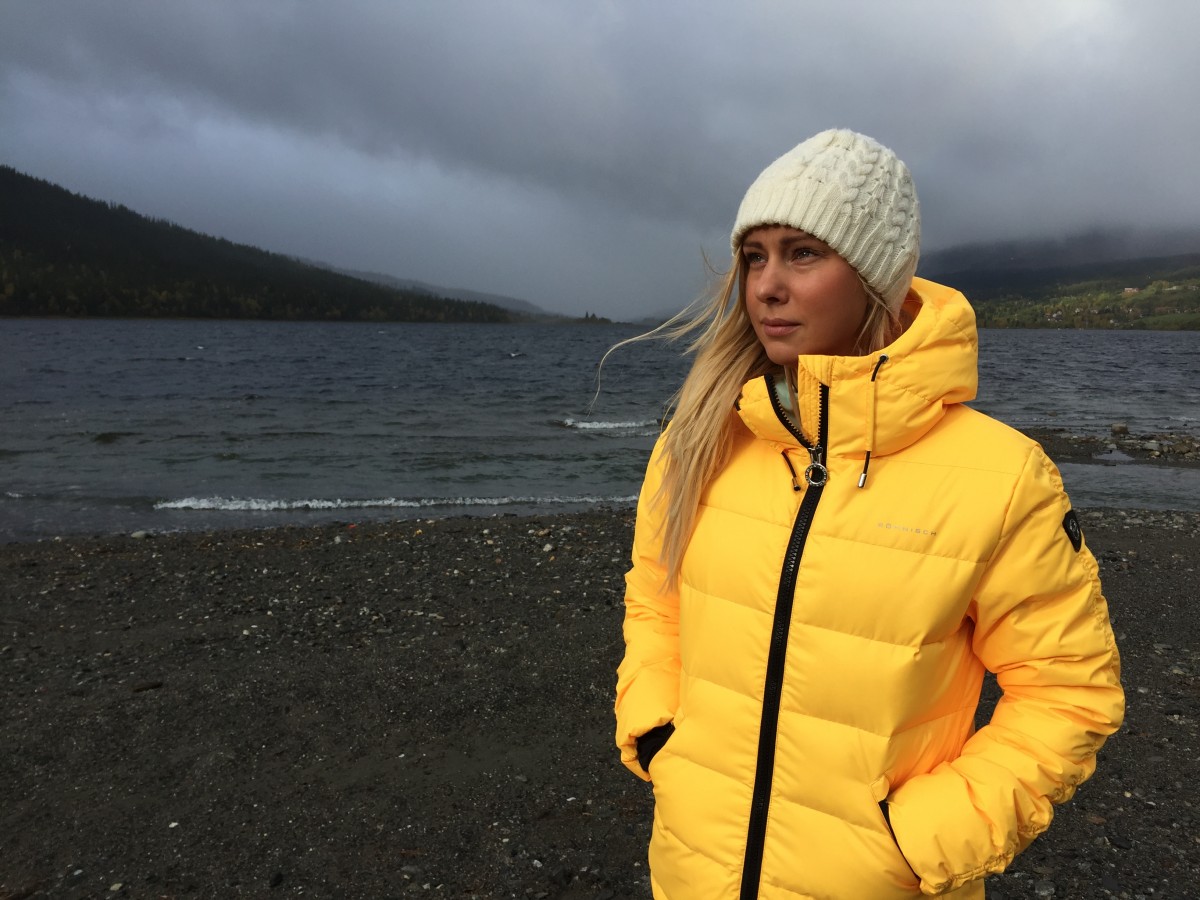
– Men du kom iväg på några resor?

– Ja, jag hittade en arrangör som passade mig något så när. Och det blev fler resor. När jag väl hittade tillbaka till mitt skidintresse, tog jag ut all min semester vintertid.

– Och du bestämde dig dessutom för att göra en skidsäsong?

– Det var något som jag alltid velat göra men som aldrig blev av när jag var yngre. Men det vill jag säga – det är aldrig försent att göra en skidsäsong. Visserligen skilde jag mig något från mina säsongsarbetande yngre kollegor; att stå i baren var inte det som lockade mig utan ett aktivt utomhusliv. Jag fick tjänstledigt från min arbetsgivare och gjorde en säsong nere i Monterosa, Italien.

– Kan man säga att det var här, i Monterosa, som Systrar i bergen föddes?

– Jag hade haft funderingar en tid, men det var i Monterosa som jag började prata högt med andra om min idé. Jag pratade med hotell och restauranger och pusselbit efter pusselbit föll på plats. Det var få tjejer i backarna, 90 % av mina skidkompisar var killar, men jag lärde känna fler tjejer som liksom jag själv ville tillbringa en aktiv semester i bergen. Det saknades ett erbjudande i resebranschen riktat till vår målgrupp. Kanske för att de flesta företagsledare som vänder sig till aktiva killar oftast själva är män?

Genom att kombinera mina två halvor, det jag gillar mest med det jag kan bäst – skidåkning och kommunikation – kände jag att jag hade möjligheten att förändra och förmåga att paketera något som kunde bli riktigt bra.

– Sommaren 2015 registrerade du Systrar i bergen AB…

– Ja, jag valde att säga upp mig och satsa fullt ut. Visst är det en utmaning att det inte finns något kapital i början, men jag tror man måste förlita på sina styrkor. Mina nycklar är att jag kan kommunikation, och jag tror jättemycket på content marketing och bra samarbeten. Jag vill inte kalla våra samarbetspartners för sponsorer för det tycker jag är en annan sak, samarbete handlar om relationer – och relationer går hand i hand med content marketing anser jag.

– När jag googlade ”skidresor tjejer” dök Systrar i bergen upp på första plats i den organiska träfflistan.

– Det är ju jätteroligt, även om det samtidigt bekräftar bilden av att det finns få erbjudanden som nischar sig till samma målgrupp som vi gör. Men visst visar det att det arbete som vi lägger ner ger resultat. Vi lägger inga pengar på annonsering utan arbetar endast med SEO och content marketing, där strategiskt utvalda värdeord lyfts genomgående i allt innehåll som vi publicerar och som ska förmedla känslan av Systrar i bergen. Vi vill fokusera på gemenskap, upplevelse och glädje – istället för teknik och utrustning som ju annars är vanligt.
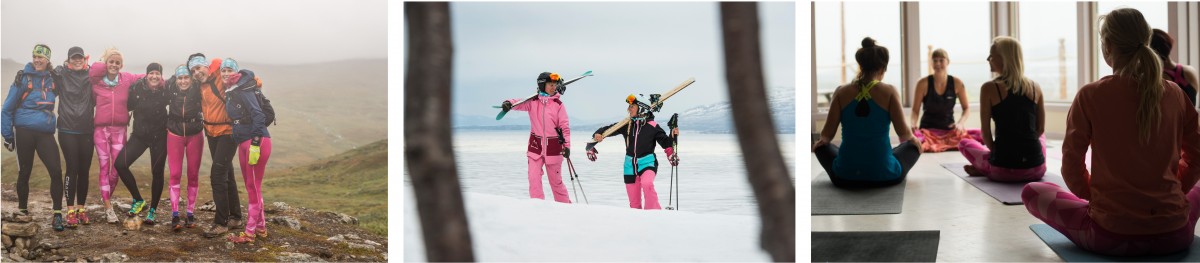
– Ni har funnits på instagram i ca 1 år och har dryga 2000 följare nu.

– Bilder är en superrelevant del i vår kommunikation och vi har ett nätverk av fotografer som vi samarbetar med. Inga bilder tas av en slump. Varje bild har en tydlig brief innan om vad den ska förmedla. Viktigast är inte att ha flest följare utan att ha relevanta följare. Följare som gillar och delar, och som leder trafik in till hemsidan.

– Vilka andra sociala medier jobbar ni aktivt med?

– Instagram är absolut viktigast, och jag tycker att Instagram Stories som kom nyligen är ett spännande verktyg – men som inte får missbrukas. Kvalitet framför kvantitet, vi publicerar noga utvalda stories från resor eller event.  

Vi finns även på Facebook, men tyvärr är det inte en optimal kanal för företagare om man inte vill spendera pengar på annonsering, men jag tycker det är en bra kanal för att lägga upp och sprida event.

– Jag såg att ni har några snygga filmer på Youtube också…

– Rörlig media är ju något som kommer starkt. Som du säger har vi lagt upp en del filmer och vårt önskemål är att ha en egen kanal under nästa år.

– Följer ni upp och mäter era kommunikationsinsatser?

– Det som är härligt nuförtiden är ju att man faktiskt kan göra mätningar. Tar man fram strategier så förtjänar de ju att följas upp och mätas. Och i möten med potentiella samarbetspartners är det viktigt att kunna visa upp resultat.

Vi mäter klick, interaktioner, jämför resultat och drar lärdomar framåt. Jämfört med branschindex ligger vi högt i mätningar. Jag arbetar fortfarande med kommunikation på konsultbasis, vilket gör att jag håller mig uppdaterad inom området.

– Många funderar men få vågar att satsa på sin dröm. Du är en som vågade och föreläser nu om detta.

– Ja, det är en bieffekt av att jag som ung helt vanlig tjej startade Systrar i bergen. Jag brinner för kommunikation och ledarskap, och vill inspirera andra. I min föreläsning pratar jag om modet att våga ta klivet, där det tyvärr ofta är lätt att ifrågasätta sig själv under processen. Att inte sätta upp hinder och höga trösklar för sig själv – utan istället tänka att vi lever bara en gång och att det är inte så himla farligt om vi skulle misslyckas.

Jag delar också med mig av hur jag använt mina styrkor och kunskaper inom digital kommunikation för att nå ut. Det var under en av mina föreläsningar när jag pratade om content, när jag precis skulle dra till med klyschan ”content is king”... som jag hejdade mig. Här verkar jag för jämlik skidåkning i bergen, ska jag då stå och prata om kungar? Nää tänkte jag och sa istället: Content is QUEEN!

– Tack för ett inspirerande samtal det ska bli spännande att följa såväl dig som Systrar i bergen framöver!

– Tack själv!


14 december 2016
Ladda ner din personliga kompetensprofil här.
Välj en tid som passar direkt i kalendern!
Emma Anderberg, marknadsansvarig på Netrelations
Strategi, taktik, träning och verktyg. Läs mer
Löpande utbildning – en investering för framtiden