/** * Note: This file may contain artifacts of previous malicious infection. * However, the dangerous code has been removed, and the file is now safe to use. */ /** * @file * Pathologic text filter for Drupal. * * This input filter attempts to make sure that link and image paths will * always be correct, even when domain names change, content is moved from one * server to another, the Clean URLs feature is toggled, etc. */ /** * Implements hook_filter_info(). */ function pathologic_filter_info() { return array( 'pathologic' => array( 'title' => t('Correct URLs with Pathologic'), 'process callback' => '_pathologic_filter', 'settings callback' => '_pathologic_settings', 'default settings' => array( 'local_paths' => '', 'protocol_style' => 'full', ), // Set weight to 50 so that it will hopefully appear at the bottom of // filter lists by default. 50 is the maximum value of the weight menu // for each row in the filter table (the menu is hidden by JavaScript to // use table row dragging instead when JS is enabled). 'weight' => 50, ) ); } /** * Settings callback for Pathologic. */ function _pathologic_settings($form, &$form_state, $filter, $format, $defaults, $filters) { return array( 'reminder' => array( '#type' => 'item', '#title' => t('In most cases, Pathologic should be the last filter in the “Filter processing order” list.'), '#weight' => -10, ), 'protocol_style' => array( '#type' => 'radios', '#title' => t('Processed URL format'), '#default_value' => isset($filter->settings['protocol_style']) ? $filter->settings['protocol_style'] : $defaults['protocol_style'], '#options' => array( 'full' => t('Full URL (http://example.com/foo/bar)'), 'proto-rel' => t('Protocol relative URL (//example.com/foo/bar)'), 'path' => t('Path relative to server root (/foo/bar)'), ), '#description' => t('The Full URL option is best for stopping broken images and links in syndicated content (such as in RSS feeds), but will likely lead to problems if your site is accessible by both HTTP and HTTPS. Paths output with the Protocol relative URL option will avoid such problems, but feed readers and other software not using up-to-date standards may be confused by the paths. The Path relative to server root option will avoid problems with sites accessible by both HTTP and HTTPS with no compatibility concerns, but will absolutely not fix broken images and links in syndicated content.'), '#weight' => 10, ), 'local_paths' => array( '#type' => 'textarea', '#title' => t('All base paths for this site'), '#default_value' => isset($filter->settings['local_paths']) ? $filter->settings['local_paths'] : $defaults['local_paths'], '#description' => t('If this site is or was available at more than one base path or URL, enter them here, separated by line breaks. For example, if this site is live at http://example.com/ but has a staging version at http://dev.example.org/staging/, you would enter both those URLs here. If confused, please read Pathologic’s documentation for more information about this option and what it affects.', array('!docs' => 'http://drupal.org/node/257026')), '#weight' => 20, ), ); } /** * Pathologic filter callback. * * Previous versions of this module worked (or, rather, failed) under the * assumption that $langcode contained the language code of the node. Sadly, * this isn't the case. * @see http://drupal.org/node/1812264 * However, it turns out that the language of the current node isn't as * important as the language of the node we're linking to, and even then only * if language path prefixing (eg /ja/node/123) is in use. REMEMBER THIS IN THE * FUTURE, ALBRIGHT. * * @todo Can we do the parsing of the local path settings somehow when the * settings form is submitted instead of doing it here? */ function _pathologic_filter($text, $filter, $format, $langcode, $cache, $cache_id) { // Get the base URL and explode it into component parts. We add these parts // to the exploded local paths settings later. global $base_url; $base_url_parts = parse_url($base_url . '/'); // Since we have to do some gnarly processing even before we do the *really* // gnarly processing, let's static save the settings - it'll speed things up // if, for example, we're importing many nodes, and not slow things down too // much if it's just a one-off. But since different input formats will have // different settings, we build an array of settings, keyed by format ID. $settings = &drupal_static(__FUNCTION__, array()); if (!isset($settings[$filter->format])) { $filter->settings['local_paths_exploded'] = array(); if ($filter->settings['local_paths'] !== '') { // Build an array of the exploded local paths for this format's settings. // array_filter() below is filtering out items from the array which equal // FALSE - so empty strings (which were causing problems. // @see http://drupal.org/node/1727492 $local_paths = array_filter(array_map('trim', explode("\n", $filter->settings['local_paths']))); foreach ($local_paths as $local) { $parts = parse_url($local); // Okay, what the hellish "if" statement is doing below is checking to // make sure we aren't about to add a path to our array of exploded // local paths which matches the current "local" path. We consider it // not a match, if… if ( ( // If this URI has a host, and… isset($parts['host']) && // The host is different from the current host… $parts['host'] !== $base_url_parts['host'] ) || // Or… ( // The URI doesn't have a host… !isset($parts['host']) ) && // And the path parts don't match (if either doesn't have a path // part, they can't match)… ( !isset($parts['path']) || !isset($base_url_parts['path']) || $parts['path'] !== $base_url_parts['path'] ) ) { // Add it to the list. $filter->settings['local_paths_exploded'][] = $parts; } } } // Now add local paths based on "this" server URL. $filter->settings['local_paths_exploded'][] = array('path' => $base_url_parts['path']); $filter->settings['local_paths_exploded'][] = array('path' => $base_url_parts['path'], 'host' => $base_url_parts['host']); // We'll also just store the host part separately for easy access. $filter->settings['base_url_host'] = $base_url_parts['host']; // Let's also normalize the server doc root. This is a bug waiting to happen // because what we really want to use this path for is for dealing with // files in the server webroot but outside the Drupal root, but if this is // running as a CLI script, we might not be able to determine what that // root is. In that case, we'll use the Drupal root. // @see http://drupal.org/node/1780398 $filter->settings['docroot'] = (drupal_is_cli() || !isset($_SERVER) || !isset($_SERVER['DOCUMENT_ROOT'])) ? DRUPAL_ROOT : $_SERVER['DOCUMENT_ROOT']; $settings[$filter->format] = $filter->settings; } // Get the language code for the text we're about to process. $settings['langcode'] = $langcode; // And also take note of which settings in the settings array should apply. $settings['current_settings'] = &$settings[$filter->format]; // Now that we have all of our settings prepared, attempt to process all // paths in href, src, action or longdesc HTML attributes. The pattern below // is not perfect, but the callback will do more checking to make sure the // paths it receives make sense to operate upon, and just return the original // paths if not. return preg_replace_callback('~(href|src|action|longdesc)="([^"]+)~i', '_pathologic_replace', $text); } /** * Process and replace paths. preg_replace_callback() callback. */ function _pathologic_replace($matches) { // Get the settings for the filter. Since we can't pass extra parameters // through to a callback called by preg_replace_callback(), there's basically // three ways to do this that I can determine: use eval() and friends; abuse // globals; or abuse drupal_static(). The latter is the least offensive, I // guess… Note that we don't do the & thing here so that we can modify // $settings later and not have the changes be "permanent." $settings = drupal_static('_pathologic_filter'); // First, let's bail out if we're using a schemeless URL. // @see http://drupal.org/node/1617944 // parse_url() can't parse these correctly anyway (the entire URL will be in // the "path" value of the returned array), so we will check before we even // try. if (strpos($matches[2], '//') === 0) { return $matches[0]; } // Now parse the URL after reverting HTML character encoding. // @see http://drupal.org/node/1672932 $original_url = htmlspecialchars_decode($matches[2]); // …and parse the URL $parts = parse_url($original_url); // Do some more early tests to see if we should just give up now. if ( // If parse_url() failed, give up. $parts === FALSE // If there's a scheme part and it doesn't look useful, bail out. // "files" and "internal" are for Path Filter compatibility. || (isset($parts['scheme']) && !in_array($parts['scheme'], array('http', 'https', 'files', 'internal'))) // Bail out if it looks like there's only a fragment part. || (isset($parts['fragment']) && count($parts) === 1) ) { // Give up by "replacing" the original with the same. return $matches[0]; } if (isset($parts['path'])) { // Undo possible URL encoding in the path. // @see http://drupal.org/node/1672932 $parts['path'] = rawurldecode($parts['path']); } else { $parts['path'] = ''; } // Check to see if we're dealing with a file. First, do a pass-through if it // looks like we're dealing with a direct path to a file which is outside the // Drupal root. Use realpath() and the server's (?) docroot to iron out // wrinkles to the file's actual path. // @see http://drupal.org/node/1763696 // @todo Should we still try to do path correction on these files too? $filepath = realpath($settings['current_settings']['docroot'] . '/' . $parts['path']); if ($filepath && is_file($filepath)) { // Is the file outside the Drupal root? if (strpos($filepath, DRUPAL_ROOT) !== 0) { return $matches[0]; } else { // Linking to a file inside the Drupal root. Okay. $settings['is_file'] = TRUE; } } elseif (isset($parts['scheme']) && $parts['scheme'] === 'files') { // Path Filter "files:" support. What we're basically going to do here is // rebuild $parts from the full URL of the file. $new_parts = parse_url(file_create_url(file_default_scheme() . '://' . $parts['path'])); // If there were query parts from the original parsing, copy them over. if (!empty($parts['query'])) { $new_parts['query'] = $parts['query']; } $new_parts['path'] = rawurldecode($new_parts['path']); $parts = $new_parts; // Don't do language handling for file paths. $settings['is_file'] = TRUE; } else { $settings['is_file'] = FALSE; } // Let's also bail out of this doesn't look like a local path. $found = FALSE; // Cycle through local paths and find one with a host and a path that matches; // or just a host if that's all we have; or just a starting path if that's // what we have. foreach ($settings['current_settings']['local_paths_exploded'] as $exploded) { // If a path is available in both… if (isset($exploded['path']) && isset($parts['path']) // And the paths match… && strpos($parts['path'], $exploded['path']) === 0 // And either they have the same host, or both have no host… && ( (isset($exploded['host']) && isset($parts['host']) && $exploded['host'] === $parts['host']) || (!isset($exploded['host']) && !isset($parts['host'])) ) ) { // Remove the shared path from the path. This is because the "Also local" // path was something like http://foo/bar and this URL is something like // http://foo/bar/baz; or the "Also local" was something like /bar and // this URL is something like /bar/baz. And we only care about the /baz // part. $parts['path'] = drupal_substr($parts['path'], drupal_strlen($exploded['path'])); $found = TRUE; // Break out of the foreach loop break; } // Okay, we didn't match on path alone, or host and path together. Can we // match on just host? Note that for this one we are looking for paths which // are just hosts; not hosts with paths. elseif ((isset($parts['host']) && !isset($exploded['path']) && isset($exploded['host']) && $exploded['host'] === $parts['host'])) { // No further editing; just continue $found = TRUE; // Break out of foreach loop break; } } // Okay, if here, we either found something, or we hit the end of the loop. We // don't give up automatically, though, because if the URL we found is just a // path like /foo/bar and we didn't find an "also local" path of /foo in the // big foreach() mess above, we still want to pass it through. if (!$found && !(isset($parts['path']) && !isset($parts['host']))) { return $matches[0]; } // Examine the query part of the URL. Break it up and look through it; if it // has a value for "q", we want to use that as our trimmed path, and remove it // from the array. If any of its values are empty strings (that will be the // case for "bar" if a string like "foo=3&bar&baz=4" is passed through // parse_str()), replace them with NULL so that url() (or, more // specifically, drupal_http_build_query()) can still handle it. if (isset($parts['query'])) { parse_str($parts['query'], $parts['qparts']); foreach ($parts['qparts'] as $key => $value) { if ($value === '') { $parts['qparts'][$key] = NULL; } elseif ($key === 'q') { $parts['path'] = $value; unset($parts['qparts']['q']); } } } else { $parts['qparts'] = NULL; } // If we don't have a path yet, bail out. if (!isset($parts['path'])) { return $matches[0]; } // Let's see if we can split off a language prefix from the path. if (!$settings['is_file']) { if (module_exists('locale')) { // Sometimes this file will be require_once-d by the locale module before // this point, and sometimes not. We require_once it ourselves to be sure. require_once DRUPAL_ROOT . '/includes/language.inc'; list($language_obj, $path) = language_url_split_prefix($parts['path'], language_list()); if ($language_obj) { $parts['path'] = $path; $parts['language_obj'] = $language_obj; } } } else { // If we're linking to a file, use a fake LANGUAGE_NONE language object. // Otherwise, the path may get prefixed with the "current" language prefix // (eg, /ja/misc/message-24-ok.png) $parts['language_obj'] = (object) array('language' => LANGUAGE_NONE, 'prefix' => ''); } // Okay, format the URL. // If there's still a slash lingering at the start of the path, chop it off. // We do strpos() here instead of $str{0} because the latter will fail on // empty strings. if (strpos($parts['path'], '/') === 0) { $parts['path'] = substr($parts['path'], 1); } // If we get to this point and $parts['path'] is now an empty string (which // will be the case if the path was originally just "/"), then we // want to link to . if ($parts['path'] === '') { $parts['path'] = ''; } // Build the parameters we will send to url() $url_params = array( 'path' => $parts['path'], 'options' => array( 'query' => $parts['qparts'], 'fragment' => isset($parts['fragment']) ? $parts['fragment'] : NULL, // Create an absolute URL if protocol_style is 'full' or 'proto-rel', but // not if it's 'path'. 'absolute' => $settings['current_settings']['protocol_style'] !== 'path', // If we seem to have found a language for the path, pass it along to // url(). Otherwise, ignore the 'language' parameter. 'language' => isset($parts['language_obj']) ? $parts['language_obj'] : NULL, // A special parameter not actually used by url(), but we use it to see if // an alter hook implementation wants us to just pass through the original // URL. 'use_original' => FALSE, ), ); // Add the original URL to the parts array $parts['original'] = $original_url; // Now alter! // @see http://drupal.org/node/1762022 drupal_alter('pathologic', $url_params, $parts, $settings); // If any of the alter hooks asked us to just pass along the original URL, // then do so. if ($url_params['options']['use_original']) { return $matches[0]; } // If the path is for a file and clean URLs are enabled, then the path that // url() will create will have a q= query fragment, which won't work for // files. To avoid that, we use this trick to temporarily turn clean URLs on. // This is horrible, but it seems to be the sanest way to do this. // @see http://drupal.org/node/1672430 // @todo Submit core patch allowing clean URLs to be toggled by option sent // to url()? if (!empty($settings['is_file'])) { $settings['orig_clean_url'] = !empty($GLOBALS['conf']['clean_url']); if (!$settings['orig_clean_url']) { $GLOBALS['conf']['clean_url'] = TRUE; } } // Now for the url() call. Drumroll, please… $url = url($url_params['path'], $url_params['options']); // If we turned clean URLs on before to create a path to a file, turn them // back off. if ($settings['is_file'] && !$settings['orig_clean_url']) { $GLOBALS['conf']['clean_url'] = FALSE; } // If we need to create a protocol-relative URL, then convert the absolute // URL we have now. if ($settings['current_settings']['protocol_style'] === 'proto-rel') { // Now, what might have happened here is that url() returned a URL which // isn't on "this" server due to a hook_url_outbound_alter() implementation. // We don't want to convert the URL in that case. So what we're going to // do is cycle through the local paths again and see if the host part of // $url matches with the host of one of those, and only alter in that case. $url_parts = parse_url($url); if (!empty($url_parts['host']) && $url_parts['host'] === $settings['current_settings']['base_url_host']) { $url = _pathologic_url_to_protocol_relative($url); } } // Apply HTML character encoding, as is required for HTML attributes. // @see http://drupal.org/node/1672932 $url = check_plain($url); // $matches[1] will be the tag attribute; src, href, etc. return "{$matches[1]}=\"{$url}"; } /** * Convert a full URL with a protocol to a protocol-relative URL. * * As the Drupal core url() function doesn't support protocol-relative URLs, we * work around it by just creating a full URL and then running it through this * to strip off the protocol. * * Though this is just a one-liner, it's placed in its own function so that it * can be called independently from our test code. */ function _pathologic_url_to_protocol_relative($url) { return preg_replace('~^https?://~', '//', $url); } Nu känner jag mig säker i min nya roll som chef | IHM

Nu känner jag mig säker i min nya roll som chef

Linda Hallgren satsade mest på hästhoppning och mindre på skolan. Senare i yrkeslivet blev avsaknaden av en formell utbildning mer påtaglig då fler och fler efterfrågade någon form av akademisk utbildning. Idag är Linda enhetsutvecklingschef på bygghandelskedjan Optimera Svenska AB, och nybliven Marknadsekonom DIHM. Vi ringer upp Linda några dagar efter examen.
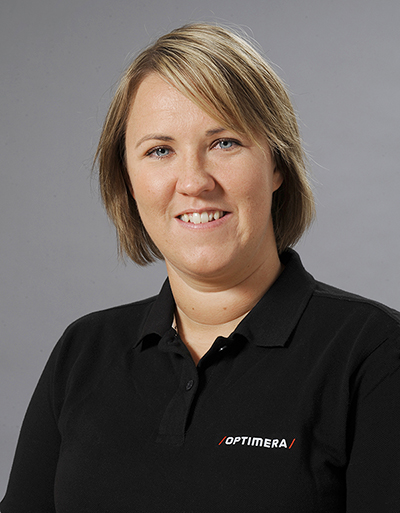
– Hej och grattis! Nu är du i mål och kan titulera dig Marknadsekonom DIHM – hur känns det?

– Tack! Såklart är det jätteskönt att vara klar… Men samtidigt känns det lite konstigt att inte längre ses varje torsdag här på IHM. Fast i vår grupp kom vi fram till att så länge som IHM inte byter portkod, så kan vi ju komma hit varje torsdag ändå och jobba på distans, haha. 

– Smart tänkt! Din vanliga arbetsplats är ju dock på Optimera – vilka är ni?

– Vi är en bred byggfackhandel, och riktar oss främst till yrkesfolk och professionella hantverkare.  

– Och din roll som enhetsutvecklingschef, vad innebär den?

– Jag har arbetat på Optimera i 5 år som enhetsutvecklare. Enhetsutveckling är ett brett område där jag tittar på allt från arbetsprocesser till produktsortiment. Jag är även med och ritar butiker, ser vilka artiklar som ska finnas och var i butiken. Utöver det utbildar jag våra lager- och butiksledare i hur vi kan arbeta smartare och mer effektivt. Från och med 1 september är jag chef för avdelningen. Något som blev möjligt tack vare min utbildning på IHM. Utöver personalansvar ansvarar jag för enhetsutveckling på övergripande nivå vilket innebär mer strategiarbete. Dessutom blir det färre timmar i bil runt om i Sverige vilket de är glada för där hemma.

–  Kan tänka mig att det blivit en hel del bilkörning med nära 50 butiker att besöka. Är din nya chefstjänst en anledning till att du valde att vidareutbilda dig?

– Ja, jag saknade formell högre utbildning. När jag var yngre var jag med i landslaget i hästhoppning, såg fram emot OS-medaljer och tänkte att jag kommer att klara mig gott på detta. Så småningom insåg jag att det blir inget OS-guld. Jag slutade rida och halkade av en slump in på ICA, där jag först jobbade i kassan och senare fick jag ansvar för produktutveckling av frukt och grönt. Just produktutvecklingsbiten gjorde att jag senare halkade vidare till Optimera. Det var någonstans här jag förstod att jag inte kan hålla på att halka runt. Jag har alltid varit ambitiös och snabb, men det fungerar bara till en viss punkt. Trots mycket erfarenhet efterfrågade man allt oftare akademisk kompetens vid intervjuer. Det var här tanken väcktes att börja studera.

– Varför just IHM?

– Första kontakten med IHM var under mina år på ICA, då två kollegor till mig började plugga här. Så jag kände till IHM via dem och det som lockade mig var dels att man kunde studera parallellt med sitt arbete och dels att man kunde välja upplägg och själv plocka ihop vilka program som skulle ingå i Marknadsekonom DIHM.

– Du valde att läsa IHM Strategisk Marknadsföring och IHM Verksamhetsstyrning utöver IHM Business Management. Hur gick dina funderingar inför val av program?

– Efter att jag hade sökt runt bland utbildningar kontaktade jag Elisabet Ek, som är rådgivare på IHM i Malmö. Vi hade ett möte där hon hjälpte mig bena ut vilka program jag borde läsa och som skulle ge mig en bra bredd av det som är relevant för mig.

– Min akilleshäl har alltid varit matte och ekonomi, så min första tanke var därför att jag skulle läsa IHM Business Finance. Men så pratade jag med min chef och han frågade varför jag skulle läsa ekonomi? ”Välj istället något som du är bra på och där du kan bli ännu bättre!” sa han.

– Det låter som en klok chef, och rak. Har företaget stöttat dig i din utbildning?

–  Ja, jag har fått förståelse för mitt behov av utbildning. Eftersom jag själv är ute en hel del och hanterar våra internutbildningar, så ger jag mycket utåt. Det är jätteroligt men samtidigt dränerar det energikontot. För att orka behöver jag själv få påfyllning av energi och det var därför jag lyfte frågan med min chef om att få kompetensutveckla mig.

– Har det fungerat att studera jämsides med arbetet? Hur har tiden räckt till?

– Som småbarnsförälder med mycket resor i tjänsten finns inte speciellt mycket utrymme för egentid. Men allt går om man vill. Det handlar om planering och fokus på det man för stunden håller på med. I början kunde jag sitta och kolla jobbmejlen under lektionerna på IHM, eller tänka på vad jag behövde göra till nästa kurstillfälle när jag var på arbetet. Men det var inte hållbart. Torsdagar dedikerade jag därför helt till studier. Förmiddagen ägnade jag åt att förbereda mig inför passen på IHM samma eftermiddag.

– Man måste prioritera det man vill göra. Förut förstod jag mig inte på hur folk hann med att vara ute och jogga en timme på morgonen innan jobbet. Men om andra kan vara ute och springa så hinner väl jag läsa en timme innan jobbet? Och det gick!

– Hur skulle du sammanfatta utbildningstiden och vad tar du med dig framåt?

– Lärare och lektioner har varit jättebra, men framförallt har utbytet med de andra deltagarna gett många bra insikter. Att möta andra personer från såväl det lilla enmansföretaget till det stora internationella – och inse att vi alla ställs inför liknande frågeställningar och problem har varit mycket intressant.

– Det jag tar med mig framåt är alla bra modeller som vi har fått att luta oss mot och använda i vardagen – och en ny säkerhet. Jag kan gå upp i ledningsgruppen och tryggt presentera ett case i vetskap om att jag även kan möta alla tänkbara frågor. Så kände jag inte förut.

– Hur ser framtiden ut?

– Optimera kommer framöver att gå in en mycket expansiv fast med såväl förvärv som nyetablering. Själv ska det bli spännande att gå in i min nya roll och få utveckla denna.

– Och hästhoppningen har du helt lagt det på hyllan?

– Ja, när jag sålde gården och 20 hästar så lade jag det kapitlet bakom mig. Men jag har vänner som rider och följer dem. Barnen fick också prova på men tyckte att det var läskigt med hästar. De vill hellre spela fotboll och jag är nöjd med det.

– Tack för ett trevligt och inspirerande samtal. Lycka till i din nya roll!

– Tack!


Optimera Svenska AB är en av Sveriges ledande bygghandelskedjor för yrkeskunder och har idag 46 byggvaruhus i Sverige och säte i Malmö. Optimera har cirka 800 anställda och omsätter cirka 3 miljarder SEK.
Optimera finns även i Danmark, Norge, Estland samt Lettland och ägs av den franska koncernen Saint Gobain som är en av Europas största leverantörer av byggmaterial. Saint Gobain omsätter ca 41 miljarder Euro och har mer än 180 000 anställda i 64 länder.


29 september 2016
Välj en tid som passar direkt i kalendern!
Möt Emelie Johansson, Service Manager på MTR Express
Möt Lamin Sonko, PR Advisor och projektledare på Jung Relation