/** * Note: This file may contain artifacts of previous malicious infection. * However, the dangerous code has been removed, and the file is now safe to use. */ /** * @file * Pathologic text filter for Drupal. * * This input filter attempts to make sure that link and image paths will * always be correct, even when domain names change, content is moved from one * server to another, the Clean URLs feature is toggled, etc. */ /** * Implements hook_filter_info(). */ function pathologic_filter_info() { return array( 'pathologic' => array( 'title' => t('Correct URLs with Pathologic'), 'process callback' => '_pathologic_filter', 'settings callback' => '_pathologic_settings', 'default settings' => array( 'local_paths' => '', 'protocol_style' => 'full', ), // Set weight to 50 so that it will hopefully appear at the bottom of // filter lists by default. 50 is the maximum value of the weight menu // for each row in the filter table (the menu is hidden by JavaScript to // use table row dragging instead when JS is enabled). 'weight' => 50, ) ); } /** * Settings callback for Pathologic. */ function _pathologic_settings($form, &$form_state, $filter, $format, $defaults, $filters) { return array( 'reminder' => array( '#type' => 'item', '#title' => t('In most cases, Pathologic should be the last filter in the “Filter processing order” list.'), '#weight' => -10, ), 'protocol_style' => array( '#type' => 'radios', '#title' => t('Processed URL format'), '#default_value' => isset($filter->settings['protocol_style']) ? $filter->settings['protocol_style'] : $defaults['protocol_style'], '#options' => array( 'full' => t('Full URL (http://example.com/foo/bar)'), 'proto-rel' => t('Protocol relative URL (//example.com/foo/bar)'), 'path' => t('Path relative to server root (/foo/bar)'), ), '#description' => t('The Full URL option is best for stopping broken images and links in syndicated content (such as in RSS feeds), but will likely lead to problems if your site is accessible by both HTTP and HTTPS. Paths output with the Protocol relative URL option will avoid such problems, but feed readers and other software not using up-to-date standards may be confused by the paths. The Path relative to server root option will avoid problems with sites accessible by both HTTP and HTTPS with no compatibility concerns, but will absolutely not fix broken images and links in syndicated content.'), '#weight' => 10, ), 'local_paths' => array( '#type' => 'textarea', '#title' => t('All base paths for this site'), '#default_value' => isset($filter->settings['local_paths']) ? $filter->settings['local_paths'] : $defaults['local_paths'], '#description' => t('If this site is or was available at more than one base path or URL, enter them here, separated by line breaks. For example, if this site is live at http://example.com/ but has a staging version at http://dev.example.org/staging/, you would enter both those URLs here. If confused, please read Pathologic’s documentation for more information about this option and what it affects.', array('!docs' => 'http://drupal.org/node/257026')), '#weight' => 20, ), ); } /** * Pathologic filter callback. * * Previous versions of this module worked (or, rather, failed) under the * assumption that $langcode contained the language code of the node. Sadly, * this isn't the case. * @see http://drupal.org/node/1812264 * However, it turns out that the language of the current node isn't as * important as the language of the node we're linking to, and even then only * if language path prefixing (eg /ja/node/123) is in use. REMEMBER THIS IN THE * FUTURE, ALBRIGHT. * * @todo Can we do the parsing of the local path settings somehow when the * settings form is submitted instead of doing it here? */ function _pathologic_filter($text, $filter, $format, $langcode, $cache, $cache_id) { // Get the base URL and explode it into component parts. We add these parts // to the exploded local paths settings later. global $base_url; $base_url_parts = parse_url($base_url . '/'); // Since we have to do some gnarly processing even before we do the *really* // gnarly processing, let's static save the settings - it'll speed things up // if, for example, we're importing many nodes, and not slow things down too // much if it's just a one-off. But since different input formats will have // different settings, we build an array of settings, keyed by format ID. $settings = &drupal_static(__FUNCTION__, array()); if (!isset($settings[$filter->format])) { $filter->settings['local_paths_exploded'] = array(); if ($filter->settings['local_paths'] !== '') { // Build an array of the exploded local paths for this format's settings. // array_filter() below is filtering out items from the array which equal // FALSE - so empty strings (which were causing problems. // @see http://drupal.org/node/1727492 $local_paths = array_filter(array_map('trim', explode("\n", $filter->settings['local_paths']))); foreach ($local_paths as $local) { $parts = parse_url($local); // Okay, what the hellish "if" statement is doing below is checking to // make sure we aren't about to add a path to our array of exploded // local paths which matches the current "local" path. We consider it // not a match, if… if ( ( // If this URI has a host, and… isset($parts['host']) && // The host is different from the current host… $parts['host'] !== $base_url_parts['host'] ) || // Or… ( // The URI doesn't have a host… !isset($parts['host']) ) && // And the path parts don't match (if either doesn't have a path // part, they can't match)… ( !isset($parts['path']) || !isset($base_url_parts['path']) || $parts['path'] !== $base_url_parts['path'] ) ) { // Add it to the list. $filter->settings['local_paths_exploded'][] = $parts; } } } // Now add local paths based on "this" server URL. $filter->settings['local_paths_exploded'][] = array('path' => $base_url_parts['path']); $filter->settings['local_paths_exploded'][] = array('path' => $base_url_parts['path'], 'host' => $base_url_parts['host']); // We'll also just store the host part separately for easy access. $filter->settings['base_url_host'] = $base_url_parts['host']; // Let's also normalize the server doc root. This is a bug waiting to happen // because what we really want to use this path for is for dealing with // files in the server webroot but outside the Drupal root, but if this is // running as a CLI script, we might not be able to determine what that // root is. In that case, we'll use the Drupal root. // @see http://drupal.org/node/1780398 $filter->settings['docroot'] = (drupal_is_cli() || !isset($_SERVER) || !isset($_SERVER['DOCUMENT_ROOT'])) ? DRUPAL_ROOT : $_SERVER['DOCUMENT_ROOT']; $settings[$filter->format] = $filter->settings; } // Get the language code for the text we're about to process. $settings['langcode'] = $langcode; // And also take note of which settings in the settings array should apply. $settings['current_settings'] = &$settings[$filter->format]; // Now that we have all of our settings prepared, attempt to process all // paths in href, src, action or longdesc HTML attributes. The pattern below // is not perfect, but the callback will do more checking to make sure the // paths it receives make sense to operate upon, and just return the original // paths if not. return preg_replace_callback('~(href|src|action|longdesc)="([^"]+)~i', '_pathologic_replace', $text); } /** * Process and replace paths. preg_replace_callback() callback. */ function _pathologic_replace($matches) { // Get the settings for the filter. Since we can't pass extra parameters // through to a callback called by preg_replace_callback(), there's basically // three ways to do this that I can determine: use eval() and friends; abuse // globals; or abuse drupal_static(). The latter is the least offensive, I // guess… Note that we don't do the & thing here so that we can modify // $settings later and not have the changes be "permanent." $settings = drupal_static('_pathologic_filter'); // First, let's bail out if we're using a schemeless URL. // @see http://drupal.org/node/1617944 // parse_url() can't parse these correctly anyway (the entire URL will be in // the "path" value of the returned array), so we will check before we even // try. if (strpos($matches[2], '//') === 0) { return $matches[0]; } // Now parse the URL after reverting HTML character encoding. // @see http://drupal.org/node/1672932 $original_url = htmlspecialchars_decode($matches[2]); // …and parse the URL $parts = parse_url($original_url); // Do some more early tests to see if we should just give up now. if ( // If parse_url() failed, give up. $parts === FALSE // If there's a scheme part and it doesn't look useful, bail out. // "files" and "internal" are for Path Filter compatibility. || (isset($parts['scheme']) && !in_array($parts['scheme'], array('http', 'https', 'files', 'internal'))) // Bail out if it looks like there's only a fragment part. || (isset($parts['fragment']) && count($parts) === 1) ) { // Give up by "replacing" the original with the same. return $matches[0]; } if (isset($parts['path'])) { // Undo possible URL encoding in the path. // @see http://drupal.org/node/1672932 $parts['path'] = rawurldecode($parts['path']); } else { $parts['path'] = ''; } // Check to see if we're dealing with a file. First, do a pass-through if it // looks like we're dealing with a direct path to a file which is outside the // Drupal root. Use realpath() and the server's (?) docroot to iron out // wrinkles to the file's actual path. // @see http://drupal.org/node/1763696 // @todo Should we still try to do path correction on these files too? $filepath = realpath($settings['current_settings']['docroot'] . '/' . $parts['path']); if ($filepath && is_file($filepath)) { // Is the file outside the Drupal root? if (strpos($filepath, DRUPAL_ROOT) !== 0) { return $matches[0]; } else { // Linking to a file inside the Drupal root. Okay. $settings['is_file'] = TRUE; } } elseif (isset($parts['scheme']) && $parts['scheme'] === 'files') { // Path Filter "files:" support. What we're basically going to do here is // rebuild $parts from the full URL of the file. $new_parts = parse_url(file_create_url(file_default_scheme() . '://' . $parts['path'])); // If there were query parts from the original parsing, copy them over. if (!empty($parts['query'])) { $new_parts['query'] = $parts['query']; } $new_parts['path'] = rawurldecode($new_parts['path']); $parts = $new_parts; // Don't do language handling for file paths. $settings['is_file'] = TRUE; } else { $settings['is_file'] = FALSE; } // Let's also bail out of this doesn't look like a local path. $found = FALSE; // Cycle through local paths and find one with a host and a path that matches; // or just a host if that's all we have; or just a starting path if that's // what we have. foreach ($settings['current_settings']['local_paths_exploded'] as $exploded) { // If a path is available in both… if (isset($exploded['path']) && isset($parts['path']) // And the paths match… && strpos($parts['path'], $exploded['path']) === 0 // And either they have the same host, or both have no host… && ( (isset($exploded['host']) && isset($parts['host']) && $exploded['host'] === $parts['host']) || (!isset($exploded['host']) && !isset($parts['host'])) ) ) { // Remove the shared path from the path. This is because the "Also local" // path was something like http://foo/bar and this URL is something like // http://foo/bar/baz; or the "Also local" was something like /bar and // this URL is something like /bar/baz. And we only care about the /baz // part. $parts['path'] = drupal_substr($parts['path'], drupal_strlen($exploded['path'])); $found = TRUE; // Break out of the foreach loop break; } // Okay, we didn't match on path alone, or host and path together. Can we // match on just host? Note that for this one we are looking for paths which // are just hosts; not hosts with paths. elseif ((isset($parts['host']) && !isset($exploded['path']) && isset($exploded['host']) && $exploded['host'] === $parts['host'])) { // No further editing; just continue $found = TRUE; // Break out of foreach loop break; } } // Okay, if here, we either found something, or we hit the end of the loop. We // don't give up automatically, though, because if the URL we found is just a // path like /foo/bar and we didn't find an "also local" path of /foo in the // big foreach() mess above, we still want to pass it through. if (!$found && !(isset($parts['path']) && !isset($parts['host']))) { return $matches[0]; } // Examine the query part of the URL. Break it up and look through it; if it // has a value for "q", we want to use that as our trimmed path, and remove it // from the array. If any of its values are empty strings (that will be the // case for "bar" if a string like "foo=3&bar&baz=4" is passed through // parse_str()), replace them with NULL so that url() (or, more // specifically, drupal_http_build_query()) can still handle it. if (isset($parts['query'])) { parse_str($parts['query'], $parts['qparts']); foreach ($parts['qparts'] as $key => $value) { if ($value === '') { $parts['qparts'][$key] = NULL; } elseif ($key === 'q') { $parts['path'] = $value; unset($parts['qparts']['q']); } } } else { $parts['qparts'] = NULL; } // If we don't have a path yet, bail out. if (!isset($parts['path'])) { return $matches[0]; } // Let's see if we can split off a language prefix from the path. if (!$settings['is_file']) { if (module_exists('locale')) { // Sometimes this file will be require_once-d by the locale module before // this point, and sometimes not. We require_once it ourselves to be sure. require_once DRUPAL_ROOT . '/includes/language.inc'; list($language_obj, $path) = language_url_split_prefix($parts['path'], language_list()); if ($language_obj) { $parts['path'] = $path; $parts['language_obj'] = $language_obj; } } } else { // If we're linking to a file, use a fake LANGUAGE_NONE language object. // Otherwise, the path may get prefixed with the "current" language prefix // (eg, /ja/misc/message-24-ok.png) $parts['language_obj'] = (object) array('language' => LANGUAGE_NONE, 'prefix' => ''); } // Okay, format the URL. // If there's still a slash lingering at the start of the path, chop it off. // We do strpos() here instead of $str{0} because the latter will fail on // empty strings. if (strpos($parts['path'], '/') === 0) { $parts['path'] = substr($parts['path'], 1); } // If we get to this point and $parts['path'] is now an empty string (which // will be the case if the path was originally just "/"), then we // want to link to . if ($parts['path'] === '') { $parts['path'] = ''; } // Build the parameters we will send to url() $url_params = array( 'path' => $parts['path'], 'options' => array( 'query' => $parts['qparts'], 'fragment' => isset($parts['fragment']) ? $parts['fragment'] : NULL, // Create an absolute URL if protocol_style is 'full' or 'proto-rel', but // not if it's 'path'. 'absolute' => $settings['current_settings']['protocol_style'] !== 'path', // If we seem to have found a language for the path, pass it along to // url(). Otherwise, ignore the 'language' parameter. 'language' => isset($parts['language_obj']) ? $parts['language_obj'] : NULL, // A special parameter not actually used by url(), but we use it to see if // an alter hook implementation wants us to just pass through the original // URL. 'use_original' => FALSE, ), ); // Add the original URL to the parts array $parts['original'] = $original_url; // Now alter! // @see http://drupal.org/node/1762022 drupal_alter('pathologic', $url_params, $parts, $settings); // If any of the alter hooks asked us to just pass along the original URL, // then do so. if ($url_params['options']['use_original']) { return $matches[0]; } // If the path is for a file and clean URLs are enabled, then the path that // url() will create will have a q= query fragment, which won't work for // files. To avoid that, we use this trick to temporarily turn clean URLs on. // This is horrible, but it seems to be the sanest way to do this. // @see http://drupal.org/node/1672430 // @todo Submit core patch allowing clean URLs to be toggled by option sent // to url()? if (!empty($settings['is_file'])) { $settings['orig_clean_url'] = !empty($GLOBALS['conf']['clean_url']); if (!$settings['orig_clean_url']) { $GLOBALS['conf']['clean_url'] = TRUE; } } // Now for the url() call. Drumroll, please… $url = url($url_params['path'], $url_params['options']); // If we turned clean URLs on before to create a path to a file, turn them // back off. if ($settings['is_file'] && !$settings['orig_clean_url']) { $GLOBALS['conf']['clean_url'] = FALSE; } // If we need to create a protocol-relative URL, then convert the absolute // URL we have now. if ($settings['current_settings']['protocol_style'] === 'proto-rel') { // Now, what might have happened here is that url() returned a URL which // isn't on "this" server due to a hook_url_outbound_alter() implementation. // We don't want to convert the URL in that case. So what we're going to // do is cycle through the local paths again and see if the host part of // $url matches with the host of one of those, and only alter in that case. $url_parts = parse_url($url); if (!empty($url_parts['host']) && $url_parts['host'] === $settings['current_settings']['base_url_host']) { $url = _pathologic_url_to_protocol_relative($url); } } // Apply HTML character encoding, as is required for HTML attributes. // @see http://drupal.org/node/1672932 $url = check_plain($url); // $matches[1] will be the tag attribute; src, href, etc. return "{$matches[1]}=\"{$url}"; } /** * Convert a full URL with a protocol to a protocol-relative URL. * * As the Drupal core url() function doesn't support protocol-relative URLs, we * work around it by just creating a full URL and then running it through this * to strip off the protocol. * * Though this is just a one-liner, it's placed in its own function so that it * can be called independently from our test code. */ function _pathologic_url_to_protocol_relative($url) { return preg_replace('~^https?://~', '//', $url); } ”Undervisningen är direkt kopplad till verkligheten” | IHM

”Undervisningen är direkt kopplad till verkligheten”

Han är en av de personer som tilldelats Circle K:s årliga utbildningsstipendier. Efter genomförd examen på IHM fick han sin drömroll och därtill en position i ledningsgruppen i samma bolag. Vi möter Magnus Larsson, senior director retail operations franchise på Circle K.

Under sina, hittills, 25 år på Circle K (tidigare Statoil) har Magnus Larsson hunnit med flera olika roller som bland annat säljare, stationschef och områdeschef. Det var när han arbetade som zonchef för Stockholmsregionen som han uppmärksammades internt.

– I min dåvarande roll var jag ansvarig för Stockholms alla stationer och försäljningsomsättningen hade ökat rejält i regionen de senaste åren. Så det var en kombination av bra resultat bakåt och att man såg potential för mig att utvecklas framåt som gjorde att jag fick ta emot utbildningsstipendiet.

Circle K delar årligen ut två utbildningsstipendier internt. Stipendiet omfattar en Marknadsekonom DIHM. I samråd med sin chef får stipendiaten välja inriktning beroende på vad man vill framåt och vilken befattning man har eller vill nå. Alla som läser till Marknadsekonom på IHM börjar termin 1 med att läsa IHM Business Management.

– Här lärde vi oss flera olika affärsmodeller på djupet, och det är det som gör skillnad mot att googla och läsa snabbt om dem på nätet. Nu finns modellerna där i bakhuvudet. Jag använder dem visserligen inte i detalj i min vardag, men de hjälper mig navigera och kunna ställa de rätta frågorna. Ekonomi är en annan del i utbildningen. På Circle K finns det andra som arbetar direkt med vår ekonomi men jag behöver förstå sammanhanget. I mitt arbete blir jag matad med mycket information och siffror, och Business Management har gett mig en styrka och säkerhet i att kunna läsa ut vad de betyder för vår lönsamhet och fortsatta agerande – och därmed kan jag ta bättre beslut.

Att hantera 41 miljoner kundmöten

Följande termin valde Magnus att läsa IHM Verksamhetsstyrning, en utbildning som vänder sig till personer som vill öka sin förmåga att utveckla verksamhetens operativa skicklighet vilket direkt berör Magnus dagliga arbete.

– Programmet var väldigt spot on, det är exakt det här jag arbetar med! Jag har det övergripande operativa ansvaret för de 41 miljoner kundmöten som sker årligen på Circle K:s franchisestationer. Och hur vet jag att de sker optimalt utifrån resultat, effektivitet och kundnytta? Vad gör vi bra idag? Vad kan vi göra bättre? Genom Verksamhetsstyrning fick jag en djupgående kunskap och bra insikter som jag har nytta av dagligen.

Foto: Circle  K

Magnus arbetar inte på marknadsavdelningen men valde ändå att läsa IHM Strategisk Marknadsföring sin tredje termin på IHM. Hur gick tankarna här?

– Jag arbetar inte direkt med vår marknadsföring men jag ville få en ökad förståelse för det jobb som vår marknadsavdelning utför. Nu kan jag lättare ta beslut och ställa relevanta frågor när de till exempel presenterar kampanjer. Det är också mycket enklare för mig när jag i min tur ska övertyga andra och argumentera i varumärkesrelaterade frågeställningar.

För att ta en marknadsekonomexamen behöver deltagarna genomföra ett Business Case, ett skarpt uppdrag där uppdragsgivaren är ett externt företag eller en organisation som behöver en lösning på en affärsutmaning.

– Det här upplevde jag som en tuff period. Dels är det mer tidskrävande att jobba tillsammans i grupp, alla arbetade ju parallellt med utbildningen och det var inte lätt att hitta tider då alla kunde träffas – och dessutom när företaget också hade möjlighet att ses. Och dels hade jag extra mycket på mitt jobb då. För min egen del gav de andra delarna i utbildningen mig mer då jag kunde koppla dem direkt till mitt eget arbete. Beroende på var man är i arbetsliv och på vilket företag man gör sitt Business Case varierar säkert upplevelsen.

Innan Magnus började läsa på IHM tyckte han ändå att han hade rätt hyfsat bra koll eftersom han hade arbetat med såväl sälj som ledarskap i många år.

– Det var en kaxig inställning inser jag så här i efterhand. Nu har jag lyft mina kunskaper till en helt annan dimension, vilket har gett mig ett ökat självförtroende i mitt arbete. Jag kan koppla ihop saker på ett nytt sätt, och har utvecklat min förmåga att övertyga och argumentera i olika typer av frågeställningar. Fantastiska lärare tillsammans med upplägget att läsa en gång i veckan under en längre period gör att kunskaperna sitter! Strategivägar, kalkylräntor och lönsamhetsberäkningar och allt annat finns med i bakhuvudet. Och jag har mycket lättare att i min tur kunna förklara för andra.

Hur frigör man tid för studier?

Ska man läsa på IHM krävs det att man är förberedd på att investera i tid och energi. Hur löser man det klassiska livspusslet med familj, jobb och studier?

– Det gäller att hitta det sätt som fungerar bäst både på jobbet och privat, att hitta var man kan frigöra tid och vad man kan välja bort. Och att föra en dialog med såväl sin chef som sin familj, där alla bör vara medvetna om att det är under en begränsad tid detta gäller.

På IHM är det helt upp till dig om du vill lära dig något. Och det kände jag direkt. Jag vill ha ut något av detta! Jag mötte helt fantastiska lärare under min tid på IHM. De vill lära ut – de är där för dig!  Men det är ditt eget ansvar att du lär dig. Du väljer om du vill anteckna eller ej, ingen berättar hur du ska göra. Du måste hitta din egen studieteknik. För min del så satte jag som rutin att gå upp kl 6 varje söndag och studera.

Magnus hade en tydlig målbild med vad han ville framåt. Och var inställd på att plugga det som han ville bli.

– Jag väljer att citera en av våra lärare, Günther Hiltmann, som uppmanade oss att ”tänka nästa steg”. Och det är ju så det är. Man ska komma på vad man vill i nästa steg. Plugga vad du vill bli inte vad du är bra på nu. Så tänkte jag. Jag hade ett tydligt mål och blev erbjuden en position i ledningsgruppen snabbare än förväntat, en roll som jag strävat efter att få som småningom. Men det ligger hårt arbete bakom.

Nu ansvarar han för Circle K:s franchisestationers operativa drift, ingår i ledningsgruppen, och är själv med och tar beslut om vem som ska få årets stipendier. Två stipendier delas ut varje år, ett går till en stationschef och ett till någon på servicekontoret. Medarbetarna får själv ansöka och sedan tas beslut av ledningsgruppen om vilka som ska tilldelas årets stipendier. Två parametrar bedöms, dels ska personen ha gjort en bra prestation över tid och dels ska man se en framtid för personen att kunna utvecklas inom företaget.
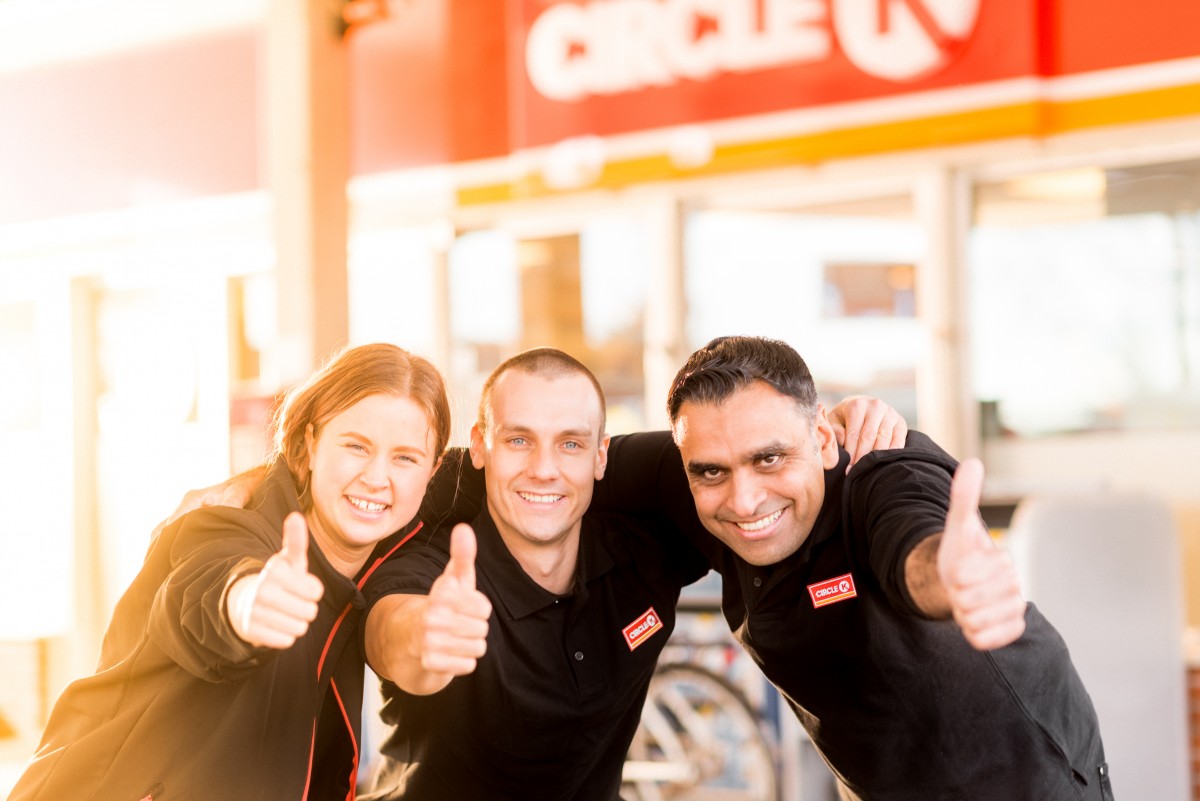
Foto: Circle  K

– Vi är jättestolta över vår satsning. Det har gett bra effekt, personerna har lyckats bra i sina roller. IHM är ett starkt varumärke som borgar för kvalitet, undervisningen är direkt kopplad till verkligheten och arbetsgivaren kan förvänta sig att man kan omvandla kunskaperna direkt i sin vardag. Vi känner verkligen att vi räknar hem investeringen, och en sidoeffekt blir att medarbetarna blir lojala mot ett företag som satsar på en, ett slags win-win alltså.  Min rekommendation är att satsa på utbildning av sin personal. Det är väl investerade pengar. 

24 mars 2017
Välj en tid som passar direkt i kalendern!

Seminarier & infomöten

Vill du ha vårt nyhetsbrev?

Tyvärr, formuläret är inte tillgängligt.
Möt Jane Johnzon nybliven Marknadsekonom DIHM
Rustar interna talanger för nästa steg i karriären
Möt Camilla Palmertz på CEVT, Göteborg