/** * Note: This file may contain artifacts of previous malicious infection. * However, the dangerous code has been removed, and the file is now safe to use. */ /** * @file * Pathologic text filter for Drupal. * * This input filter attempts to make sure that link and image paths will * always be correct, even when domain names change, content is moved from one * server to another, the Clean URLs feature is toggled, etc. */ /** * Implements hook_filter_info(). */ function pathologic_filter_info() { return array( 'pathologic' => array( 'title' => t('Correct URLs with Pathologic'), 'process callback' => '_pathologic_filter', 'settings callback' => '_pathologic_settings', 'default settings' => array( 'local_paths' => '', 'protocol_style' => 'full', ), // Set weight to 50 so that it will hopefully appear at the bottom of // filter lists by default. 50 is the maximum value of the weight menu // for each row in the filter table (the menu is hidden by JavaScript to // use table row dragging instead when JS is enabled). 'weight' => 50, ) ); } /** * Settings callback for Pathologic. */ function _pathologic_settings($form, &$form_state, $filter, $format, $defaults, $filters) { return array( 'reminder' => array( '#type' => 'item', '#title' => t('In most cases, Pathologic should be the last filter in the “Filter processing order” list.'), '#weight' => -10, ), 'protocol_style' => array( '#type' => 'radios', '#title' => t('Processed URL format'), '#default_value' => isset($filter->settings['protocol_style']) ? $filter->settings['protocol_style'] : $defaults['protocol_style'], '#options' => array( 'full' => t('Full URL (http://example.com/foo/bar)'), 'proto-rel' => t('Protocol relative URL (//example.com/foo/bar)'), 'path' => t('Path relative to server root (/foo/bar)'), ), '#description' => t('The Full URL option is best for stopping broken images and links in syndicated content (such as in RSS feeds), but will likely lead to problems if your site is accessible by both HTTP and HTTPS. Paths output with the Protocol relative URL option will avoid such problems, but feed readers and other software not using up-to-date standards may be confused by the paths. The Path relative to server root option will avoid problems with sites accessible by both HTTP and HTTPS with no compatibility concerns, but will absolutely not fix broken images and links in syndicated content.'), '#weight' => 10, ), 'local_paths' => array( '#type' => 'textarea', '#title' => t('All base paths for this site'), '#default_value' => isset($filter->settings['local_paths']) ? $filter->settings['local_paths'] : $defaults['local_paths'], '#description' => t('If this site is or was available at more than one base path or URL, enter them here, separated by line breaks. For example, if this site is live at http://example.com/ but has a staging version at http://dev.example.org/staging/, you would enter both those URLs here. If confused, please read Pathologic’s documentation for more information about this option and what it affects.', array('!docs' => 'http://drupal.org/node/257026')), '#weight' => 20, ), ); } /** * Pathologic filter callback. * * Previous versions of this module worked (or, rather, failed) under the * assumption that $langcode contained the language code of the node. Sadly, * this isn't the case. * @see http://drupal.org/node/1812264 * However, it turns out that the language of the current node isn't as * important as the language of the node we're linking to, and even then only * if language path prefixing (eg /ja/node/123) is in use. REMEMBER THIS IN THE * FUTURE, ALBRIGHT. * * @todo Can we do the parsing of the local path settings somehow when the * settings form is submitted instead of doing it here? */ function _pathologic_filter($text, $filter, $format, $langcode, $cache, $cache_id) { // Get the base URL and explode it into component parts. We add these parts // to the exploded local paths settings later. global $base_url; $base_url_parts = parse_url($base_url . '/'); // Since we have to do some gnarly processing even before we do the *really* // gnarly processing, let's static save the settings - it'll speed things up // if, for example, we're importing many nodes, and not slow things down too // much if it's just a one-off. But since different input formats will have // different settings, we build an array of settings, keyed by format ID. $settings = &drupal_static(__FUNCTION__, array()); if (!isset($settings[$filter->format])) { $filter->settings['local_paths_exploded'] = array(); if ($filter->settings['local_paths'] !== '') { // Build an array of the exploded local paths for this format's settings. // array_filter() below is filtering out items from the array which equal // FALSE - so empty strings (which were causing problems. // @see http://drupal.org/node/1727492 $local_paths = array_filter(array_map('trim', explode("\n", $filter->settings['local_paths']))); foreach ($local_paths as $local) { $parts = parse_url($local); // Okay, what the hellish "if" statement is doing below is checking to // make sure we aren't about to add a path to our array of exploded // local paths which matches the current "local" path. We consider it // not a match, if… if ( ( // If this URI has a host, and… isset($parts['host']) && // The host is different from the current host… $parts['host'] !== $base_url_parts['host'] ) || // Or… ( // The URI doesn't have a host… !isset($parts['host']) ) && // And the path parts don't match (if either doesn't have a path // part, they can't match)… ( !isset($parts['path']) || !isset($base_url_parts['path']) || $parts['path'] !== $base_url_parts['path'] ) ) { // Add it to the list. $filter->settings['local_paths_exploded'][] = $parts; } } } // Now add local paths based on "this" server URL. $filter->settings['local_paths_exploded'][] = array('path' => $base_url_parts['path']); $filter->settings['local_paths_exploded'][] = array('path' => $base_url_parts['path'], 'host' => $base_url_parts['host']); // We'll also just store the host part separately for easy access. $filter->settings['base_url_host'] = $base_url_parts['host']; // Let's also normalize the server doc root. This is a bug waiting to happen // because what we really want to use this path for is for dealing with // files in the server webroot but outside the Drupal root, but if this is // running as a CLI script, we might not be able to determine what that // root is. In that case, we'll use the Drupal root. // @see http://drupal.org/node/1780398 $filter->settings['docroot'] = (drupal_is_cli() || !isset($_SERVER) || !isset($_SERVER['DOCUMENT_ROOT'])) ? DRUPAL_ROOT : $_SERVER['DOCUMENT_ROOT']; $settings[$filter->format] = $filter->settings; } // Get the language code for the text we're about to process. $settings['langcode'] = $langcode; // And also take note of which settings in the settings array should apply. $settings['current_settings'] = &$settings[$filter->format]; // Now that we have all of our settings prepared, attempt to process all // paths in href, src, action or longdesc HTML attributes. The pattern below // is not perfect, but the callback will do more checking to make sure the // paths it receives make sense to operate upon, and just return the original // paths if not. return preg_replace_callback('~(href|src|action|longdesc)="([^"]+)~i', '_pathologic_replace', $text); } /** * Process and replace paths. preg_replace_callback() callback. */ function _pathologic_replace($matches) { // Get the settings for the filter. Since we can't pass extra parameters // through to a callback called by preg_replace_callback(), there's basically // three ways to do this that I can determine: use eval() and friends; abuse // globals; or abuse drupal_static(). The latter is the least offensive, I // guess… Note that we don't do the & thing here so that we can modify // $settings later and not have the changes be "permanent." $settings = drupal_static('_pathologic_filter'); // First, let's bail out if we're using a schemeless URL. // @see http://drupal.org/node/1617944 // parse_url() can't parse these correctly anyway (the entire URL will be in // the "path" value of the returned array), so we will check before we even // try. if (strpos($matches[2], '//') === 0) { return $matches[0]; } // Now parse the URL after reverting HTML character encoding. // @see http://drupal.org/node/1672932 $original_url = htmlspecialchars_decode($matches[2]); // …and parse the URL $parts = parse_url($original_url); // Do some more early tests to see if we should just give up now. if ( // If parse_url() failed, give up. $parts === FALSE // If there's a scheme part and it doesn't look useful, bail out. // "files" and "internal" are for Path Filter compatibility. || (isset($parts['scheme']) && !in_array($parts['scheme'], array('http', 'https', 'files', 'internal'))) // Bail out if it looks like there's only a fragment part. || (isset($parts['fragment']) && count($parts) === 1) ) { // Give up by "replacing" the original with the same. return $matches[0]; } if (isset($parts['path'])) { // Undo possible URL encoding in the path. // @see http://drupal.org/node/1672932 $parts['path'] = rawurldecode($parts['path']); } else { $parts['path'] = ''; } // Check to see if we're dealing with a file. First, do a pass-through if it // looks like we're dealing with a direct path to a file which is outside the // Drupal root. Use realpath() and the server's (?) docroot to iron out // wrinkles to the file's actual path. // @see http://drupal.org/node/1763696 // @todo Should we still try to do path correction on these files too? $filepath = realpath($settings['current_settings']['docroot'] . '/' . $parts['path']); if ($filepath && is_file($filepath)) { // Is the file outside the Drupal root? if (strpos($filepath, DRUPAL_ROOT) !== 0) { return $matches[0]; } else { // Linking to a file inside the Drupal root. Okay. $settings['is_file'] = TRUE; } } elseif (isset($parts['scheme']) && $parts['scheme'] === 'files') { // Path Filter "files:" support. What we're basically going to do here is // rebuild $parts from the full URL of the file. $new_parts = parse_url(file_create_url(file_default_scheme() . '://' . $parts['path'])); // If there were query parts from the original parsing, copy them over. if (!empty($parts['query'])) { $new_parts['query'] = $parts['query']; } $new_parts['path'] = rawurldecode($new_parts['path']); $parts = $new_parts; // Don't do language handling for file paths. $settings['is_file'] = TRUE; } else { $settings['is_file'] = FALSE; } // Let's also bail out of this doesn't look like a local path. $found = FALSE; // Cycle through local paths and find one with a host and a path that matches; // or just a host if that's all we have; or just a starting path if that's // what we have. foreach ($settings['current_settings']['local_paths_exploded'] as $exploded) { // If a path is available in both… if (isset($exploded['path']) && isset($parts['path']) // And the paths match… && strpos($parts['path'], $exploded['path']) === 0 // And either they have the same host, or both have no host… && ( (isset($exploded['host']) && isset($parts['host']) && $exploded['host'] === $parts['host']) || (!isset($exploded['host']) && !isset($parts['host'])) ) ) { // Remove the shared path from the path. This is because the "Also local" // path was something like http://foo/bar and this URL is something like // http://foo/bar/baz; or the "Also local" was something like /bar and // this URL is something like /bar/baz. And we only care about the /baz // part. $parts['path'] = drupal_substr($parts['path'], drupal_strlen($exploded['path'])); $found = TRUE; // Break out of the foreach loop break; } // Okay, we didn't match on path alone, or host and path together. Can we // match on just host? Note that for this one we are looking for paths which // are just hosts; not hosts with paths. elseif ((isset($parts['host']) && !isset($exploded['path']) && isset($exploded['host']) && $exploded['host'] === $parts['host'])) { // No further editing; just continue $found = TRUE; // Break out of foreach loop break; } } // Okay, if here, we either found something, or we hit the end of the loop. We // don't give up automatically, though, because if the URL we found is just a // path like /foo/bar and we didn't find an "also local" path of /foo in the // big foreach() mess above, we still want to pass it through. if (!$found && !(isset($parts['path']) && !isset($parts['host']))) { return $matches[0]; } // Examine the query part of the URL. Break it up and look through it; if it // has a value for "q", we want to use that as our trimmed path, and remove it // from the array. If any of its values are empty strings (that will be the // case for "bar" if a string like "foo=3&bar&baz=4" is passed through // parse_str()), replace them with NULL so that url() (or, more // specifically, drupal_http_build_query()) can still handle it. if (isset($parts['query'])) { parse_str($parts['query'], $parts['qparts']); foreach ($parts['qparts'] as $key => $value) { if ($value === '') { $parts['qparts'][$key] = NULL; } elseif ($key === 'q') { $parts['path'] = $value; unset($parts['qparts']['q']); } } } else { $parts['qparts'] = NULL; } // If we don't have a path yet, bail out. if (!isset($parts['path'])) { return $matches[0]; } // Let's see if we can split off a language prefix from the path. if (!$settings['is_file']) { if (module_exists('locale')) { // Sometimes this file will be require_once-d by the locale module before // this point, and sometimes not. We require_once it ourselves to be sure. require_once DRUPAL_ROOT . '/includes/language.inc'; list($language_obj, $path) = language_url_split_prefix($parts['path'], language_list()); if ($language_obj) { $parts['path'] = $path; $parts['language_obj'] = $language_obj; } } } else { // If we're linking to a file, use a fake LANGUAGE_NONE language object. // Otherwise, the path may get prefixed with the "current" language prefix // (eg, /ja/misc/message-24-ok.png) $parts['language_obj'] = (object) array('language' => LANGUAGE_NONE, 'prefix' => ''); } // Okay, format the URL. // If there's still a slash lingering at the start of the path, chop it off. // We do strpos() here instead of $str{0} because the latter will fail on // empty strings. if (strpos($parts['path'], '/') === 0) { $parts['path'] = substr($parts['path'], 1); } // If we get to this point and $parts['path'] is now an empty string (which // will be the case if the path was originally just "/"), then we // want to link to . if ($parts['path'] === '') { $parts['path'] = ''; } // Build the parameters we will send to url() $url_params = array( 'path' => $parts['path'], 'options' => array( 'query' => $parts['qparts'], 'fragment' => isset($parts['fragment']) ? $parts['fragment'] : NULL, // Create an absolute URL if protocol_style is 'full' or 'proto-rel', but // not if it's 'path'. 'absolute' => $settings['current_settings']['protocol_style'] !== 'path', // If we seem to have found a language for the path, pass it along to // url(). Otherwise, ignore the 'language' parameter. 'language' => isset($parts['language_obj']) ? $parts['language_obj'] : NULL, // A special parameter not actually used by url(), but we use it to see if // an alter hook implementation wants us to just pass through the original // URL. 'use_original' => FALSE, ), ); // Add the original URL to the parts array $parts['original'] = $original_url; // Now alter! // @see http://drupal.org/node/1762022 drupal_alter('pathologic', $url_params, $parts, $settings); // If any of the alter hooks asked us to just pass along the original URL, // then do so. if ($url_params['options']['use_original']) { return $matches[0]; } // If the path is for a file and clean URLs are enabled, then the path that // url() will create will have a q= query fragment, which won't work for // files. To avoid that, we use this trick to temporarily turn clean URLs on. // This is horrible, but it seems to be the sanest way to do this. // @see http://drupal.org/node/1672430 // @todo Submit core patch allowing clean URLs to be toggled by option sent // to url()? if (!empty($settings['is_file'])) { $settings['orig_clean_url'] = !empty($GLOBALS['conf']['clean_url']); if (!$settings['orig_clean_url']) { $GLOBALS['conf']['clean_url'] = TRUE; } } // Now for the url() call. Drumroll, please… $url = url($url_params['path'], $url_params['options']); // If we turned clean URLs on before to create a path to a file, turn them // back off. if ($settings['is_file'] && !$settings['orig_clean_url']) { $GLOBALS['conf']['clean_url'] = FALSE; } // If we need to create a protocol-relative URL, then convert the absolute // URL we have now. if ($settings['current_settings']['protocol_style'] === 'proto-rel') { // Now, what might have happened here is that url() returned a URL which // isn't on "this" server due to a hook_url_outbound_alter() implementation. // We don't want to convert the URL in that case. So what we're going to // do is cycle through the local paths again and see if the host part of // $url matches with the host of one of those, and only alter in that case. $url_parts = parse_url($url); if (!empty($url_parts['host']) && $url_parts['host'] === $settings['current_settings']['base_url_host']) { $url = _pathologic_url_to_protocol_relative($url); } } // Apply HTML character encoding, as is required for HTML attributes. // @see http://drupal.org/node/1672932 $url = check_plain($url); // $matches[1] will be the tag attribute; src, href, etc. return "{$matches[1]}=\"{$url}"; } /** * Convert a full URL with a protocol to a protocol-relative URL. * * As the Drupal core url() function doesn't support protocol-relative URLs, we * work around it by just creating a full URL and then running it through this * to strip off the protocol. * * Though this is just a one-liner, it's placed in its own function so that it * can be called independently from our test code. */ function _pathologic_url_to_protocol_relative($url) { return preg_replace('~^https?://~', '//', $url); } World-class Engineering Expertise mitt i Göteborg | IHM

World-class Engineering Expertise mitt i Göteborg

För många inträffar förr eller senare en vändpunkt i livet, då man känner att det är dags att göra något nytt, något annat. Så var det för Camilla Palmertz efter framgången med Volvo YCC (Your Concept Car) – även kallad ”tjejbilen” – den första bilen i världshistorien som gjordes av ett designteam med bara kvinnor. 4 personer från projektet startade eget, och Camilla var en av dem.
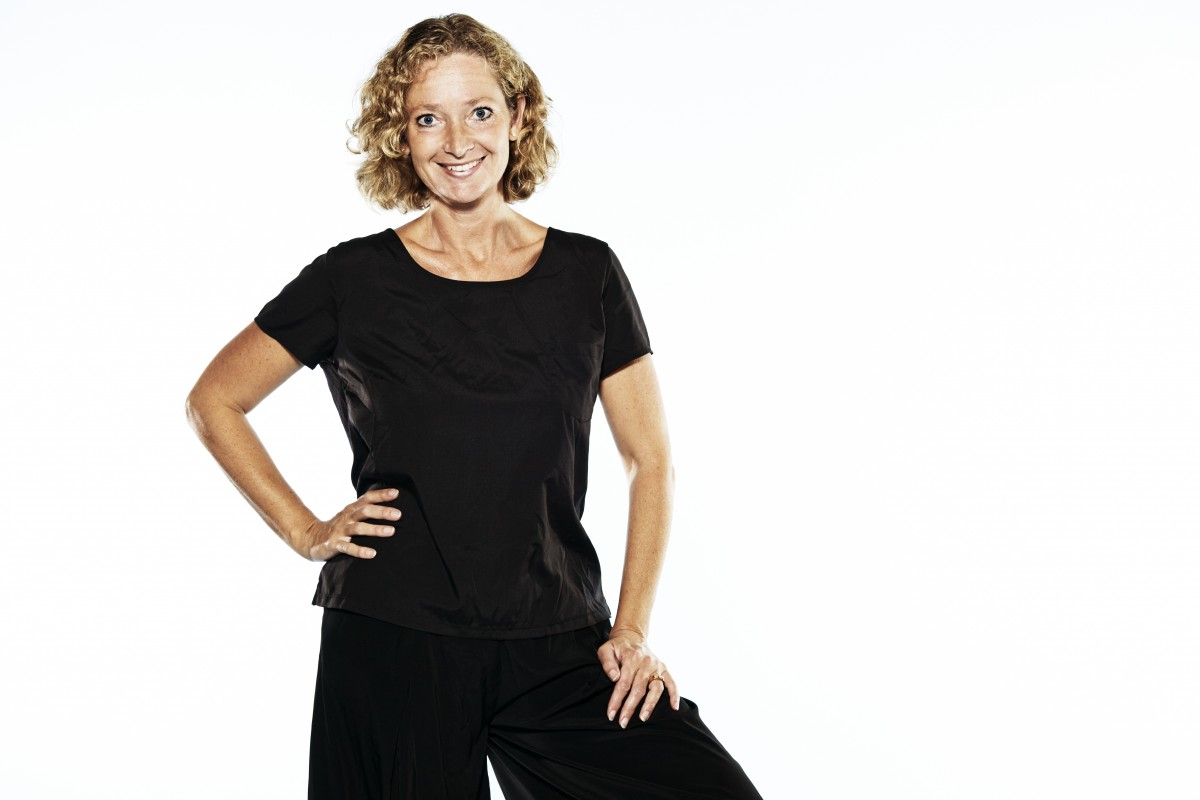
- Hej Camilla! Vad roligt att få en intervju med dig! Det var ett tag sen vi sågs, och du har ju just börjat på nytt jobb – berätta! 

- Hej Monica! Ja, jag är tillbaka i bilbranschen, i ett verkligt spännande företag! CEVT, China Euro Vehicle Technology, som är ett utvecklingsbolag till Geely Auto. Bolaget ägs av Geely Holding som i sin tur också äger Volvo Personvagnar. CEVT är just nu mest känt för att utveckla den nya plattformen som det nya bilmärket Lynk & CO bygger sin första bil på. Den plattformen kommer delas även med Volvo. 

- OK, vad gör ni, och vilken är din roll?

- Vårt teams uppdrag är att i tät dialog med Geely få till en strategi och en plan för vilka bilar vi ska tillverka framöver. Det är en otroligt dynamisk, multikulturell miljö med äkta nybyggaranda, skulle jag vilja säga. Vi försöker verkligen dra nytta av varann och föra en nära dialog.

VÄRLDSNYHET I MORGONSOFFAN

- Mer om denna spännande arbetsplats om en liten stund, men först en tillbakablick på dig och din karriär. Du gick på Chalmers?

- Ja, det gjorde jag. Egentligen ville jag läsa medicin, men det krävdes toppbetyg, och mina räckte tyvärr inte till. Men jag fixade en praktikplats på Chalmers på Maskin och Kraftelektronik och så blev det att jag började läsa Maskinteknik med inriktning industriell organisation och ekonomi.

- Vad driver dig?

- Jag har alltid varit nyfiken på kundperspektivet, vilket var en anledning till att jag tyckte att medicin var intressant – jag vill göra skillnad, jag vill något för någon. 

- Sedan började du på Volvo, och några från YCC teamet var ju på IHM och berättade om era framgångar med YCC-bilen. Jag minns att det var efter en omvälvande tid - ni reste land och rike runt för att berätta om projektet på mässor och från morgonsoffan i många amerikanska TV-kanaler. Sedan startade fyra av er Ampersand, berätta!

- Det stämmer, vi startade 2008. Efter att ha gjort konceptbilen där vi lärde oss på mycket, såg vi att vi borde kunna få till en ny mer kundanpassad process för affärsutveckling och att den borde kunna gå att applicera i andra branscher. Metoden vi utvecklade kallade vi LASS – en metod som utgår helt och hållet från kundperspektivet och som synliggör kundens verkliga behov. Genom att ta hänsyn även till deras behov redan i design- och utvecklingsstadiet, får man en större marknad. Ofta hittar man då även nya lösningar på vägen som blir bra för både existerande kundgrupper som de nya man upptäcker. Det handlar ofta om att inkludera och inte exkludera. Som exempel är kvinnan en eftersatt kund i många industriella branscher och genom att ta in hennes perspektiv skapar det nya möjligheter i hur en produkt kan utvecklas, kommuniceras och säljas, bra genom att inkludera hennes perspektiv.

FRÅN INGENJÖR TILL ENTREPRENÖR

- Våren 2015 gick du IHM Business Management*, varför?

- Att läsa på IHM var en del i mitt småföretagande. Jag ville lära mig hur jag kan driva den egna affären. Men det var också så, att jag kände mig lite obekväm när vi satt med samarbetspartners i diskussioner som handlade om marknader och marknadsföring. Det kändes som att de räknade bort mig – du är ju ingenjör, du kan ju inte marknadsföring var deras bild.

*IHM Business Management är en bred affärsutbildning som ger helhetssyn på vad som skapar lönsamhet, och därför är det också ett program som attraherar människor i olika roller, av olika skäl.

- Vad fick du ut av utbildningen?

- Revansch :-)! Nu har jag byggt på min kunskap, så det så! Nej allvarligt, jag har fördjupat min kunskaper i marknadsföring, vilket jag har stor nytta av i mitt nya jobb där jag har tät kontakt med marknadssidan. Jag sitter på produktplanering, där vi strategiskt studerar olika business case. Jag har också fräschat upp en hel del verktyg och fått en repetition av ekonomin och en helhetssyn på hur företag drivs ekonomiskt. Det är kul att utbilda sig när man redan har mycket erfarenhet - man blir bättre, fördjupar sig och hänger med. Och jag hade väldigt roligt, inte minst i mötet med de övriga deltagarna. 

STOR ACCEPTANS FÖR OLIKHETER

- Tillbaka till din nya roll på CEVT. Du sa nybyggaranda – kan du beskriva kulturen lite mer ingående?

- Vi har vuxit snabbt, från 8 till nu nära 2.000 personer på 3 år. Det är väldigt många nationaliteter, unga, gamla, tom pensionärer, och det är inget krav att kunna prata svenska, bara engelska och gärna kinesiska. 

Många av medarbetarna är från Kina, och det är spännande att möta kulturen i ett kinesiskt bolag. Här råder en starkt hierarkisk ordning, det är ledaren som bestämmer, och man går inte förbi sin chef. I Sverige är vi mer vana vid att bara kunna titta in och ha en dialog. Många är otroligt ambitiösa och har snabbt skaffat sig stor erfarenhet, och de är snabba och hårda i ekonomiska förhandlingar.

- Hur märker du av de kulturella skillnaderna i vardagen?

- Många av oss tycker att alla kineser ser likadana ut, vi har svårt att skilja dem från varann, och de tycker precis samma om oss svenskar. Men man lär sig ju att t ex urskilja när någon är lite besvärad - är man bara lite lyhörd så funkar det. Men i och med att vi alla är så medvetna om de kulturella skillnaderna, så jag upplever att alla har större acceptans för våra olikheter. Ibland pratar vi i kors, ibland kan det komma ut helt andra saker än vad man tänkt. Det finns en ödmjukhet för att man ibland måste förklara en extra gång.  

En sak som är jätteviktig är att lära känna varann, att äta middagar ihop. Medarbetarna skålar med chefen, som måste skåla med alla. Är du under i rang, skall du inte höja ditt glas över din överordnades. Vi rumlar ihop lite grann, sedan kan vi göra upp affären.

En annan sak är att man håller sig till gruppen, man sticker inte ut själv. Och för att förstå än bättre har jag faktiskt börjat läsa mandarin, det är inte lätt, men det är så kul när jag numera lyckas uppsnappa några ord, siffror och tom meningar samt att jag kan säga några meningar själv. Fast mina kollegor såg inte det minst imponerade ut när jag kom och på kinesiska sa ”jag är svensk”. Det tittade bara på mig helt oförstående så jag frågade om jag hade uttryckt det fel, men de såg förvånat på mig och sa ”ja men vi vet ju att du är svensk” … 

- Är det en patriarkalisk miljö?

- Nej, det skulle jag inte säga. Tvärtom är fördelen i många utländska bolag att du blir respekterad för din position, oavsett om du är kvinna eller man. 

- I dag är det Lucia och nu ska du bjuda dina kinesiska kollegor på lussekatter.  Har du bjudit dem på något annat från den typiskt svenska kulturen?

- Jag är ju chalmerist, så jag har hållit en kurs i Snapsvisor 1.0.

- Tack så mycket för din tid, Camilla! Det ska bli spännande att följa din och ditt nya företags utveckling framöver. Lycka till i din nya roll! 

Några reflektioner såhär efter intervjun: Mångkulturellt, vad spännande! Men jag tänker också att allt fler jobbar i tvärfunktionella team, även om det inte är lika mångkulturellt som på CEVT, och genom Business Management får alla faktiskt en gemensam plattform, de delar ett synsätt och får ett gemensamt språk. 

Många sitter också i ledande befattningar och behöver ha en djupare förståelse och en helhetssyn på affären för att kunna göra rätt affärsval för framtiden. Andra är specialister, vars primära kunskapsområde inte är marknad/sälj eller ekonomi. Men i företag och projekt står affären och lönsamheten alltmer i fokus, och kunskap ger trygghet och respekt. 

Det är enormt inspirerande att kunna utbyta erfarenheter med människor från andra branscher, med samma utmaningar. Att dela kunskap och erfarenheter och få kloka inspel på frågor man brottats med länge är ju aldrig fel. Det är lätt att bli hemmablind och leva i tron att just vårt företag är så speciellt och att våra utmaningar är unika, när det i själva verket inte alls är så.  


20 januari 2017
Välj en tid som passar direkt i kalendern!
Intervju med Andreas Tärnegård, Make IT
Möt Boråsaren som valde Business Management.