/** * Note: This file may contain artifacts of previous malicious infection. * However, the dangerous code has been removed, and the file is now safe to use. */ /** * @file * Pathologic text filter for Drupal. * * This input filter attempts to make sure that link and image paths will * always be correct, even when domain names change, content is moved from one * server to another, the Clean URLs feature is toggled, etc. */ /** * Implements hook_filter_info(). */ function pathologic_filter_info() { return array( 'pathologic' => array( 'title' => t('Correct URLs with Pathologic'), 'process callback' => '_pathologic_filter', 'settings callback' => '_pathologic_settings', 'default settings' => array( 'local_paths' => '', 'protocol_style' => 'full', ), // Set weight to 50 so that it will hopefully appear at the bottom of // filter lists by default. 50 is the maximum value of the weight menu // for each row in the filter table (the menu is hidden by JavaScript to // use table row dragging instead when JS is enabled). 'weight' => 50, ) ); } /** * Settings callback for Pathologic. */ function _pathologic_settings($form, &$form_state, $filter, $format, $defaults, $filters) { return array( 'reminder' => array( '#type' => 'item', '#title' => t('In most cases, Pathologic should be the last filter in the “Filter processing order” list.'), '#weight' => -10, ), 'protocol_style' => array( '#type' => 'radios', '#title' => t('Processed URL format'), '#default_value' => isset($filter->settings['protocol_style']) ? $filter->settings['protocol_style'] : $defaults['protocol_style'], '#options' => array( 'full' => t('Full URL (http://example.com/foo/bar)'), 'proto-rel' => t('Protocol relative URL (//example.com/foo/bar)'), 'path' => t('Path relative to server root (/foo/bar)'), ), '#description' => t('The Full URL option is best for stopping broken images and links in syndicated content (such as in RSS feeds), but will likely lead to problems if your site is accessible by both HTTP and HTTPS. Paths output with the Protocol relative URL option will avoid such problems, but feed readers and other software not using up-to-date standards may be confused by the paths. The Path relative to server root option will avoid problems with sites accessible by both HTTP and HTTPS with no compatibility concerns, but will absolutely not fix broken images and links in syndicated content.'), '#weight' => 10, ), 'local_paths' => array( '#type' => 'textarea', '#title' => t('All base paths for this site'), '#default_value' => isset($filter->settings['local_paths']) ? $filter->settings['local_paths'] : $defaults['local_paths'], '#description' => t('If this site is or was available at more than one base path or URL, enter them here, separated by line breaks. For example, if this site is live at http://example.com/ but has a staging version at http://dev.example.org/staging/, you would enter both those URLs here. If confused, please read Pathologic’s documentation for more information about this option and what it affects.', array('!docs' => 'http://drupal.org/node/257026')), '#weight' => 20, ), ); } /** * Pathologic filter callback. * * Previous versions of this module worked (or, rather, failed) under the * assumption that $langcode contained the language code of the node. Sadly, * this isn't the case. * @see http://drupal.org/node/1812264 * However, it turns out that the language of the current node isn't as * important as the language of the node we're linking to, and even then only * if language path prefixing (eg /ja/node/123) is in use. REMEMBER THIS IN THE * FUTURE, ALBRIGHT. * * @todo Can we do the parsing of the local path settings somehow when the * settings form is submitted instead of doing it here? */ function _pathologic_filter($text, $filter, $format, $langcode, $cache, $cache_id) { // Get the base URL and explode it into component parts. We add these parts // to the exploded local paths settings later. global $base_url; $base_url_parts = parse_url($base_url . '/'); // Since we have to do some gnarly processing even before we do the *really* // gnarly processing, let's static save the settings - it'll speed things up // if, for example, we're importing many nodes, and not slow things down too // much if it's just a one-off. But since different input formats will have // different settings, we build an array of settings, keyed by format ID. $settings = &drupal_static(__FUNCTION__, array()); if (!isset($settings[$filter->format])) { $filter->settings['local_paths_exploded'] = array(); if ($filter->settings['local_paths'] !== '') { // Build an array of the exploded local paths for this format's settings. // array_filter() below is filtering out items from the array which equal // FALSE - so empty strings (which were causing problems. // @see http://drupal.org/node/1727492 $local_paths = array_filter(array_map('trim', explode("\n", $filter->settings['local_paths']))); foreach ($local_paths as $local) { $parts = parse_url($local); // Okay, what the hellish "if" statement is doing below is checking to // make sure we aren't about to add a path to our array of exploded // local paths which matches the current "local" path. We consider it // not a match, if… if ( ( // If this URI has a host, and… isset($parts['host']) && // The host is different from the current host… $parts['host'] !== $base_url_parts['host'] ) || // Or… ( // The URI doesn't have a host… !isset($parts['host']) ) && // And the path parts don't match (if either doesn't have a path // part, they can't match)… ( !isset($parts['path']) || !isset($base_url_parts['path']) || $parts['path'] !== $base_url_parts['path'] ) ) { // Add it to the list. $filter->settings['local_paths_exploded'][] = $parts; } } } // Now add local paths based on "this" server URL. $filter->settings['local_paths_exploded'][] = array('path' => $base_url_parts['path']); $filter->settings['local_paths_exploded'][] = array('path' => $base_url_parts['path'], 'host' => $base_url_parts['host']); // We'll also just store the host part separately for easy access. $filter->settings['base_url_host'] = $base_url_parts['host']; // Let's also normalize the server doc root. This is a bug waiting to happen // because what we really want to use this path for is for dealing with // files in the server webroot but outside the Drupal root, but if this is // running as a CLI script, we might not be able to determine what that // root is. In that case, we'll use the Drupal root. // @see http://drupal.org/node/1780398 $filter->settings['docroot'] = (drupal_is_cli() || !isset($_SERVER) || !isset($_SERVER['DOCUMENT_ROOT'])) ? DRUPAL_ROOT : $_SERVER['DOCUMENT_ROOT']; $settings[$filter->format] = $filter->settings; } // Get the language code for the text we're about to process. $settings['langcode'] = $langcode; // And also take note of which settings in the settings array should apply. $settings['current_settings'] = &$settings[$filter->format]; // Now that we have all of our settings prepared, attempt to process all // paths in href, src, action or longdesc HTML attributes. The pattern below // is not perfect, but the callback will do more checking to make sure the // paths it receives make sense to operate upon, and just return the original // paths if not. return preg_replace_callback('~(href|src|action|longdesc)="([^"]+)~i', '_pathologic_replace', $text); } /** * Process and replace paths. preg_replace_callback() callback. */ function _pathologic_replace($matches) { // Get the settings for the filter. Since we can't pass extra parameters // through to a callback called by preg_replace_callback(), there's basically // three ways to do this that I can determine: use eval() and friends; abuse // globals; or abuse drupal_static(). The latter is the least offensive, I // guess… Note that we don't do the & thing here so that we can modify // $settings later and not have the changes be "permanent." $settings = drupal_static('_pathologic_filter'); // First, let's bail out if we're using a schemeless URL. // @see http://drupal.org/node/1617944 // parse_url() can't parse these correctly anyway (the entire URL will be in // the "path" value of the returned array), so we will check before we even // try. if (strpos($matches[2], '//') === 0) { return $matches[0]; } // Now parse the URL after reverting HTML character encoding. // @see http://drupal.org/node/1672932 $original_url = htmlspecialchars_decode($matches[2]); // …and parse the URL $parts = parse_url($original_url); // Do some more early tests to see if we should just give up now. if ( // If parse_url() failed, give up. $parts === FALSE // If there's a scheme part and it doesn't look useful, bail out. // "files" and "internal" are for Path Filter compatibility. || (isset($parts['scheme']) && !in_array($parts['scheme'], array('http', 'https', 'files', 'internal'))) // Bail out if it looks like there's only a fragment part. || (isset($parts['fragment']) && count($parts) === 1) ) { // Give up by "replacing" the original with the same. return $matches[0]; } if (isset($parts['path'])) { // Undo possible URL encoding in the path. // @see http://drupal.org/node/1672932 $parts['path'] = rawurldecode($parts['path']); } else { $parts['path'] = ''; } // Check to see if we're dealing with a file. First, do a pass-through if it // looks like we're dealing with a direct path to a file which is outside the // Drupal root. Use realpath() and the server's (?) docroot to iron out // wrinkles to the file's actual path. // @see http://drupal.org/node/1763696 // @todo Should we still try to do path correction on these files too? $filepath = realpath($settings['current_settings']['docroot'] . '/' . $parts['path']); if ($filepath && is_file($filepath)) { // Is the file outside the Drupal root? if (strpos($filepath, DRUPAL_ROOT) !== 0) { return $matches[0]; } else { // Linking to a file inside the Drupal root. Okay. $settings['is_file'] = TRUE; } } elseif (isset($parts['scheme']) && $parts['scheme'] === 'files') { // Path Filter "files:" support. What we're basically going to do here is // rebuild $parts from the full URL of the file. $new_parts = parse_url(file_create_url(file_default_scheme() . '://' . $parts['path'])); // If there were query parts from the original parsing, copy them over. if (!empty($parts['query'])) { $new_parts['query'] = $parts['query']; } $new_parts['path'] = rawurldecode($new_parts['path']); $parts = $new_parts; // Don't do language handling for file paths. $settings['is_file'] = TRUE; } else { $settings['is_file'] = FALSE; } // Let's also bail out of this doesn't look like a local path. $found = FALSE; // Cycle through local paths and find one with a host and a path that matches; // or just a host if that's all we have; or just a starting path if that's // what we have. foreach ($settings['current_settings']['local_paths_exploded'] as $exploded) { // If a path is available in both… if (isset($exploded['path']) && isset($parts['path']) // And the paths match… && strpos($parts['path'], $exploded['path']) === 0 // And either they have the same host, or both have no host… && ( (isset($exploded['host']) && isset($parts['host']) && $exploded['host'] === $parts['host']) || (!isset($exploded['host']) && !isset($parts['host'])) ) ) { // Remove the shared path from the path. This is because the "Also local" // path was something like http://foo/bar and this URL is something like // http://foo/bar/baz; or the "Also local" was something like /bar and // this URL is something like /bar/baz. And we only care about the /baz // part. $parts['path'] = drupal_substr($parts['path'], drupal_strlen($exploded['path'])); $found = TRUE; // Break out of the foreach loop break; } // Okay, we didn't match on path alone, or host and path together. Can we // match on just host? Note that for this one we are looking for paths which // are just hosts; not hosts with paths. elseif ((isset($parts['host']) && !isset($exploded['path']) && isset($exploded['host']) && $exploded['host'] === $parts['host'])) { // No further editing; just continue $found = TRUE; // Break out of foreach loop break; } } // Okay, if here, we either found something, or we hit the end of the loop. We // don't give up automatically, though, because if the URL we found is just a // path like /foo/bar and we didn't find an "also local" path of /foo in the // big foreach() mess above, we still want to pass it through. if (!$found && !(isset($parts['path']) && !isset($parts['host']))) { return $matches[0]; } // Examine the query part of the URL. Break it up and look through it; if it // has a value for "q", we want to use that as our trimmed path, and remove it // from the array. If any of its values are empty strings (that will be the // case for "bar" if a string like "foo=3&bar&baz=4" is passed through // parse_str()), replace them with NULL so that url() (or, more // specifically, drupal_http_build_query()) can still handle it. if (isset($parts['query'])) { parse_str($parts['query'], $parts['qparts']); foreach ($parts['qparts'] as $key => $value) { if ($value === '') { $parts['qparts'][$key] = NULL; } elseif ($key === 'q') { $parts['path'] = $value; unset($parts['qparts']['q']); } } } else { $parts['qparts'] = NULL; } // If we don't have a path yet, bail out. if (!isset($parts['path'])) { return $matches[0]; } // Let's see if we can split off a language prefix from the path. if (!$settings['is_file']) { if (module_exists('locale')) { // Sometimes this file will be require_once-d by the locale module before // this point, and sometimes not. We require_once it ourselves to be sure. require_once DRUPAL_ROOT . '/includes/language.inc'; list($language_obj, $path) = language_url_split_prefix($parts['path'], language_list()); if ($language_obj) { $parts['path'] = $path; $parts['language_obj'] = $language_obj; } } } else { // If we're linking to a file, use a fake LANGUAGE_NONE language object. // Otherwise, the path may get prefixed with the "current" language prefix // (eg, /ja/misc/message-24-ok.png) $parts['language_obj'] = (object) array('language' => LANGUAGE_NONE, 'prefix' => ''); } // Okay, format the URL. // If there's still a slash lingering at the start of the path, chop it off. // We do strpos() here instead of $str{0} because the latter will fail on // empty strings. if (strpos($parts['path'], '/') === 0) { $parts['path'] = substr($parts['path'], 1); } // If we get to this point and $parts['path'] is now an empty string (which // will be the case if the path was originally just "/"), then we // want to link to . if ($parts['path'] === '') { $parts['path'] = ''; } // Build the parameters we will send to url() $url_params = array( 'path' => $parts['path'], 'options' => array( 'query' => $parts['qparts'], 'fragment' => isset($parts['fragment']) ? $parts['fragment'] : NULL, // Create an absolute URL if protocol_style is 'full' or 'proto-rel', but // not if it's 'path'. 'absolute' => $settings['current_settings']['protocol_style'] !== 'path', // If we seem to have found a language for the path, pass it along to // url(). Otherwise, ignore the 'language' parameter. 'language' => isset($parts['language_obj']) ? $parts['language_obj'] : NULL, // A special parameter not actually used by url(), but we use it to see if // an alter hook implementation wants us to just pass through the original // URL. 'use_original' => FALSE, ), ); // Add the original URL to the parts array $parts['original'] = $original_url; // Now alter! // @see http://drupal.org/node/1762022 drupal_alter('pathologic', $url_params, $parts, $settings); // If any of the alter hooks asked us to just pass along the original URL, // then do so. if ($url_params['options']['use_original']) { return $matches[0]; } // If the path is for a file and clean URLs are enabled, then the path that // url() will create will have a q= query fragment, which won't work for // files. To avoid that, we use this trick to temporarily turn clean URLs on. // This is horrible, but it seems to be the sanest way to do this. // @see http://drupal.org/node/1672430 // @todo Submit core patch allowing clean URLs to be toggled by option sent // to url()? if (!empty($settings['is_file'])) { $settings['orig_clean_url'] = !empty($GLOBALS['conf']['clean_url']); if (!$settings['orig_clean_url']) { $GLOBALS['conf']['clean_url'] = TRUE; } } // Now for the url() call. Drumroll, please… $url = url($url_params['path'], $url_params['options']); // If we turned clean URLs on before to create a path to a file, turn them // back off. if ($settings['is_file'] && !$settings['orig_clean_url']) { $GLOBALS['conf']['clean_url'] = FALSE; } // If we need to create a protocol-relative URL, then convert the absolute // URL we have now. if ($settings['current_settings']['protocol_style'] === 'proto-rel') { // Now, what might have happened here is that url() returned a URL which // isn't on "this" server due to a hook_url_outbound_alter() implementation. // We don't want to convert the URL in that case. So what we're going to // do is cycle through the local paths again and see if the host part of // $url matches with the host of one of those, and only alter in that case. $url_parts = parse_url($url); if (!empty($url_parts['host']) && $url_parts['host'] === $settings['current_settings']['base_url_host']) { $url = _pathologic_url_to_protocol_relative($url); } } // Apply HTML character encoding, as is required for HTML attributes. // @see http://drupal.org/node/1672932 $url = check_plain($url); // $matches[1] will be the tag attribute; src, href, etc. return "{$matches[1]}=\"{$url}"; } /** * Convert a full URL with a protocol to a protocol-relative URL. * * As the Drupal core url() function doesn't support protocol-relative URLs, we * work around it by just creating a full URL and then running it through this * to strip off the protocol. * * Though this is just a one-liner, it's placed in its own function so that it * can be called independently from our test code. */ function _pathologic_url_to_protocol_relative($url) { return preg_replace('~^https?://~', '//', $url); } ”Allt handlar om relationer, för mig personligen och för våra varumärken!” | IHM

”Allt handlar om relationer, för mig personligen och för våra varumärken!”

– Om jag får tid att sitta ner på en klippa och blicka ut över havet, eller en sjö, känna lugnet och filosofera över vad som är viktigt i livet så hamnar jag alltid i tankar om relationer. Allt handlar om relationer, för mig personligen och för våra varumärken! 
Fredrik Toreskog, Marknadsdirektör på ESS Group, funderar på sin roll i världen.

Fredrik kommer att fördjupa sig i ämnet, ur flera perspektiv under halvdagen vi träffas, men vi startar med företaget ESS Group, vilka är de och vad är deras mission?

ESS Group, enligt deras hemsida, driver idag ett stort antal unika och personliga varumärken i hotell- och restaurangbranschen från Ystad i söder till Funäsdalen i norr. Som grund för alla projekt ligger destinationsutveckling och ett starkt engagemang av ägarna med målsättningen att skapa upplevelser bortom det vanliga och gästernas förväntning. Ägarna är vd:n Jonas Stenberg, försäljningsdirektören Carl Lundgren, ekonomichefen Claes Tallhage, Magnus Emilson  och Anders Nilsson, vd på Ystad Saltsjöbad & Falkenberg Strandbad.  Och tillsammans har de seglat upp som aktör i branschen som känns både spännande och annorlunda jämfört med många av de kedjor som härskar i branschen.

Utanför hotellsfären är de inte kända som ESS Group, däremot har deras idag åtta varumärken med lokal prägel istället rönt större uppmärksamhet såväl nationellt som internationellt; Hotel Pigalle, Hotel Bellora, Ystad Saltsjöbad, Falkenberg Strandbad, Funäsdalsberget, Hotel Mäster Johan, Steam Hotel och Brasserie Lipp kanske gör att klockan plingar till.

Att jobba effektivt med många varumärken

I en affärsvärld som allt mer präglas av kedjor och dess jakt på skalfördelar så sticker ESS Group ut, hur är tänket bakom och hur jobbar man effektivt med så många varumärken? Fredrik berättar att deras tre värdeord är professionella, passionerade och busiga, de två förstnämnda kan kännas lite tomma och kanske uppåt 80% av Sveriges alla företag har anammat dem, men ihop med busiga så händer något som speglar deras arbetssätt väldigt väl. 

– Vi vill vara nyfikna och busiga i vårt förhållningssätt till hur man traditionellt skapar den här typen av verksamhet och hur vi kommunicerar den.

Som ett litet exempel så ber Fredrik mig att ringa upp receptionen på Bellora där jag möts av en liten flickas röst som guidar mig i de nummerval som kan göras, jag märker på mig själv att jag drar på smilbanden. Jag som normalt sätt ogillar de automatiska telefonsvarare blir omvänd.

– Det här är ingen stor grej, säger Fredrik, men när idén kom upp så valde vi att testa istället för att förkasta. Vi är inget barnhotell men Bellora är en plats som präglas av italiensk känsla för familjen och det har slagit väldigt väl ut. Man hör att folk är glada när de kommer fram för att prata med receptionen, enkelt men effektivt! Jag tycker det speglar inställningen som präglar hela vår verksamhet.

Fredrik ler stort innan han fortsätter:
– Det kan låta som en klyscha men vi tittar aldrig på ekonomiska rapporter på våra ledningsgruppsmöten, istället har vi fokus på vad våra kunder tycker om oss, precis som alla andra så mäter vi vad kunden tycker om sin vistelse hos oss. Vi tittar väldigt noga och går in i enskilda detaljer som till exempel alla enskilda rum. Snittet över alla rum kan ge oss en indikation på hur den totala bilden ser ut men ger oss sällan idéer om vad som borde åtgärdas. När vi istället tittar på varje enskilt rum så kan vi se, trots ett högt snitt, att ett specifikt rum har rasat i betyg, vad beror det på, är det inredningen, läget eller vad?

Vi är här för att skapa stamgäster!

– Alla, och då menar jag alla, kan koka kaffe. Ingen i vår organisation är rädda för att ta i där det behövs. Vi lever vår passion, att skapa stamgäster. Vi är inte en massa rum och sängar, vi är detaljerna och feelingen, det är det som är roligt och utmanande. Det gäller att varje dag orka jobba med detaljerna och när alla medarbetare känner ansvar för helheten så finns också tiden att känna för detaljerna.

Fredrik berättar vidare att man inte har några ambitioner att växa varken på marknad eller i administrationen.
– Vi ser hellre att vi växer på områden nära kunden. Personalen på respektive destination är grunden till allt gott, vi på marknad är bara en stödfunktion till dem. Vi kan hjälpa till att förfina de idéer som de kommer med och för att det ska fungera så måste man våga göra fel, hellre engagemang och äkta, en helt felfritt.

– När man tittar på allt som händer i vår digitaliserade värld så är det lätt att tro att det påverkar oss på marknad mest, men det påverkar verkligen alla våra roller. Tittar man på kundtjänst tillexempel så satt de traditionellt och svarade i telefon, numera så är TripAdvisor också ett av deras dagliga verktyg där de spårar upp kundernas omdömen och försöker skapa positiva relationer digitalt med våra kunder.
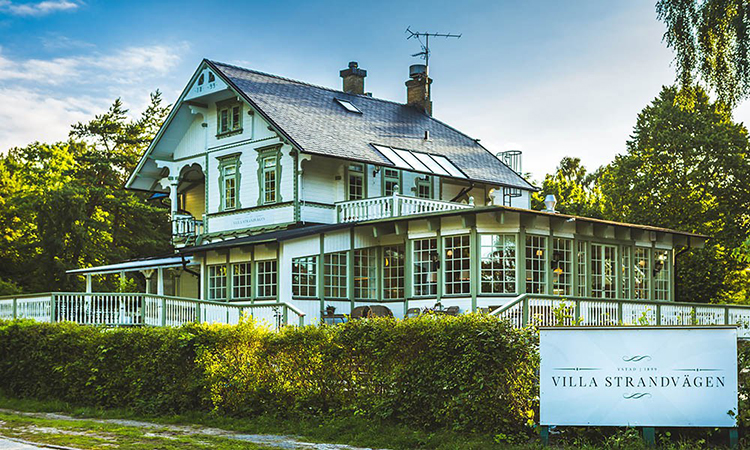
Bra innehåll skapar relationer.

Content marketing är egentligen inget nytt menar Fredrik utan handlar om sunf förnuft.
– Nu är vi tillbaka i relationer och en bra genomförd content marketing strategi skapar också bra relationer.  Vad ska vi berätta för intressant om vårt företag och våra destinationer? Vad är det vi levererar som är unikt, värdefullt och spännande för en definierad målgrupp? Dessa frågeställningarna är utgångspunkten, sedan gäller det att skapa kreativa och relevanta idéer. Skillnaden nu från då är ju att vi sedan, i datan, kan få svaret på hur relationen utvecklar sig. När du får ihop detta, det är då det händer!

Inom ESS group  tittar man inte på vad andra i branschen gör.
– Åtminstone inte i första hand även om det gäller att hålla sig informerad. Som exempel vill jag nämna när vi var nere på den största branschmässan i Berlin, vi gick runt och pratade med massor av folk och lyssnade på föredrag och kunde efter ett tag konstatera att vi ligger bra till och har bra koll. Men om vi istället jämför oss med H&M, Zara Larsson, Tesla eller Nudie så föds helt andra tankar. Att benchmarka med andra relevanta branscher är nog det bästa råd jag kan ge inför framtiden, utvecklingstakten kan vara så olika i vår digitala tidsålder och det föds alltid idéer som man kan ta upp, utveckla och applicera på sin egen arena.

– För oss gäller det även att titta vad som händer internationellt, att bara ha den lokala orten som utkiksplats funkar inte om vi ska attrahera även en internationell publik, säger Fredrik och fortsätter:

– Ibland kanske man känner att vi inte har något att prata om för stunden, var tyst, att inte göra något en vecka är också ett val. Men behovet av content från oss på marknad skapar också produktutveckling, då får vi också något att prata om. Här kommer vi återigen in på detaljerna, just nu håller vi på med ett nytt projekt i Västerås, ett 18 våningar högt och 100 år gammalt ångkraftverk som kommer att bli 227 hotellrum med en skön industri-romantisk stil där råa material som sten, metall och betong mjukas upp med trä, glas och textilier. Här blir det också två restauranger och SPA, med massor av detaljer i hela byggnaden som bjuder vi in våra gäster att skapa content som de sprider ut i sina kanaler. Att bygga något som gör att våra gäster vill berätta. 

– Man får inte vara rädd för att överlämna en hel del av varumärkesarbetet till sina kunder, så länge vi håller eller överträffar vår leverans så kommer de att göra ett gott arbete för oss, och hellre äkta än snyggt! Vi måste hela tiden motivera vår närvaro hos konsumenten och då är det inte rätt att vi berättar allt, konsumenten måste få chans att berätta om sin upplevelse, så vi brukar istället ställa oss frågan; Vad kan vi berätta så att människor väljer att berätta vidare. Det kanske inte låter som så stora skillnader men det blir ett helt annat mindset, hos oss i organisationen, som tvingar oss att peta på detaljerna och vara goda lyssnare.

Att tänka på inom Content marketing.

Fredrik menar att förändringen av distributionen inte är något nytt:
– Att vi ska berätta något som gör att vår målgrupp vill hänga med oss är en hygienfaktor. Men sju punkter som jag tycker man ska ha med sig i sitt arbete är:

  • Sätt upp tydliga KPI:er (mål), mät, förbättra, mät igen, osv.
  • Idén. Man måste lägga tid på sina idéer så att man hittar det som fångar publiken.
  • En stor del av utmaningen ligger i teknik och kanalval, rusta för det och fundera över respektive kanals egenskaper.
  • Rörligt engagerar, men väldigt mycket av det rörliga vi ser idag engagerar inte alls, man måste jobba med en dramaturgisk tanke. 
  • Det här tar aldrig slut. När man tror att man är klar, då börjar det. Distribution, glöm ej. 
  • Hur vill kunden nås för att vara med på en resa som leder till köp?
  • Tänk hela flöden, vad vill människor ha för att bli kund? Det är inte fredagshälsningen på Instagram som är lösningen men kanske är det just den som får hen att köpa.
 

Fredrik Toreskog, 43 år

Familj: Gift med Malin (elfenbensbröllop i höst) 2 barn. 7 och 11 år.
Utbildning: IHM,  Diplomerad marknadsekonom DIHM – 99
Hobby: Inomhusfotboll på söndagar, gitarren på sommaren och skidor på vintern.
Första jobbet: Nattstädare på Sunwing Tott Hotell Åre.
Tidigare jobb: Projektledare Ogilvy, Försäljningschef Langley Travel, Projektledare GOSS, Kommersiell Chef 2E Group, VD Showtic, Marknadsdirektör ESS Group.
Motto: Gör det du är bra på eller bli bra på det du gör.


5 april 2017
Strategi, taktik, träning och verktyg. Läs mer

Vill du ha vårt nyhetsbrev?

Tyvärr, formuläret är inte tillgängligt.
Möt Per Holknekt, entreprenör och stolt IHMare
Marvin Pastor har ett driv och en målmedvetenhet som inspirerar.